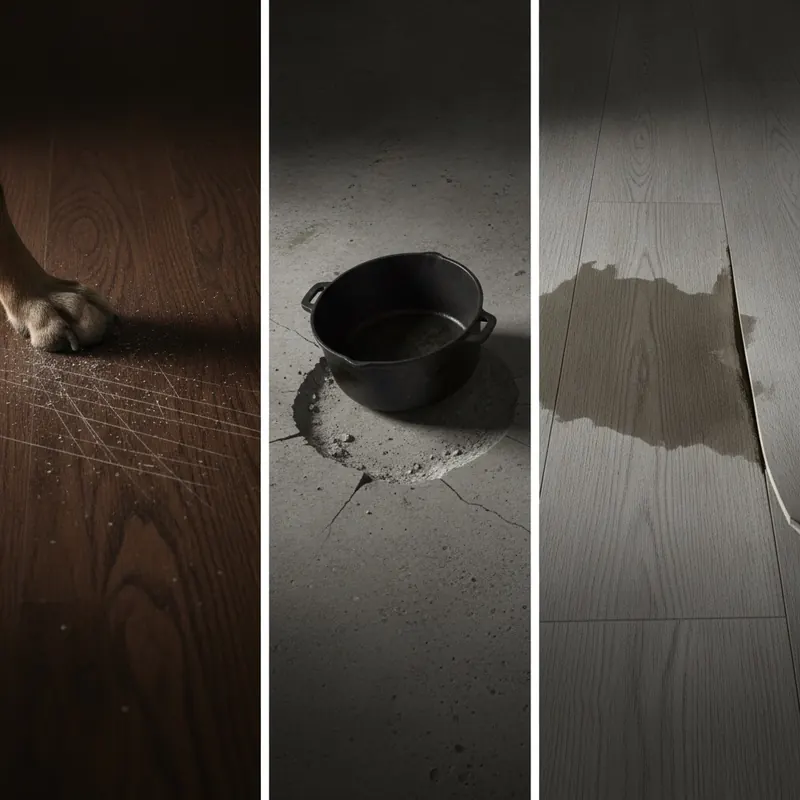
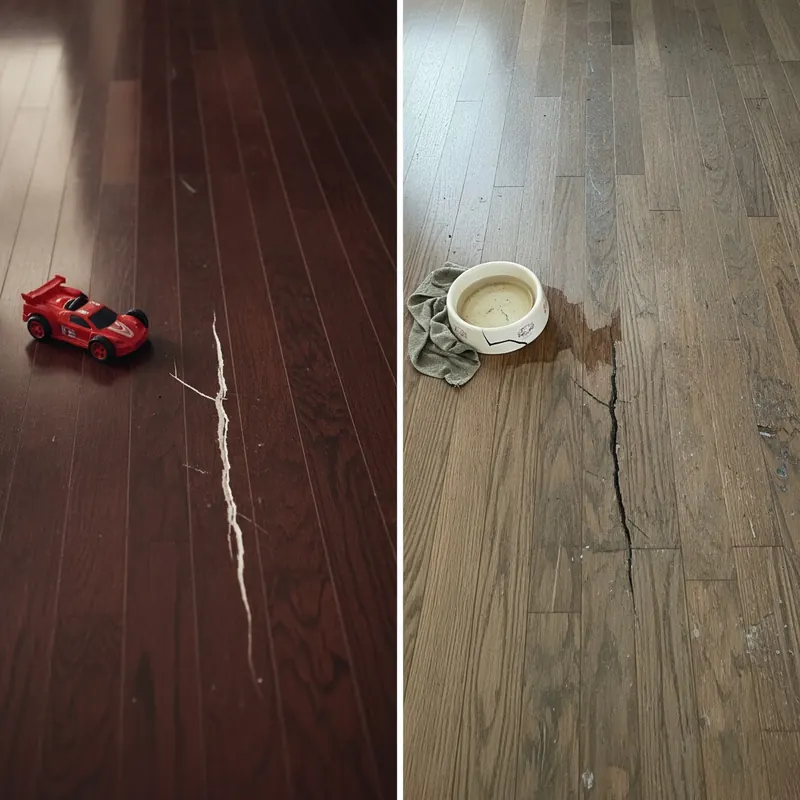
There’s a unique frustration that comes from seeing the first deep scratch on a brand-new floor. It’s a feeling that your investment, meant to bring beauty and value to your space, is already under attack from daily life—shuffling feet, scraping chairs, playful pets, and falling objects. This constant battle against wear and tear can leave any homeowner or business manager feeling defeated.
What if you had a complete strategy to win this battle?
Welcome to the Definitive Floor Durability Playbook. This is not just another list of tips; it’s a comprehensive, science-backed resource that guides you through the entire lifecycle of your floor. We will empower you to move from feeling anxious about damage to feeling confident in your ability to preserve your investment. Together, we will explore the science of floor wear, select the perfect durable material with data-driven tools, implement a bulletproof protection plan, and execute expert-level repairs. This is the only guide you’ll ever need to ensure your floors remain as resilient and beautiful as the day they were installed.
- Understanding the Science of Floor Wear: Abrasion, Scratches, and Impact
- The Definitive Guide to Selecting Durable & Abrasion-Resistant Flooring
- A Proactive Framework for Floor Protection & Prevention
- The Practical Repair Guide: Fixing Scratches on Any Floor
- Achieving a ‘Forever Floor’: The Secrets to Long-Term Longevity
- Conclusion: Your Floor, Your Fortress
- References & Authoritative Sources
Understanding the Science of Floor Wear: Abrasion, Scratches, and Impact
Before we can protect our floors, we must first understand the enemy. The daily degradation of a floor’s surface isn’t caused by a single event, but by a combination of forces working at both microscopic and macroscopic levels. Understanding these forces is the first step toward effective prevention and selection.
At its core, floor surface abrasion is the process of wear caused by the friction of two surfaces rubbing against each other. Think of it like using sandpaper on wood. The primary culprits are tiny, hard particles of dirt, sand, and grit tracked in on shoes. Each step grinds these particles against your floor’s finish, slowly but surely wearing it away. Over time, this cumulative action dulls the gloss, erodes the protective top layer, and eventually exposes the core material beneath.
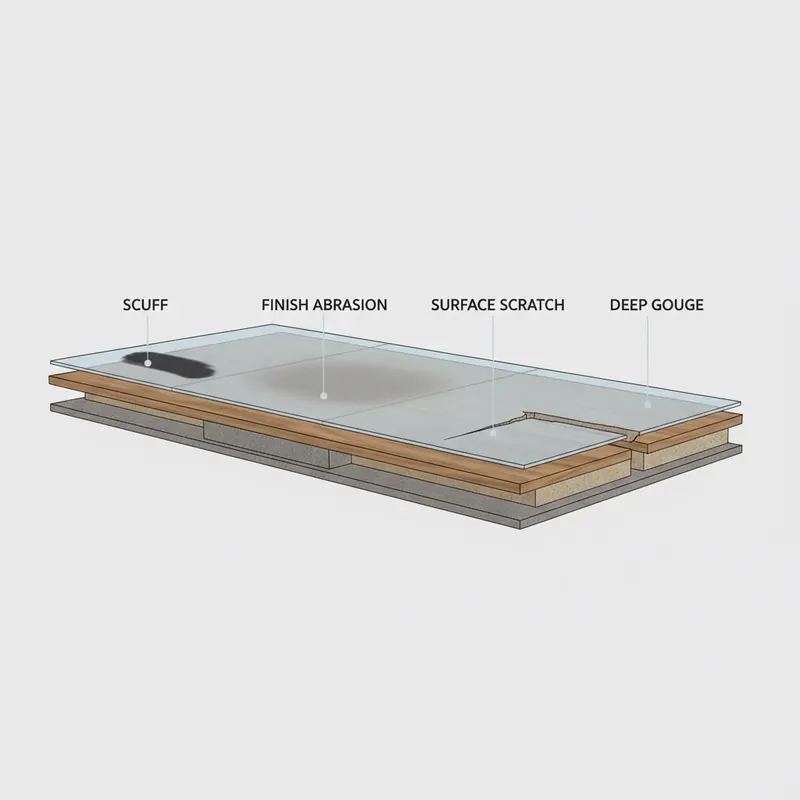
It’s crucial to distinguish between different types of damage to apply the right solution:
- Scuff: A mark on the surface, often from the rubber sole of a shoe. The floor’s finish is intact; the mark is a transfer of material onto the floor. It can typically be cleaned off.
- Finish Abrasion: A dull, hazy, or worn-looking patch in a high-traffic area. This is the result of thousands of micro-scratches that have eroded the floor’s gloss and protective layer.
- Surface Scratch: A single, thin line or groove that has cut into the floor’s top finish or wear layer but has not penetrated to the core material or color layer below.
- Deep Gouge: A significant scratch or indentation that has broken through the finish and wear layer, exposing the core material (e.g., the wood fiber in hardwood or the printed design layer in laminate).
Glossary of Key Flooring Terms
- Wear Layer: The top, transparent protective coating on flooring like LVP, laminate, and engineered wood. Its thickness (measured in mils) is a primary indicator of durability against abrasion and scratches.
- Friction: The resistance that one surface or object encounters when moving over another. This is the fundamental force behind surface abrasion.
- Substrate: The structural layer beneath the flooring, such as a concrete slab or plywood subfloor. Its condition is critical for the long-term stability and longevity of the floor itself. According to industry bodies like the American Society of Concrete Contractors (ASCC), a properly prepared substrate is non-negotiable for a successful flooring installation[1].
The Definitive Guide to Selecting Durable & Abrasion-Resistant Flooring
Choosing a new floor is a significant investment, and the single most important decision you can make is selecting a material that matches the demands of your environment. The “best” durable flooring for a bustling family home with a large dog is vastly different from the ideal choice for a commercial warehouse or a high-end retail store. This guide will provide the data-driven tools you need to make the right choice.
Expert’s Corner: The Most Common Mistake in Floor Selection
According to flooring retailers like GoFlooring.com, one of the biggest mistakes consumers make is choosing a floor based on looks alone, without considering its performance specifications[2]. A beautiful, glossy hardwood might look stunning in a showroom but can quickly show wear in a home with active kids and pets. Conversely, a high-performance Luxury Vinyl Plank (LVP) with a thick wear layer might be the more practical and long-lasting choice, offering both beauty and resilience. Always match the material’s durability to your lifestyle.
For Your Home: The Residential Scratch-Resistance Scorecard
For homeowners, especially those with children and pets, the primary concern is resistance to scratches, scuffs, and impacts from everyday life. This scorecard provides an at-a-glance comparison of the most popular residential flooring options.
Residential Scratch-Resistance Scorecard (Rating 1-5, 5 being highest resistance)
| Flooring Material | Pet Claw Resistance | Furniture Dragging | Dropped Object Impact | Overall Notes |
|---|---|---|---|---|
| Porcelain Tile | 5 | 5 | 3 | Unmatched scratch resistance, but can crack or chip from a heavy, sharp impact. Hard underfoot. |
| SPC/LVP | 4 | 4 | 4 | Excellent all-around performer. The key is the wear layer; look for 20 mils or more for maximum durability. |
| Laminate | 4 | 3 | 4 | Very hard, scratch-resistant top layer, but deep scratches are difficult to repair. Can be susceptible to water damage. |
| Solid Hardwood | 2 | 2 | 3 | Prone to scratching and denting, but has the unique advantage of being able to be fully sanded and refinished multiple times. |
The Power of the Wear Layer
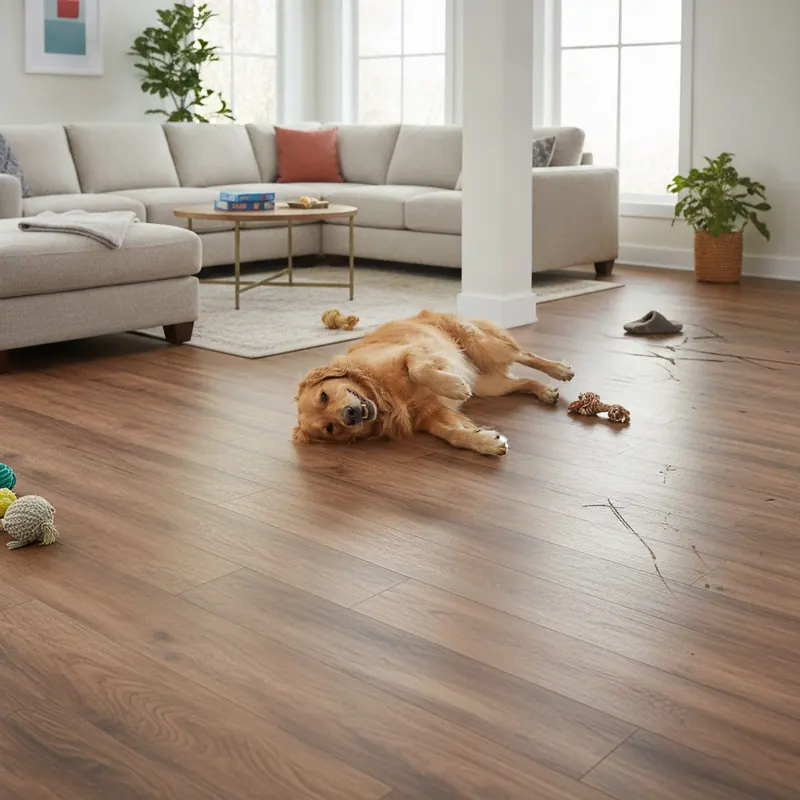
For modern flooring like Stone Plastic Composite (SPC) and Luxury Vinyl Plank (LVP), the secret to durability lies in its layered construction. The topmost layer, the wear layer, is a clear, tough coating that protects the printed design layer from scratches and abrasion.
For a busy home, a wear layer of at least 12 mils is recommended, but for homes with large pets or very high traffic, a wear layer of 20 mils or more is the ideal choice for long-lasting protection.
For Your Business: The Commercial Durability Matrix
In commercial settings, durability extends beyond scratches. It involves resistance to heavy foot traffic, rolling loads, chemical spills, and impact, all while considering upfront investment and long-term maintenance costs. This matrix scores top commercial options against key business criteria.
Commercial Flooring Durability Matrix
| Flooring Material | Upfront Investment | Maintenance Cost | Impact Resistance | Chemical Resistance | Best For |
|---|---|---|---|---|---|
| Epoxy/Resinous | Medium | Low | High | Very High | Warehouses, auto shops, labs, commercial kitchens |
| Terrazzo | Very High | Very Low | Very High | High | Airports, lobbies, schools, institutional buildings |
| Luxury Vinyl Tile (LVT) | Medium | Low | Medium | Medium | Retail, healthcare, corporate offices, hospitality |
| Polished Concrete | Low-Medium | Low | Very High | Low-Medium | Retail, showrooms, restaurants, public spaces |
As noted by suppliers of high-performance systems like TERRAZZCO, materials like epoxy terrazzo are often chosen for major public buildings like airports and schools precisely because their extreme durability and low maintenance needs justify the higher initial investment over a lifespan that can exceed 100 years[3].
Furthermore, modern materials have proven their worth in demanding environments. High-quality LVT, for instance, has demonstrated it is durable enough to withstand the constant foot traffic and rolling equipment found in busy hospital common areas.
A critical, often overlooked factor is the long-term maintenance protocol. While polished concrete has a low upfront cost, it requires periodic resealing to maintain its stain resistance. Epoxy floors are seamless and easy to clean but can be damaged by certain solvents. Terrazzo may only require simple daily cleaning for decades but can be expensive to repair if severely damaged. Factoring these long-term costs is essential for a true lifecycle cost analysis.
Decoding the Specs: How Durability is Professionally Measured
To move beyond marketing claims and become a truly informed consumer, it’s helpful to understand the standardized tests the flooring industry uses to measure performance.
The gold standard for measuring a floor’s resistance to friction and wear is the ASTM D-4060 Taber Abrasion Test. This test, developed by the American Society for Testing and Materials (ASTM), provides an objective, repeatable method for determining abrasion resistance[4].
Expert’s Corner: The Importance of Standardized Testing
According to technical experts at high-performance flooring manufacturers like Stonhard, standardized testing is critical. “The ASTM D-4060 test allows for a true apples-to-apples comparison of how different materials will hold up to the abrasive forces found in the real world. Without these objective standards, you’re just guessing at a floor’s long-term performance”[5].
Other key metrics to look for include:
- Janka Hardness Scale: Used specifically for wood, this test measures the force required to embed a steel ball into the wood. A higher number indicates harder, more dent-resistant wood.
- DCOF Rating (Dynamic Coefficient of Friction): This measures a floor’s slip resistance. It is a critical safety standard for commercial spaces to help prevent slip-and-fall incidents.
A Proactive Framework for Floor Protection & Prevention
Selecting the right floor is half the battle. The other half is implementing a consistent protection and prevention strategy. Proactive care is far less expensive and time-consuming than reactive repairs.
Industry studies show that well-designed walk-off mat systems at all building entrances can prevent up to 80% of outside soil, grit, and moisture from being tracked onto your floors, drastically reducing the primary source of abrasion.
Everyday Habits: Your First Line of Defense
The most effective protection strategies are simple, consistent habits that become second nature.
- Clean Consistently: How often should you clean to minimize abrasive dirt? According to professional cleaning services like ServiceMaster Clean, the key is frequency over intensity. For high-traffic areas, daily sweeping or vacuuming (with a hard floor attachment) is recommended to remove abrasive grit before it can be ground into the floor. A weekly damp mop with a pH-neutral cleaner is sufficient for most surfaces[6].
- Implement a “No-Shoes” (or “Clean-Shoes”) Policy: While a strict no-shoes policy is the most effective way to prevent tracked-in dirt, it’s not always practical. A good compromise is having high-quality doormats at every entrance and encouraging guests to wipe their feet thoroughly.
- Pet-Specific Care: For pet owners, keeping nails trimmed is non-negotiable. Place mats under food and water bowls to catch spills, and clean up any accidents immediately using a cleaner formulated for your specific floor type to avoid damaging the finish.
Essential Gear: Choosing the Right Furniture Pads and Rugs
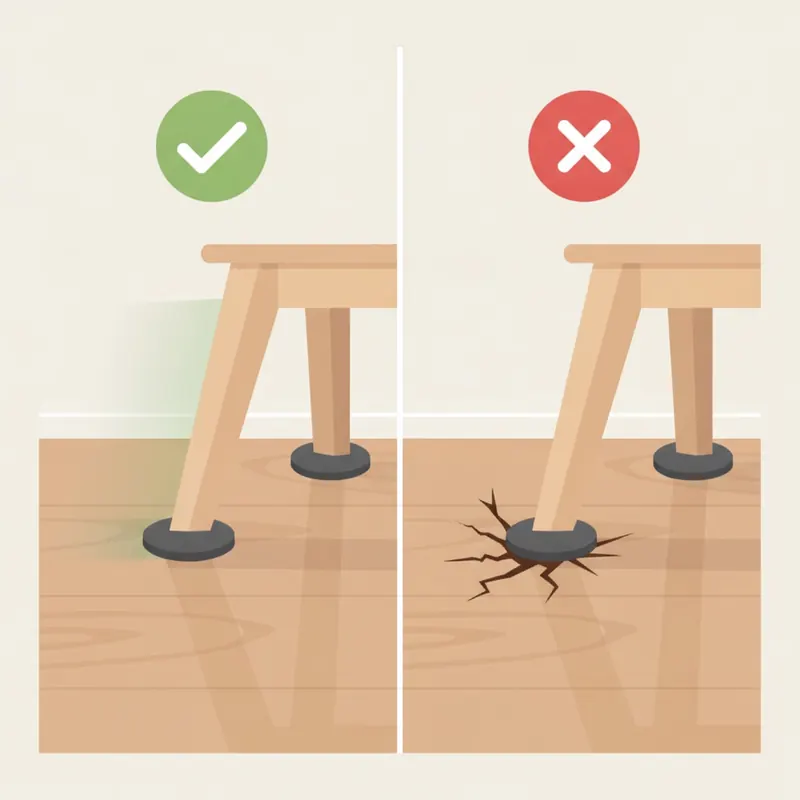
Furniture and rugs are your floor’s best friends—if you choose the right ones.
Furniture Pad Comparison
| Pad Type | Pros | Cons | Best For |
|---|---|---|---|
| Felt Pads | Inexpensive, quiet, slide easily | Wear out, can collect grit | Dining chairs, sofas, tables (on hard surfaces) |
| Silicone/Rubber Caps | Durable, grip well, protect from moisture | Can be harder to slide, may leave marks | Stationary furniture, chair legs on delicate floors |
| Hard Plastic Sliders | Very durable, slide easily on carpet | Noisy, can scratch hard floors if grit gets trapped | Heavy furniture on carpeted surfaces |
When selecting area rugs for high-traffic zones, consider the following:
- Material: Wool is naturally durable and crush-resistant. Synthetics like nylon and polypropylene are excellent for stain resistance and easy cleaning.
- Pile Height: A low, dense pile is better for high-traffic areas as it’s less likely to trip on and easier to clean.
- Backing: Crucially, ensure the rug has a soft, non-abrasive backing or is used with a high-quality rug pad that won’t scratch or discolor the floor underneath.
Buyer’s Guide: Temporary Floor Protection for Construction & Moving
During high-risk events like remodeling, painting, or moving, temporary protection is a must. Using the right product can prevent catastrophic damage.
Protection Product Selector Guide
| Job Type | Hardwood / Laminate | Tile / Concrete | Carpet |
|---|---|---|---|
| Painting / Light Foot Traffic | Rosin Paper, Breathable Film | Plastic Sheeting, Film | Adhesive Carpet Film |
| Moving / Heavy Furniture | Padded Blankets, Paperboard | Paperboard (e.g., Ram Board) | Plywood Sheets, Sliders |
| Heavy Construction / Demolition | Plywood Sheets over Paperboard | Heavy-Duty Paperboard | Plywood Sheets |
What NOT To Do
A critical mistake is using the wrong type of adhesive film on a sensitive floor. As authorities like Surface Shields advise, never use a film designed for carpets on a hardwood or LVP floor[7]. The adhesive can be too aggressive and damage or strip the finish when removed. Always use a product specifically rated for your floor type.
The Practical Repair Guide: Fixing Scratches on Any Floor
Even with the best preventative care, scratches can happen. The key is to address them quickly and correctly. This guide provides a step-by-step process for identifying and repairing common scratches on a variety of floor types.
Step 1: Diagnose the Damage with the Scratch Severity Guide
Before you reach for a repair kit, you must correctly identify the type of scratch you’re dealing with. Using the wrong method can make the damage more noticeable.
- Minor Surface Scuff: Looks like a light, hazy line that is only visible from certain angles. Action: Often repairable with a simple cleaning or a targeted polish. DIY Repair Possible.
- Finish-Level Scratch: A clear, defined line you can feel with your fingernail, but it has not changed color. This means the scratch is only in the top protective finish. Action: Can typically be concealed with repair markers, wax kits, or finish restorers. DIY Repair Possible.
- Deep Wood Gouge: The scratch has penetrated the finish and removed color, exposing the lighter raw material underneath. Action: Requires a filler like wood putty and a color-matched stain. For large areas, Professional Refinishing is Recommended.
Step 2: DIY Repair Methods for Minor to Moderate Scratches
For scuffs and finish-level scratches, these DIY methods can yield excellent results.
Repairing Laminate & LVP Flooring
These floors cannot be sanded, so repairs focus on concealing the damage.
What You’ll Need:
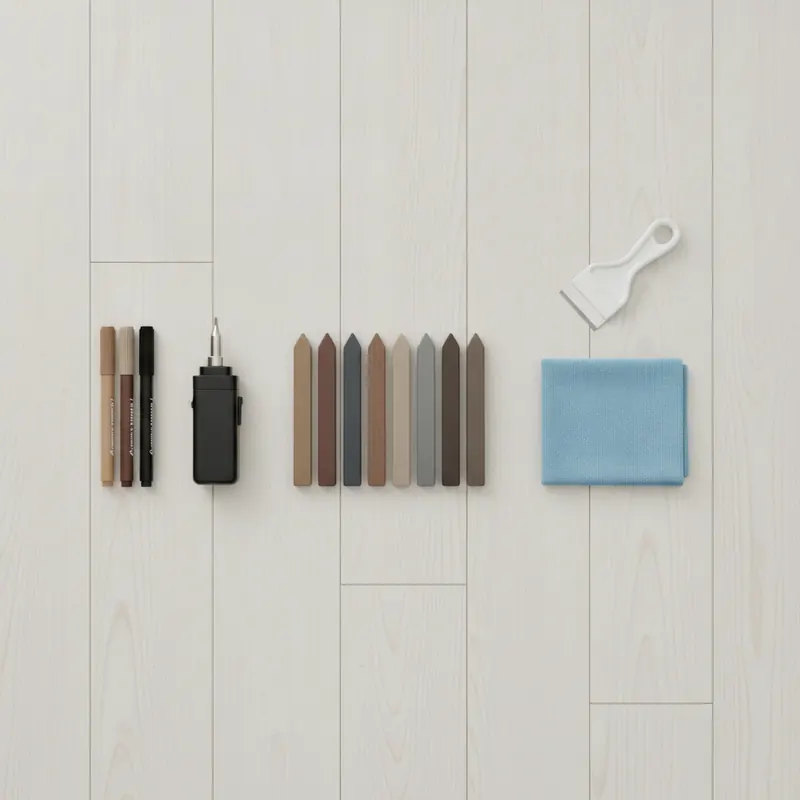
- Laminate/LVP Floor Repair Kit (includes wax sticks and a melting tool)
- Floor Repair Markers
- Clean, lint-free cloths
- Mineral spirits for cleaning
Steps:
- Clean the scratch thoroughly with a cloth and a small amount of mineral spirits to remove any dirt or residue.
- For a very light scratch, start with a repair marker that closely matches the floor’s color. Fill in the scratch and immediately wipe away any excess with a clean cloth.
- For a deeper scratch, use the wax repair kit. Select wax sticks that match the different tones in your floor’s grain.
- Use the melting tool to drip small amounts of the wax into the scratch, blending colors to mimic the natural grain pattern.
- Once filled, use the flat edge of the tool to scrape the repair level with the floor surface. Lightly buff with a soft cloth.
Pro-Tip: To perfectly color-match a repair, always test your marker or wax mixture on a spare plank or in an inconspicuous area like inside a closet.
Fixing Scratches in Hardwood & Engineered Wood
The approach here depends on whether the floor is solid or engineered.
What You’ll Need:
- Stain-filled markers or pens
- Wood filler or putty
- Fine-grit sandpaper (220-grit)
- Clean cloths
- Polyurethane finish pen
Steps:
- For Minor Scratches: A simple trick is to rub the meat of a walnut or pecan into the scratch; the oils can help darken and conceal it. For a more permanent fix, use a stain marker that matches your floor.
- For Deeper Scratches (Solid & Engineered): Choose a wood filler that matches your floor’s color. Apply it to the scratch with a putty knife, slightly overfilling it.
- Let it dry completely, then gently sand it flush with the surrounding surface using fine-grit sandpaper.
- Touch up the color with a stain pen if needed.
- Seal the repair with a small amount of polyurethane applied with a fine artist’s brush or a finish pen.
According to wood care specialists like Portercraft, the key to a good wood repair is to work slowly and build up color in thin layers rather than applying one thick, dark coat[8].
Important Note for Engineered Wood: Most engineered hardwood has a very thin top layer of real wood. It cannot be deeply sanded like solid hardwood. Aggressive sanding will wear through the veneer, permanently ruining the plank. Repairs must be kept localized to the scratch itself.
Step 3: Knowing When to Call a Professional
DIY repairs are great for isolated scratches, but some jobs are best left to the experts. As advised by professional flooring companies like Refloor, you should call a pro if you see any of the following[9]:
- The scratch is very deep, and the wood is splintered.
- The damage extends across multiple planks.
- There is a large area of widespread abrasion and dullness (e.g., the entire path from the door to the kitchen).
- The floor has suffered water damage, causing planks to warp, cup, or buckle.
In these cases, a professional can assess whether the floor needs a “screen and recoat” (a light buffing and new topcoat) or a full sanding and refinishing to restore its original beauty.
Achieving a ‘Forever Floor’: The Secrets to Long-Term Longevity
The most durable flooring materials, when properly installed and maintained, can last a lifetime and beyond. The beautiful terrazzo floors in historic buildings that have withstood a century of foot traffic are a testament to the concept of a “forever floor.” The secret isn’t just in the material, but in a commitment to long-term stewardship. A manufacturer’s warranty is often a good indicator of a product’s expected lifespan, with some high-end products offering 50-year or even lifetime warranties.
The Lifetime Maintenance Calendar
Protecting your investment over decades requires a long-term plan. Use this as a template to create a maintenance schedule for your specific floor.
- Every 3-5 Years (Stone/Tile): Inspect grout and reseal as needed to prevent moisture penetration and staining.
- Every 5-10 Years (Hardwood): Assess the finish in high-traffic areas. Consider a professional “screen and recoat” to refresh the protective top layer before it wears through, which is much less expensive than a full refinish.
- Every 10-20 Years (Solid Hardwood): If the floor has accumulated deep scratches and wear, it can be professionally sanded down to bare wood and completely refinished, making it look brand new.
- Annually (All Floors): Do a thorough inspection under furniture and in corners for any signs of trouble, such as moisture, pests, or unexpected wear.
Common Failure Points of Durable Floors (And How to Avoid Them)
Even the toughest floors have an Achilles’ heel. Knowing these common failure points is key to avoiding them.
- Tile’s Weakness: Grout Failure. The tile itself is incredibly durable, but the grout between them can crack, stain, or degrade, allowing moisture to seep underneath and compromise the substrate. Prevention: Seal your grout after installation and reseal it every few years.
- Hardwood’s Enemy: Water. A major leak or prolonged high humidity can cause hardwood to cup, buckle, and warp, often requiring a complete replacement. Prevention: Clean up spills immediately, use a dehumidifier in damp climates, and ensure proper ventilation.
- Laminate’s Flaw: Edge Swelling. While the top surface of laminate is durable, if water gets into the seams between planks, the fiberboard core can swell and delaminate, causing permanent damage. Prevention: Use only a damp (not wet) mop and wipe up spills from the seams immediately.
Expert’s Corner: The Foundation of Longevity
According to professional installers at flooring retailers like Flooring America, the single most critical factor for a floor’s longevity is often invisible. “A floor is only as good as the subfloor it’s on. If the subfloor isn’t perfectly flat, clean, and dry, even the most expensive flooring will eventually fail. Proper subfloor preparation is the foundation of a ‘forever floor'”[10].
Conclusion: Your Floor, Your Fortress
Your floors are more than just a surface to walk on; they are the foundation of your home or business’s style, comfort, and value. Protecting that investment shouldn’t be a source of constant stress. By embracing the principles of the Durability Playbook, you are now equipped with a complete strategy for a lifetime of performance.
You have learned how to select the right material with data, not just decoration, in mind. You have a framework for proactive protection, turning everyday habits into a powerful defense against wear. You have the confidence to diagnose and repair damage effectively, and you understand the long-term commitment required to create a true “forever floor.” You have transformed from a worried property owner into a knowledgeable steward, ready to ensure your floors remain a source of pride for years to come.
Feeling confident about your floors? Download our free ‘Weekly Floor Protection Checklist’ to start building durable habits today. Or, if you’re ready to choose your ‘forever floor,’ explore our detailed product reviews.
This article may contain affiliate links. All repair advice should be attempted with caution; for significant damage, consult a professional flooring contractor. Product recommendations are based on research and not direct endorsement.
References & Authoritative Sources
- American Society of Concrete Contractors (ASCC). (N.D.). ASCC Sealer Glossary. Retrieved from ascconline.org.
- GoFlooring.com. (N.D.). Best Scratch Resistant Flooring. Retrieved from goflooring.com/learn-about-flooring/best-scratch-resistant-flooring.
- TERRAZZCO. (N.D.). Epoxy Terrazzo Flooring For High Traffic Buildings. Retrieved from terrazzco.com/flooring-for-high-traffic-buildings.
- ASTM International. (N.D.). Standard Test Method for Abrasion Resistance of Organic Coatings by the Taber Abraser. Retrieved from astm.org.
- Stonhard. (N.D.). Abrasion Resistant Flooring. Retrieved from stonhard.com/product-benefits/abrasion-resistant.
- ServiceMaster Clean. (N.D.). How to Maintain Your Flooring in High-Traffic Areas. Retrieved from servicemasterclean.com/clean-blog/floor-cleaning/how-to-maintain-your-flooring-in-high-traffic-ar.
- Surface Shields. (N.D.). Floor Protection. Retrieved from surfaceshields.com/products/floor-protection.
- Portercraft. (N.D.). 3 Ways to Prevent Scratches on Wood Floors. Retrieved from portercraft.com/3-ways-to-prevent-scratches-on-wood-floors.
- Refloor. (N.D.). How to Fix Scratches on Laminate Floors. Retrieved from refloor.com/posts/how-to-fix-scratches-on-laminate-floors.
- Flooring America. (N.D.). The Most Durable Flooring Options. Retrieved from flooringamerica.com/blog/most-durable-flooring-options.