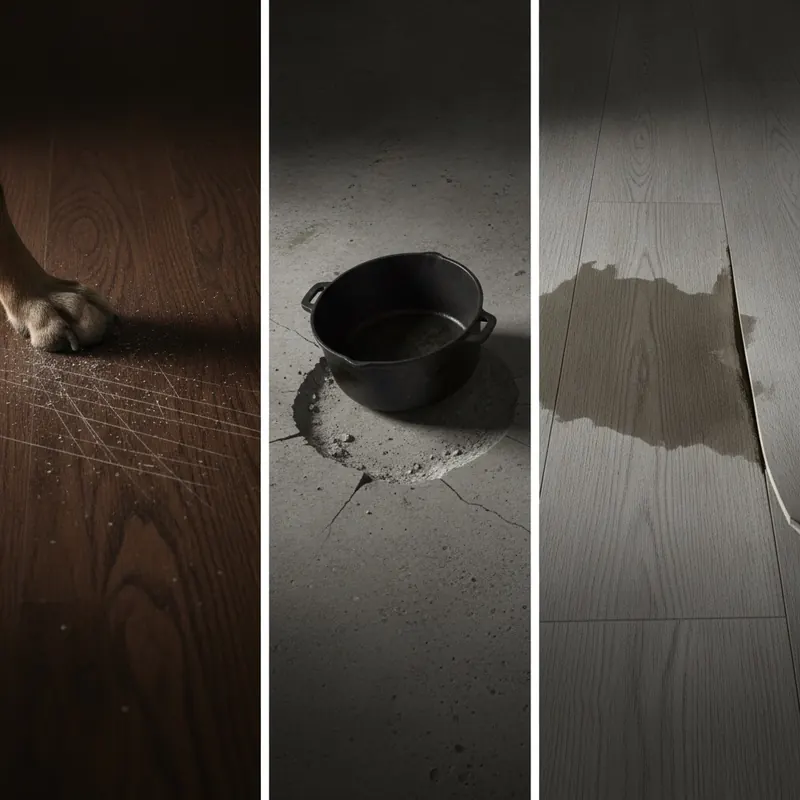
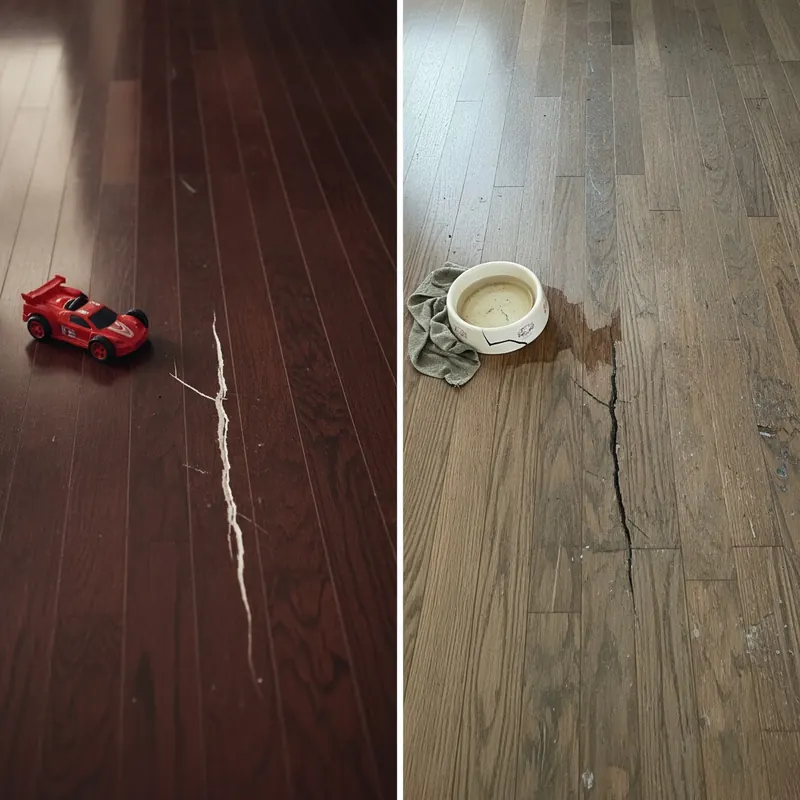
There’s nothing quite like the feeling of a newly installed floor in your home office—it’s clean, fresh, and full of potential. But that feeling can quickly turn to frustration when the first scuff mark appears, followed by a network of scratches and grooves carved out by the relentless rolling of your office chair. Suddenly, your beautiful investment looks worn and tired, a constant reminder of a battle it’s losing.
You find yourself searching for something better, something tougher. You might even wish for “adamantine flooring”—a surface so strong it’s practically indestructible. While this mythical, unbreakable material of legend doesn’t actually exist on store shelves, the quest for it is real. You’re looking for flooring that can truly perform under pressure.
This guide is your answer. We’re not just going to give you a list of “top 5 durable floors.” We’re providing a complete decision-making system. You will learn to decode technical specifications like a pro, choose the perfect material for your high-stress environment, implement a bulletproof protection plan, and even repair minor damage. This is your framework for selecting, protecting, and maintaining a real-world adamantine floor—an investment in your home’s value and your own peace of mind.
- What is ‘Adamantine Flooring’? Debunking the Myth & Finding Real-World Solutions
- Decoding Durability: How to Read Flooring Specs Like a Pro
- The Ultimate Showdown: Best Durable Flooring for a Home Office
- The Office Chair Challenge: Your Complete Floor Protection Plan
- Triage & Treatment: A Field Guide to Repairing Scratches and Scuffs
- The Economics of Durability: Calculating the True Cost of Your Floor
- Your Framework for a Flawless Floor
- References
What is ‘Adamantine Flooring’? Debunking the Myth & Finding Real-World Solutions
The term “adamantine” has roots in mythology, describing a legendary material of impenetrable hardness, often associated with diamond or an unbreakable metal. When people search for “adamantine flooring,” they are looking for the absolute pinnacle of durability—a floor that resists scratches, scuffs, dents, and wear from the heaviest traffic and most punishing use.
While you can’t buy a floor made of a mythical substance, material science has created several real-world options that come remarkably close to this ideal. These high-performance materials, often born from demanding commercial environments, offer the strength and longevity you’re seeking for your home office.
The leading candidates for real-world adamantine flooring include:
- Commercial-Grade Luxury Vinyl Tile (LVT): With ultra-thick wear layers, this isn’t the vinyl of the past. It’s a robust, multi-layered product designed for retail stores and airports.
- High-Solids Epoxy Coatings: Poured directly over concrete, these seamless surfaces are incredibly strong. Professional-grade epoxy flooring can achieve a compressive strength of over 10,000 psi, making it significantly stronger than the standard concrete it covers [1].
- Porcelain Tile: Fired at extremely high temperatures, porcelain is dense, hard, and highly resistant to scratches and water, making it a classic choice for durability.
The key isn’t to find a mythical material but to understand the science behind what makes these real-world options so incredibly tough.
Decoding Durability: How to Read Flooring Specs Like a Pro
To make an informed decision, you need to speak the language of durability. Flooring manufacturers use a set of standardized ratings to measure how well their products stand up to wear and tear. Understanding these specs transforms you from a hopeful buyer into an empowered expert. Think of the following ratings as the “stat sheet” for your floor’s performance.
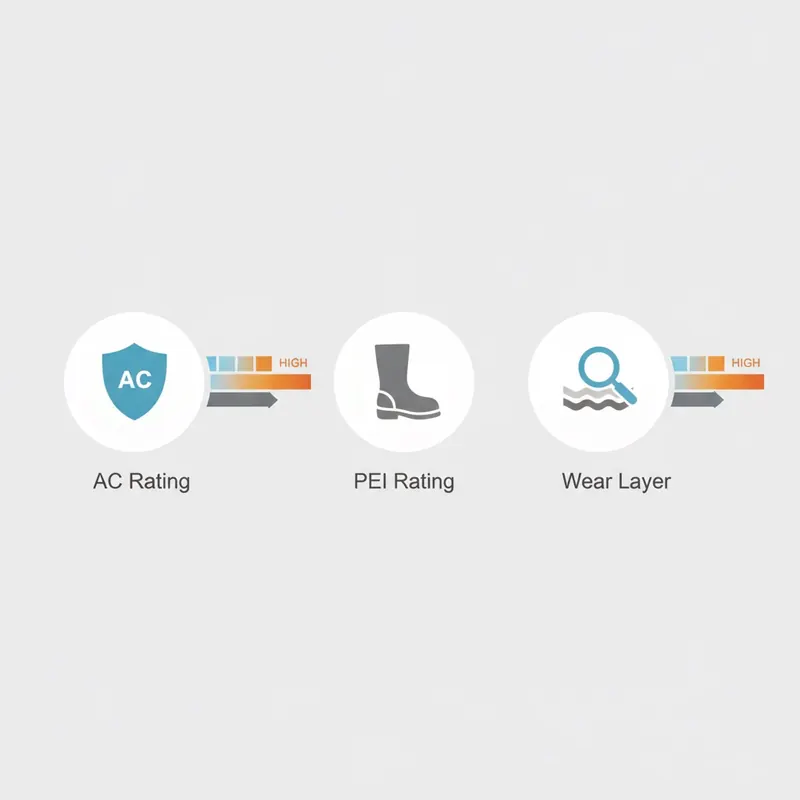
The Durability Matrix: A Quick Comparison
| Rating | What It Measures | Good for Home Office | Best for Home Office |
|---|---|---|---|
| AC Rating | Laminate Scratch/Abrasion Resistance | AC3 | AC4 / AC5 |
| PEI Rating | Tile Wear Resistance | PEI 3 | PEI 4 / PEI 5 |
| Wear Layer | LVT Scratch/Scuff Resistance | 12 mil | 20+ mil |
| Janka | Wood Dent Resistance | 1290+ (Red Oak) | 2000+ |
| Mohs Scale | Tile Scratch Resistance | 6 | 7 / 8 |
AC Rating (Abrasion Class) for Laminate
The AC rating is a scale from AC1 to AC5 that measures a laminate floor’s resistance to abrasion, impact, stains, and burns. For a home office with a rolling chair and steady foot traffic, you should look for a rating of AC3 or higher.
- AC1: Light residential use (e.g., bedrooms).
- AC2: General residential use (e.g., living rooms).
- AC3: Heavy residential use and light commercial use (ideal for home offices).
- AC4: General commercial use (e.g., small offices, boutiques).
- AC5: Heavy commercial use (e.g., department stores, public buildings).
An AC4 or AC5 rated laminate will provide exceptional scratch resistance for even the most active home office.
PEI Rating (Porcelain Enamel Institute) for Tile
The PEI rating, established by the Porcelain Enamel Institute, grades ceramic and porcelain tile on its resistance to wear from foot traffic. The scale runs from 1 to 5. As the Tile Council of North America (TCNA) outlines in its standards, this rating is crucial for matching the tile to its intended use [2].
- PEI 1: Wall use only.
- PEI 2: Light traffic (e.g., residential bathrooms).
- PEI 3: Light to moderate traffic (suitable for all residential applications, including home offices).
- PEI 4: Moderate to heavy traffic (suitable for all residential and some commercial use).
- PEI 5: Heavy to extra-heavy traffic (suitable for all residential and all commercial use).
For a home office, a PEI rating of 3 is good, but a rating of 4 or 5 ensures the surface will withstand years of use without showing wear patterns.
Wear Layer Thickness for Luxury Vinyl (LVT/LVP)
For luxury vinyl flooring, the single most important factor for durability is the wear layer. This is a clear, protective top coat that shields the printed design from scratches, scuffs, and stains. It is measured in mils (one-thousandth of an inch).
A thicker wear layer means a more durable floor.
- 6-12 mil: Standard for residential use. Can be susceptible to damage from office chairs.
- 20+ mil: Considered commercial-grade. This is the “adamantine” level for LVT and is highly recommended for a home office.
According to the Resilient Floor Covering Institute (RFCI), this top layer is what provides the product’s primary defense against traffic [3]. When choosing LVT, prioritize the wear layer thickness above almost any other feature.
Janka Hardness & Mohs Scale for Wood and Tile
Two other scientific scales help quantify durability:
- Janka Hardness Test: This test measures the force required to embed a steel ball into a piece of wood, indicating its resistance to denting. As the National Wood Flooring Association (NWFA) guidelines suggest, harder woods are better for high-traffic areas [4]. For context, Red Oak has a Janka rating of 1290, while the incredibly durable Brazilian Walnut scores a 3684.
- Mohs Scale of Hardness: This scale, used in geology, rates minerals from 1 (softest) to 10 (hardest) based on their ability to scratch one another [10]. Porcelain tile typically scores a 7 or 8 on the Mohs scale, making it harder than steel and extremely resistant to scratching.
The Ultimate Showdown: Best Durable Flooring for a Home Office
Now that you can read the specs, let’s put the top contenders head-to-head. The best choice for your home office depends on balancing durability with aesthetics, comfort, acoustics, and budget.
Winner for All-Around Performance: Luxury Vinyl Tile (LVT/LVP)
For most home offices, high-quality LVT is the undisputed champion. It hits the sweet spot of performance, style, and practicality. The U.S. market for LVT was valued at over $10 billion in 2022, a testament to its soaring popularity for good reason.
- Pros:
- Extreme Durability: When equipped with a 20+ mil wear layer, LVT resists scratches and scuffs from casters with ease. Opt for a product with an SPC (Stone Plastic Composite) rigid core, which is incredibly dense and resistant to dents from dropped objects.
- 100% Waterproof: Spills from coffee or water bottles are a non-issue.
- Design Versatility: Realistically mimics hardwood, stone, or tile.
- Good Acoustics: Quieter underfoot than laminate or tile, reducing echo and noise.
- Cons:
- Can be damaged by very sharp objects.
- Lower quality LVT (with thin wear layers) will not hold up to office chairs.
Top Contender for Scratch Resistance: High-AC Laminate
Modern laminate flooring is a marvel of engineering. Forget the easily-damaged laminates of the past; today’s high-quality options are built for battle.
- Pros:
- Superior Scratch Resistance: Laminate with an AC4 or AC5 rating features a top layer infused with aluminum oxide or ceramic beads, making it one of the most scratch-resistant surfaces you can buy.
- Cost-Effective: Typically more affordable than high-quality LVT or tile.
- Easy to Install: DIY-friendly click-lock systems are common.
- Cons:
- Repairability: While extremely resistant to scratches, if a deep gouge does occur, it’s very difficult to repair seamlessly.
- Acoustics: Can create a hollow, clicking sound when walked on unless a high-quality underlayment is used.
- Water Resistance: While much improved, it’s still not as waterproof as LVT or porcelain.
The Indestructible Choice: Porcelain Tile
If your only metric is raw, brute-force durability, porcelain tile is the king. With a Mohs hardness rating of 7-8 and a top PEI 5 rating, it’s designed to handle the traffic of a shopping mall.
- Pros:
- Virtually Scratch-Proof: Office chair casters, pet claws, and dragged furniture are no match for porcelain.
- Completely Waterproof: Impervious to any kind of spill.
- Easy to Clean: The non-porous surface is incredibly low-maintenance.
- Cons:
- Hardness & Comfort: It’s unforgiving underfoot and can contribute to fatigue if you stand for long periods. Dropped items like a phone will likely break.
- Cold: Can feel cold underfoot, especially in basements.
- Poor Acoustics: Sound bounces off the hard surface, creating echo. Grout lines can also be difficult to keep clean.
The Smart Choice for Comfort & Sound: Low-Pile Carpet Tile
Don’t dismiss carpet, especially modern carpet tiles. For a home office where acoustics and comfort are high priorities, they are an excellent and surprisingly durable solution.
- Pros:
- Superior Acoustics: Absorbs sound better than any hard surface, creating a quieter, more focused work environment.
- Comfort: Warm and soft underfoot.
- Modularity: This is the key advantage. If a tile gets stained or damaged, you can simply lift it up and replace it—a massive benefit in an office chair zone.
- Cons:
- Rolling Resistance: You must choose a low-pile commercial-grade tile (less than 1/2 inch thick) for an office chair to roll smoothly.
- Stain Potential: While highly stain-resistant, it’s not impervious to spills like vinyl or tile. Look for products certified by The Carpet and Rug Institute’s (CRI) Green Label Plus program, which ensures low VOCs and high performance [5].
The Office Chair Challenge: Your Complete Floor Protection Plan
The number one enemy of your home office floor is your chair. A 200-pound person sitting in a chair with standard hard plastic casters can exert a pressure of over 25,000 psi on the floor at the tiny contact points of the wheels. This focused pressure is what causes scratches, grooves, and finish wear.
Fortunately, protecting your floor is simple. The solution involves either adding a barrier or, even better, changing the point of contact itself.
The Caster & Floor Compatibility Chart
| If Your Floor Is… | Your Chair Wheels Should Be… |
|---|---|
| Hardwood, LVT, Laminate, Tile | Soft Polyurethane / Rubber (Rollerblade Style) |
| Low-Pile Carpet | Hard Nylon (Standard Wheels) |
| High-Pile Carpet | Hard Nylon (Standard Wheels) + A Chair Mat |
Solution 1: Choosing the Right Chair Mat
A chair mat is a classic solution that works by distributing the chair’s weight over a larger area. But choosing the right one is critical.
- For Hard Floors: Use a mat with a smooth back that stays in place without damaging the floor’s finish.
- For Carpet: Use a mat with small cleats on the back that grip the carpet fibers and prevent it from sliding.
- Material Matters: Opt for a polycarbonate mat over a cheaper PVC vinyl one. Polycarbonate is far more durable, guaranteed not to crack or discolor, and provides a smoother rolling surface.
Solution 2 (The Pro Tip): Change Your Chair’s Caster Wheels
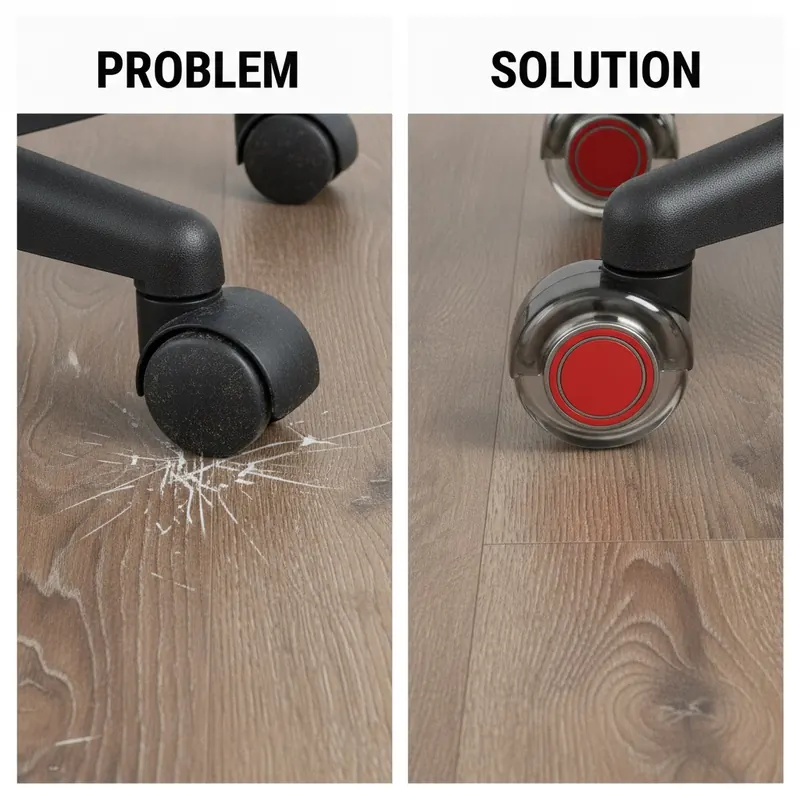
This is the most effective, elegant, and often overlooked solution. Most office chairs come standard with hard nylon dual-wheel casters. These are designed only for carpet. Using them on a hard surface is like driving a car with metal rims instead of rubber tires—damage is inevitable.
The fix is simple and inexpensive: swap them for floor-safe, soft-wheel casters.
These “rollerblade style” wheels are made of soft polyurethane that is gentle on hard surfaces. They glide silently, won’t scratch or mark your floor, and often provide a smoother rolling experience. A set typically costs between $25-$40 and can be installed in under five minutes with no tools.
Critically, using the wrong casters can void your flooring’s warranty. Always check the manufacturer’s documentation. Adhering to standards set by organizations like the Business and Institutional Furniture Manufacturers Association (BIFMA) ensures both safety and performance [6].
Triage & Treatment: A Field Guide to Repairing Scratches and Scuffs
Even with the best protection, minor damage can happen. The key to a successful repair is correctly diagnosing the problem first.
Myth Busting: Common DIY “Fixes” to Avoid
- Toothpaste: It’s an abrasive that can dull your floor’s finish, making the area look worse.
- Magic Erasers: These are micro-abrasives that can strip the finish off polyurethane-coated floors.
- Cooking Oil: Applying olive oil to a scratch on a hardwood floor will not fix it; it will only attract dirt and potentially stain the wood.
First, Diagnose the Damage: Is It a Scuff or a Scratch?
People often use these terms interchangeably, but they are completely different problems with different solutions.
- A Scuff: This is a material transfer onto your floor. It’s usually a rubber mark from a shoe or a paint transfer from a piece of furniture. A scuff sits on top of the finish and can typically be cleaned off. A simple trick for vinyl or polyurethane floors is to gently rub the mark with a clean tennis ball.
- A Scratch: This is material removal from your floor. It’s a physical groove or gouge that has cut into the wear layer or the material itself. A scratch cannot be cleaned off; it must be filled or refinished.
Step-by-Step Repair Guides by Floor Type
Always test any repair product in an inconspicuous area first. When in doubt, consult a professional.
Fixing Scratches on Laminate and LVT
Since you cannot sand and refinish laminate or LVT, the goal is to fill and conceal the scratch.
- What You’ll Need: A floor repair kit with color-matched wax pencils or filler putty.
- Difficulty: Easy DIY.
- Steps:
- Clean the scratch thoroughly to remove any dirt or debris.
- Select the wax pencil or putty that most closely matches the floor color. You can often blend colors for a better match.
- Rub the pencil or press the putty firmly into the scratch until it is filled.
- Use a plastic scraper or the edge of a credit card to remove any excess material, leaving the surface smooth.
- Buff the area with a soft, clean cloth.
For the best results, check for repair kits recommended by your flooring’s manufacturer, such as Pergo or Shaw.
Buffing Scratches in Hardwood Floor Finishes
Most light scratches on modern hardwood floors are only in the top polyurethane finish, not in the wood itself.
- What You’ll Need: A microfiber cloth and a high-quality finish restorer or polish.
- Difficulty: Easy to Intermediate DIY.
- Steps for Minor Scratches:
- Clean the area well.
- Apply a small amount of a finish restorer, like those made by leading floor care authorities such as Bona [7], to a cloth.
- Gently rub the product along the grain of the wood over the scratch.
- Buff away any excess. This can often hide the white mark of a finish scratch and restore the sheen.
- For more widespread wear, a professional screen-and-recoat may be necessary.
The Economics of Durability: Calculating the True Cost of Your Floor
A durable floor is a smart financial investment, but the initial price tag is only part of the story. To understand the true value, you need to consider the Total Cost of Ownership (TCO).
TCO = (Initial Cost + Installation Cost) + (Lifetime Maintenance Costs) – (Lifespan)
A cheaper floor that needs to be replaced in five years is far more expensive than a premium floor that lasts for twenty. Research shows that maintenance can account for up to 60% of a floor’s total cost over its lifespan. A highly durable, low-maintenance floor like commercial-grade LVT or porcelain tile has a higher upfront cost but a much lower TCO over time.
Furthermore, as the World Floor Covering Association (WFCA) frequently notes, proper installation is the single most important factor in a floor’s longevity [8]. Cutting corners on installation to save money upfront will almost certainly lead to premature failure and higher costs down the road.
Your Framework for a Flawless Floor
Choosing the right flooring for your home office doesn’t have to be a gamble. By moving beyond simple aesthetics and embracing a framework of durability, you can make a choice that is beautiful, functional, and built to last.
Let’s recap the key principles of the Durability Framework:
- Decode the Specs: Learn to read AC ratings, PEI ratings, and wear layer thickness to choose a product with the proven strength to handle your workspace.
- Select for the Use: Match the material—LVT, laminate, tile, or carpet tile—to your specific priorities of durability, acoustics, and comfort.
- Protect Proactively: Don’t wait for damage to happen. The simple, inexpensive act of swapping your chair’s casters is the single best thing you can do to protect your investment.
- Repair with Precision: Know the difference between a scuff and a scratch, and use the correct, material-safe methods to keep your floor looking its best.
By following this guide, you’ve gained the expertise to select a floor that truly lives up to the “adamantine” ideal—one that will perform flawlessly for years to come, allowing you to focus on your work, not on your floor.
What durable flooring solution are you considering for your home office? Share your questions and experiences in the comments below!
This article provides general advice. Always consult your flooring manufacturer’s warranty and care instructions before attempting repairs. For new installations, consider consulting a professional flooring installer.
References
- Data derived from technical data sheets of leading industrial epoxy coating manufacturers. Compressive strength is commonly tested using ASTM D695 standards.
- Tile Council of North America (TCNA). (2026). TCNA Handbook for Ceramic, Glass, and Stone Tile Installation. TCNA.
- Resilient Floor Covering Institute (RFCI). (N.D.). Resources for Consumers. Retrieved from rfci.com.
- National Wood Flooring Association (NWFA). (2026). NWFA Wood Species Guide. Retrieved from nwfa.org.
- The Carpet and Rug Institute (CRI). (N.D.). Green Label Plus. Retrieved from carpet-rug.org.
- Business and Institutional Furniture Manufacturers Association (BIFMA). (N.D.). BIFMA Standards Overview. Retrieved from bifma.org.
- Bona. (N.D.). Hardwood Floor Care Guides. Retrieved from bona.com.
- World Floor Covering Association (WFCA). (N.D.). Consumer Flooring Guide. Retrieved from wfca.org.
- ASTM International. (N.D.). ASTM F1914 – 15 Standard Test Method for Short-Term Indentation and Residual Indentation of Resilient Floor Covering. Retrieved from astm.org.
- Mohs, F. (1825). Treatise on Mineralogy, Or, The Natural History of the Mineral Kingdom. A. Constable & Company. (Historical basis for the Mohs scale).