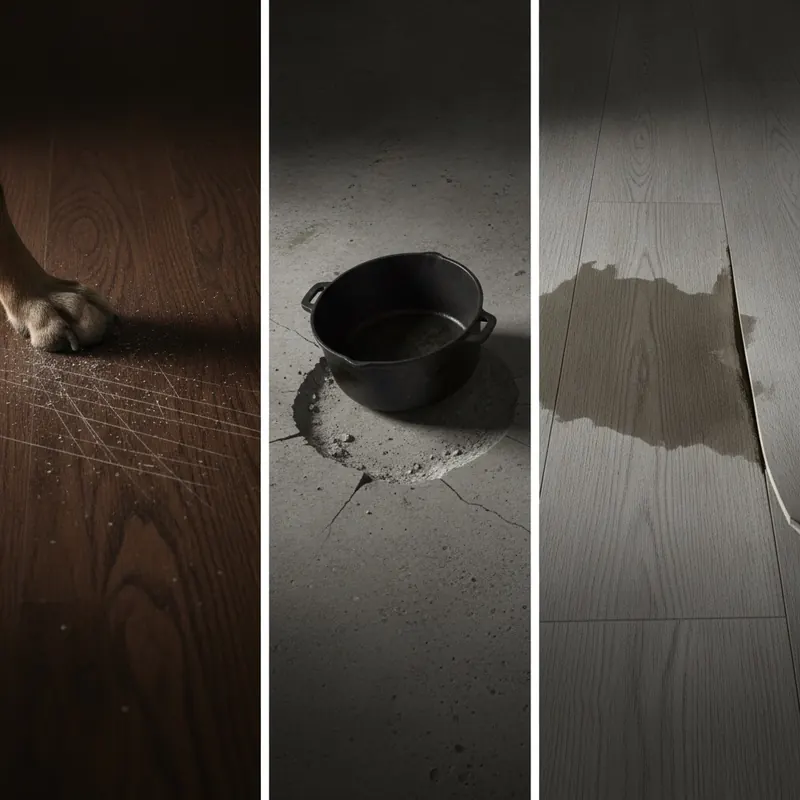
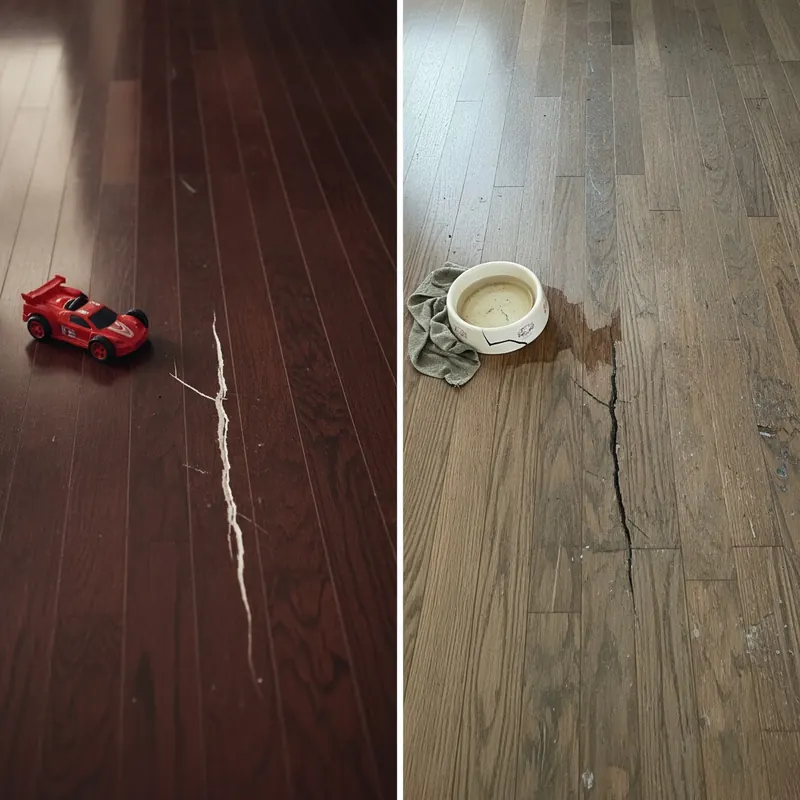
Are you tired of looking at floors marred by scratches from pet claws, dented from dropped toys, and showing worn-out paths in your busiest hallways? The frustration of investing in a beautiful new floor, only to see it degrade under the pressures of daily life, is a feeling homeowners know all too well. You start searching for something better, something that promises ultimate durability—something “adamantine.”
While a specific product named “Adamantine Flooring” might be what you’re looking for, the term truly represents a quest for the pinnacle of durability. It’s the search for a floor that won’t just look good for a year, but will stand up to the tests of your life for decades. This article is your definitive playbook for that quest. We’re moving beyond generic lists to provide a data-driven framework for choosing a floor that lasts a lifetime. With our “Flooring Forensics” diagnostic charts, a true lifetime cost analysis, and a durability scorecard, you will be empowered to make a confident, long-term investment in your home, no matter what life throws at it.
- What is Adamantine Flooring? Uncovering the Truth Behind Ultra-Durable Floors
- Decoding Durability: How to Read the Ratings That Actually Matter
- The Durability Showdown: Ranking Floors for Homes with Pets, Kids & High Traffic
- The Whole-Home Flooring Strategy: Creating a Seamless Look That Lasts
- Flooring Forensics: A Diagnostic Guide to Why Floors Fail
- Beyond the Price Tag: Calculating the True Lifetime Cost of Your Floor
- Conclusion
- References & Authoritative Sources
What is Adamantine Flooring? Uncovering the Truth Behind Ultra-Durable Floors
From the perspective of a materials specialist, “Adamantine Flooring” isn’t a single, universally defined product but rather a category of high-performance flooring systems designed for extreme resilience. The term itself evokes the mythical, unbreakable “adamant,” and products marketed this way aim to deliver on that promise. Typically, they are multi-layer, resinous systems, often built upon an epoxy or polyaspartic base, infused with incredibly hard aggregates like quartz, aluminum oxide, or other proprietary minerals.
Imagine looking at a cross-section under a microscope. You would see a primer that bites into the concrete subfloor, a thick body coat saturated with these durable minerals, and one or more tough, chemical-resistant top coats that provide the final shield against scratches, impacts, and stains. This construction makes it exceptionally suitable for demanding environments like garages, workshops, and commercial spaces, but increasingly, homeowners are seeking this level of performance for high-traffic areas like mudrooms, kitchens, and basements.

Pros:
- Extreme Hardness: Highly resistant to scratches, abrasion, and impact.
- Seamless & Non-Porous: Creates a monolithic surface that is waterproof and exceptionally easy to clean, with no grout lines to stain.
- Chemical Resistance: Unaffected by oil, grease, road salts, and most household chemicals.
Cons:
- High Cost: Professional installation is required, and material costs are significantly higher than most residential flooring.
- Hardness & Comfort: The surface is unyielding underfoot, similar to concrete, which can be fatiguing.
- Complex Installation: Requires meticulous subfloor preparation, including diamond grinding, making it a job for certified professionals only.
Here is how Adamantine-style flooring compares to other ultra-durable options:
| Feature | Adamantine Flooring System | Polished Concrete | Epoxy Coating | Terrazzo |
|---|---|---|---|---|
| Composition | Resin base with hard mineral aggregates | Densified and polished concrete slab | Two-part resin applied as a thin coating | Cement or epoxy matrix with marble/granite chips |
| Typical Thickness | 3-5 mm | N/A (The slab itself) | < 1 mm | 6-15 mm |
| Impact Resistance | Excellent | Good (can chip/spall) | Fair to Good | Excellent |
| Scratch Resistance | Superior | Good | Good | Excellent |
| Installation Cost | Very High | High | Moderate | Very High |
| Best For… | Garages, workshops, commercial spaces, high-tech residential | Modernist homes, lofts, retail spaces | Garages, basements (residential grade) | Lobbies, airports, institutions, luxury homes |
Decoding Durability: How to Read the Ratings That Actually Matter

To make an informed choice, you need to speak the language of durability. Manufacturers use standardized rating systems to quantify how a floor will perform under stress. Understanding these key metrics will empower you to see past marketing claims and choose a product with the right specifications for your needs. These standards are established by independent bodies like ASTM International to ensure consistent and reliable testing[1].
AC Rating: The Scratch Resistance Test for Laminate
The Abrasion Class (AC) rating is a crucial metric for laminate and some new vinyl flooring. It measures the floor’s resistance to abrasion, scratches, and stains on a scale from 1 to 5. The higher the number, the more durable the floor. According to the Resilient Floor Covering Institute (RFCI), choosing the right AC rating is vital for longevity[2].
- AC1 (Moderate Residential): Suitable for low-traffic areas like bedrooms or closets.
- AC2 (General Residential): Designed for medium-traffic spaces like living rooms or dining rooms.
- AC3 (Heavy Residential/Moderate Commercial): An excellent choice for all residential areas, including high-traffic hallways and kitchens.
- AC4 (General Commercial): Built to withstand the traffic of small offices, cafes, or boutiques.
- AC5 (Heavy Commercial): The toughest rating, designed for department stores, public buildings, and high-traffic commercial environments.
| AC Rating | Traffic Level | Best For… |
|---|---|---|
| AC1 | Moderate Residential | Bedrooms, closets |
| AC2 | General Residential | Living rooms, dining rooms |
| AC3 | Heavy Residential | All home areas, including kitchens & hallways |
| AC4 | General Commercial | Small offices, boutiques |
| AC5 | Heavy Commercial | Department stores, public buildings |
PEI Rating: Grading Wear Resistance for Tile
For ceramic and porcelain tile, the key durability metric is the Porcelain Enamel Institute (PEI) rating. This scale, promoted by the Tile Council of North America (TCNA), grades the hardness and durability of the tile’s glaze—the part you see and walk on[3]. It specifically measures the visible wear on the surface.
- PEI 0: No foot traffic. For wall tiles only.
- PEI 1: Very light traffic. Suitable for residential bathroom walls.
- PEI 2: Light traffic. Best for residential bathrooms or bedrooms where soft footwear is used.
- PEI 3: Light to moderate traffic. A good choice for most residential floors.
- PEI 4: Moderate to heavy traffic. Excellent for all residential applications, including entryways and kitchens, as well as light commercial spaces.
- PEI 5: Heavy to extra-heavy traffic. The most durable option, suitable for any residential or heavy commercial use.
Janka Hardness Scale: The Dent Resistance Test for Wood
The Janka hardness test measures a wood floor’s resistance to denting and wear[4]. It involves pressing a 0.444-inch steel ball into the wood until it is halfway embedded, and the force required to do so becomes its rating. It’s crucial to understand this measures dent resistance, not scratch resistance. A floor’s scratch resistance comes from its protective finish. Modern finishes containing aluminum oxide provide a tough top layer that resists surface scuffs, but a heavy impact can still dent the wood underneath. The National Wood Flooring Association (NWFA) emphasizes that both the wood’s inherent hardness and its finish contribute to overall durability[5].
Here are the Janka ratings for some common wood species:
| Wood Species | Janka Hardness Rating (lbf) |
|---|---|
| Douglas Fir | 660 |
| Red Oak (Industry Benchmark) | 1290 |
| White Oak | 1360 |
| Hard Maple | 1450 |
| Hickory | 1820 |
| Brazilian Cherry (Jatoba) | 2350 |
| Strand-Woven Bamboo | 3000+ |
Wear Layer Thickness: The Key to LVP & Vinyl Durability
For Luxury Vinyl Plank (LVP), Luxury Vinyl Tile (LVT), and other resilient flooring, the single most important factor for durability is the wear layer. This is a clear, protective top coating, measured in mils (one-thousandth of an inch). It’s the barrier that stands between foot traffic, furniture legs, and pet claws and the beautiful printed design layer of the plank.
“For a busy family home with kids and pets, I never recommend anything less than a 20 mil wear layer,” advises one certified flooring installer. “It’s the difference between a floor that looks great for three years and one that looks great for fifteen.”
According to RFCI standards, a thicker wear layer provides significantly more protection[2].
- 6-10 mil: Entry-level, suitable for very low-traffic areas like guest rooms.
- 12 mil: A good minimum for general residential use in moderate traffic areas.
- 20 mil or higher: The recommended standard for homes with pets, kids, and high-traffic areas. This is often considered “commercial grade” and offers exceptional durability.
To visualize the difference, a 20 mil wear layer is about the thickness of a standard credit card—a substantial shield for your floor.
The Durability Showdown: Ranking Floors for Homes with Pets, Kids & High Traffic
Now that you can decode the specs, let’s see how the most popular durable materials stack up against the real-world challenges of a busy household. We’ve created a “Pet & Kid Scorecard” to evaluate each option.
A key consideration for any home with children is indoor air quality. When shopping, look for products with a FloorScore certification, which is verified by organizations like the Greenguard Environmental Institute and ensures that the flooring meets strict standards for low emissions of volatile organic compounds (VOCs)[6]. For pet owners, traction is also a concern. The American Kennel Club (AKC) suggests that floors with some texture are better for a dog’s joint health than very slick, smooth surfaces[7].

Winner for Versatility: Luxury Vinyl Plank (LVP/SPC)
LVP, particularly with a Stone Plastic Composite (SPC) core, is often the top contender for active families. Its multi-layer construction is designed for performance. SPC cores are denser and more rigid than Wood Plastic Composite (WPC) cores, making them far more resistant to dents from dropped objects.
- Pet & Kid Scorecard:
- Scratch Resistance: Excellent (with a 20 mil+ wear layer)
- Water Resistance: Superior (100% waterproof)
- Stain Resistance: Excellent
- Comfort: Good (especially WPC core)
- Repairability: Excellent (single planks can be replaced)
One of LVP’s greatest strengths is its repairability. A deep gouge or a serious stain doesn’t mean replacing the entire floor. A skilled installer can heat the damaged plank, remove it, and click a new one into place, making the repair virtually invisible.
The Indestructible Choice: Porcelain & Ceramic Tile
When it comes to sheer surface hardness, nothing beats porcelain tile. With a PEI rating of 4 or 5, it is virtually scratch-proof and completely waterproof. According to sources like the Natural Stone Institute, hard surface floors like tile and stone have the potential to last for 50 years or even centuries when installed correctly[8].
- Pet & Kid Scorecard:
- Scratch Resistance: Superior
- Water Resistance: Superior (100% waterproof)
- Stain Resistance: Excellent (tile body), Good (grout)
- Comfort: Poor (very hard and cold)
- Repairability: Fair (replacing a single tile is a difficult, dusty job)
A common weak point for tile has always been grout, which can stain or crack. However, modern epoxy and urethane grouts are highly stain-resistant and flexible, solving one of tile’s biggest historical drawbacks.
The Timeless Classic: Modern Hardwood & Engineered Wood
The warmth and beauty of hardwood are undeniable, and modern advancements have made it a viable option for busy homes. High-performance polyurethane finishes with aluminum oxide additives offer excellent scratch resistance. The ultimate advantage of solid hardwood is its longevity through refinishing. The NWFA states that a standard 3/4-inch solid hardwood floor can be sanded and refinished 5-7 times, giving it a potential lifespan of over 100 years[5]. Engineered hardwood, with a thick top veneer, can typically be refinished 1-3 times.
- Pet & Kid Scorecard:
- Scratch Resistance: Good (with a high-quality finish)
- Water Resistance: Poor (vulnerable to spills and moisture)
- Stain Resistance: Good (if spills are cleaned quickly)
- Comfort: Excellent
- Repairability: Good (can be refinished to look brand new)
Pro Tip: To protect hardwood floors, use felt pads on all furniture legs, place mats at entryways, and keep pets’ nails trimmed regularly.
The Budget Champion: High-Pressure Laminate
Modern laminate flooring is a far cry from the products of the past. With a high-density fiberboard (HDF) core and a top layer that can achieve an AC4 or AC5 rating, it is exceptionally resistant to scratches and fading. While it offers great durability for its price, its core weakness remains moisture. Even products marketed as “water-resistant” can be damaged by standing water seeping into the seams, causing the core to swell and the edges of the planks to peak.
- Pet & Kid Scorecard:
- Scratch Resistance: Excellent (with a high AC rating)
- Water Resistance: Fair to Poor (highly susceptible to core damage from moisture)
- Stain Resistance: Excellent
- Comfort: Good
- Repairability: Poor (damaged planks are difficult to replace; often requires disassembling a large section of the floor)
The Whole-Home Flooring Strategy: Creating a Seamless Look That Lasts
Using a single flooring material throughout the house is a popular design trend that creates a cohesive, expansive feel. However, it requires careful planning to ensure the chosen material can handle the diverse demands of every room, from a wet bathroom to a cozy bedroom.
“The key to a successful whole-home flooring strategy is choosing a material that is both a chameleon and a workhorse,” says an interior designer accredited by the American Society of Interior Designers (ASID)[9]. “LVP with an SPC core is often my top recommendation because it’s waterproof enough for bathrooms and kitchens, durable enough for hallways, and available in countless styles that can suit any room’s decor.”
Executing this strategy requires technical precision. According to the Certified Flooring Installers Association (CFI), long, continuous runs of floating floors (like LVP and laminate) require carefully placed expansion gaps, often hidden under transition strips or baseboards, to allow the floor to expand and contract with temperature changes[10]. Without them, the floor can buckle or separate.
Before embarking on a whole-home project, consider this checklist:
- Is the material 100% waterproof for use in kitchens, bathrooms, and laundry rooms?
- Does it have a high enough durability rating (AC3+/PEI 3+/20 mil wear layer) for your busiest areas?
- Is the color and pattern versatile enough to complement the decor in every room?
- Have you discussed the need for expansion gaps and transitions with your certified installer?
Flooring Forensics: A Diagnostic Guide to Why Floors Fail
Sometimes, even a floor that seems durable fails prematurely. Understanding the cause is the first step to prevention. This diagnostic guide helps you identify the culprit behind common flooring problems. A professional flooring inspector from a body like the Institute of Inspection, Cleaning and Restoration Certification (IICRC) will tell you that the problem is rarely the product itself, but almost always related to installation or maintenance[11].
Flooring Forensics Diagnostic Chart
| Symptom | Likely Cause(s) | Prevention / Solution |
|---|---|---|
| Peaking or Buckling Seams | Insufficient expansion gap; exposure to excessive moisture. | Ensure installer leaves a 1/4″ to 3/8″ gap around the perimeter. Control humidity. |
| Gaps Between Planks | Improper installation (planks not fully engaged); subfloor movement. | Use a tapping block during installation. Ensure subfloor is stable and level. |
| Dull, Hazy Finish | Using the wrong cleaner (e.g., wax-based products, vinegar); soap residue buildup. | Use only pH-neutral cleaners recommended by the manufacturer. Rinse with clean water. |
| Visible Wear Pattern | Low-quality product (thin wear layer/AC rating); abrasive dirt being ground in. | Choose a floor rated for your traffic level. Use walk-off mats and clean frequently. |
| Scratches & Scuffs | Furniture being dragged; pet claws; grit on shoes. | Use felt pads on all furniture. Keep pet nails trimmed. Enforce a “no shoes” policy. |
The #1 Culprit: Improper Installation & Subfloor Prep

You can buy the most expensive, durable flooring in the world, but if it’s installed over an uneven, unstable, or dirty subfloor, it is destined to fail. The CFI stresses that proper subfloor preparation is the most critical step of any flooring project[10]. This includes ensuring the subfloor is:
- Flat: Within a tolerance of 3/16 of an inch over a 10-foot span.
- Clean: Free of all dust, debris, paint, and old adhesive.
- Dry: Within the manufacturer’s specified moisture limits.
When hiring an installer, ask these questions:
- Are you CFI certified?
- How will you assess and prepare my subfloor?
- What is your method for ensuring the subfloor is perfectly flat and clean?
- Will you follow the specific installation guidelines provided by the flooring manufacturer?
The Slow Killer: Incorrect Maintenance Routines
Using the wrong cleaning products is a surefire way to ruin your floor’s finish and void its warranty. A steam mop can force moisture into the seams of laminate or LVP, causing irreversible damage. Oily soaps can leave a residue that attracts dirt, making the floor look perpetually dull. Always read the manufacturer’s care guide and use only the recommended products. A simple routine of regular sweeping or vacuuming (with the beater bar off) and occasional damp mopping with a pH-neutral cleaner is all most durable floors need.
Beyond the Price Tag: Calculating the True Lifetime Cost of Your Floor
The cheapest floor is rarely the best value. A truly “adamantine” investment is one that considers the total cost of ownership over decades. This includes the initial purchase, installation, maintenance, and potential refinishing or replacement costs.
A real estate appraiser notes, “Solid hardwood flooring consistently offers one of the highest returns on investment because buyers perceive it as a premium, lifetime feature. While high-quality LVP is gaining acceptance, the ability to sand and refinish hardwood gives it a unique long-term value proposition.”
Let’s compare the approximate 50-year lifetime cost of several options for a 500 sq. ft. area:
| Flooring Type | Initial Cost (Installed) | Refinishing / Replacement Cycles (50 Yrs) | Total Lifetime Cost (Approx.) |
|---|---|---|---|
| Builder-Grade Laminate | $2,500 | Replace every 10 years (x4) | $12,500 |
| High-Quality LVP (20 mil) | $4,500 | Replace every 25 years (x1) | $9,000 |
| Porcelain Tile | $7,000 | 0 (potential grout refresh) | $7,500 |
| Solid Hardwood | $8,000 | Refinish every 15 years (x2) | $11,000 |
Finally, always analyze the warranty. A “lifetime” warranty often refers to the structural integrity of the product and protects against manufacturing defects. It almost never covers wear and tear from normal use, scratches, or damage from improper installation or maintenance. Read the fine print to understand exactly what is and isn’t covered.
Conclusion
Choosing a durable floor is not about finding a single, mythical “best” material. It’s about becoming an informed consumer who can use a data-driven framework to match the right product and specifications to the unique demands of your home and lifestyle. By learning to decode durability ratings like AC and PEI, understanding the critical importance of the wear layer, and evaluating materials based on your real-world needs—be it pets, kids, or heavy foot traffic—you can move beyond the marketing hype. Remember that the most durable material in the world can fail if not installed correctly and maintained properly. The path to a forever floor is paved with knowledge, proper installation, and diligent care.
Feeling confident to choose your forever floor? Download our free ‘Durable Flooring Shopping Checklist’ to take with you to the store and ensure you ask the right questions and check for the right specs.
This article provides general guidance. Always consult with a certified flooring professional for advice specific to your home’s conditions. This post may contain affiliate links.
References & Authoritative Sources
- ASTM International. (n.d.). ASTM International – Standards Worldwide. Retrieved from https://www.astm.org/
- Resilient Floor Covering Institute. (n.d.). RFCI. Retrieved from https://rfci.com/
- Tile Council of North America. (n.d.). TCNA. Retrieved from https://www.tcnatile.com/
- Janka Hardness Test. (n.d.). Standard test methods for small clear specimens of timber. As described in ASTM D143.
- National Wood Flooring Association. (n.d.). NWFA. Retrieved from https://www.nwfa.org/
- Greenguard Environmental Institute. (n.d.). UL GREENGUARD Certification Program. Retrieved from https://www.ul.com/services/greenguard-certification
- American Kennel Club. (n.d.). AKC. Retrieved from https://www.akc.org/
- Natural Stone Institute. (n.d.). Natural Stone Institute. Retrieved from https://www.naturalstoneinstitute.org/
- American Society of Interior Designers. (n.d.). ASID. Retrieved from https://www.asid.org/
- Certified Flooring Installers Association. (n.d.). CFI. Retrieved from https://www.cfiinstallers.org/
- Institute of Inspection, Cleaning and Restoration Certification. (n.d.). IICRC. Retrieved from https://iicrc.org/