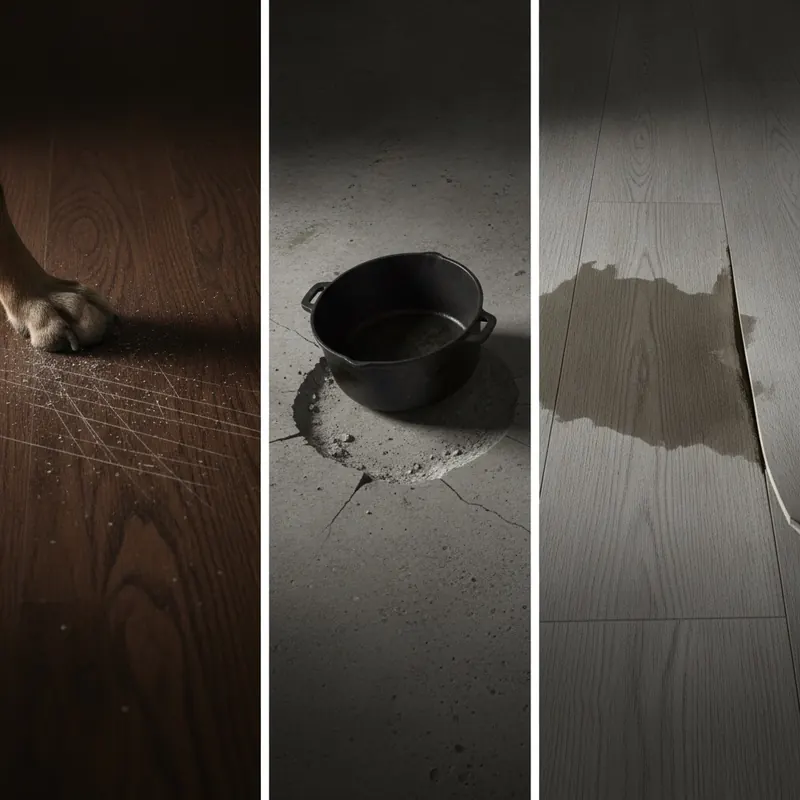
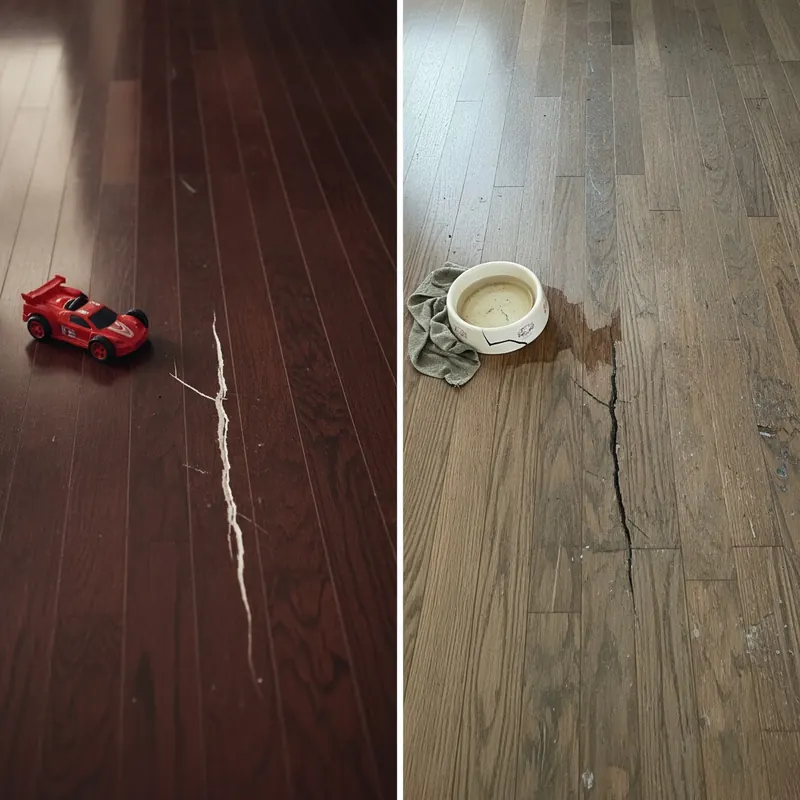
There’s a unique frustration that comes with watching a beautiful, new floor slowly surrender to the realities of daily life. The first deep scratch from a dragged chair, the dulling pathway carved out by foot traffic, the scuffs and stains that mark a home well-loved but also well-worn. You invested time and money into a floor that promised durability, only to find it falling short. The market doesn’t help, bombarding you with confusing terms like “scratch-proof,” “commercial-grade,” and a dizzying array of technical ratings.
This guide is your antidote to that confusion. We are moving beyond the marketing hype to provide the definitive, science-backed resource for choosing a floor that truly lasts. We will debunk the myths, decode the complex durability ratings into plain English, and give you a clear framework for making a confident, long-term investment.
Whether you’re battling pet claws, toddler toy drops, or the constant wear of a busy entryway, this article will empower you to select the perfect wear-resistant flooring for your specific needs. We will explore the science of strength, compare the top material contenders head-to-head, and provide actionable advice for maintaining your floor’s beauty for years to come.
- What is ‘Adamantine Flooring’? Debunking the Myth of the ‘Indestructible’ Floor
- The Science of Durability: How to Read a Floor’s True Strength
- The Ultimate Material Showdown: Comparing the Top Durable Flooring Options
- Right Floor, Right Life: The Best Durable Flooring for Your High-Stress Home
- Maximizing Your Investment: A Guide to Maintenance, Repair, and Lifetime Value
- Our Verdict: The Best Durable Flooring for Most Homes in 2026
- References & Authoritative Sources
What is ‘Adamantine Flooring’? Debunking the Myth of the ‘Indestructible’ Floor
You may have encountered the term “Adamantine flooring” in your search for the ultimate durable surface. It evokes images of something unbreakable, diamond-hard, and completely immune to wear. But is it a real product you can buy?
In most cases, “Adamantine flooring” is a powerful marketing term used to describe a product’s supreme durability rather than a specific, standardized material. It’s a concept, not a category. A search of the United States Patent and Trademark Office (USPTO) reveals no single, universally recognized flooring product category under this name, suggesting it’s used by various brands to signify their toughest product line.[1]
This brings us to a crucial starting point for your journey: understanding the difference between marketing promises and material science reality. The most important distinction to make is between “scratch-proof” and “highly scratch-resistant.”
- Scratch-Proof is a Myth: No residential flooring material is 100% immune to scratches. A dropped knife, a dragged appliance, or even a small stone embedded in a shoe tread can scratch virtually any surface if enough force is applied.
- Highly Scratch-Resistant is Achievable: This is the realistic goal. Through smart material choice, advanced manufacturing, and understanding the science of durability, you can absolutely find flooring that withstands the vast majority of everyday wear and tear, looking new for years.
This guide is your resource for finding that achievable goal. We’ll move past the buzzwords and into the data, helping you become an expert in what makes a floor genuinely tough.
The Science of Durability: How to Read a Floor’s True Strength
A floor’s ability to resist wear and tear isn’t magic; it’s a result of its composition, construction, and most importantly, its protective top layer. To make an informed decision, you need to understand these core components. Think of it like buying a car—you wouldn’t just look at the paint color; you’d want to know what’s under the hood.
The true strength of modern flooring comes from a synergistic system of layers, but the two most critical elements to understand are the industry-standard durability ratings and the unsung hero of longevity: the wear layer.
Decoding the Ratings: Janka, AC, and PEI Explained
Manufacturers use standardized tests to grade the durability of their products. Understanding these three key ratings will allow you to compare different flooring types objectively.
- Janka Hardness Scale (for Wood): This test measures the force required to embed a 0.444-inch steel ball halfway into a piece of wood. The higher the Janka rating, the more resistant the wood is to denting and wear. The National Wood Flooring Association (NWFA) recognizes this as the primary standard for wood hardness.[3] For example, a Brazilian Walnut with a rating of 3680 is nearly three times harder than a Red Oak rated at 1290.
- AC Rating (for Laminate): The Abrasion Class (AC) rating measures a laminate floor’s resistance to abrasion, impact, stains, and burns. The scale, often governed by standards from organizations like the Resilient Floor Covering Institute (RFCI), ranges from AC1 (light residential use) to AC5 (heavy commercial use).[4] For a busy home, you should look for a rating of AC3 or higher.
- PEI Rating (for Ceramic & Porcelain Tile): The Porcelain Enamel Institute (PEI) rating grades the wear resistance of a tile’s glaze. This scale, standardized by bodies like ANSI, is crucial for choosing the right tile for the right application.[4]
- Class 1: No foot traffic (wall tile only).
- Class 2: Light traffic (e.g., bathroom floors).
- Class 3: Light to moderate traffic (most residential floors).
- Class 4: Moderate to heavy traffic (all residential and light commercial).
- Class 5: Heavy to extra-heavy traffic (all residential and heavy commercial).
| Rating System | Measures | Good Residential Score | Best For |
|---|---|---|---|
| Janka Scale | Wood Dent Resistance | 1290+ (Red Oak) | Hardwood Flooring |
| AC Rating | Laminate Wear Resistance | AC3 or AC4 | Laminate Flooring |
| PEI Rating | Tile Glaze Durability | Class 3 or Class 4 | Ceramic/Porcelain Tile |
The Unsung Hero: Why the Wear Layer is Crucial for Longevity
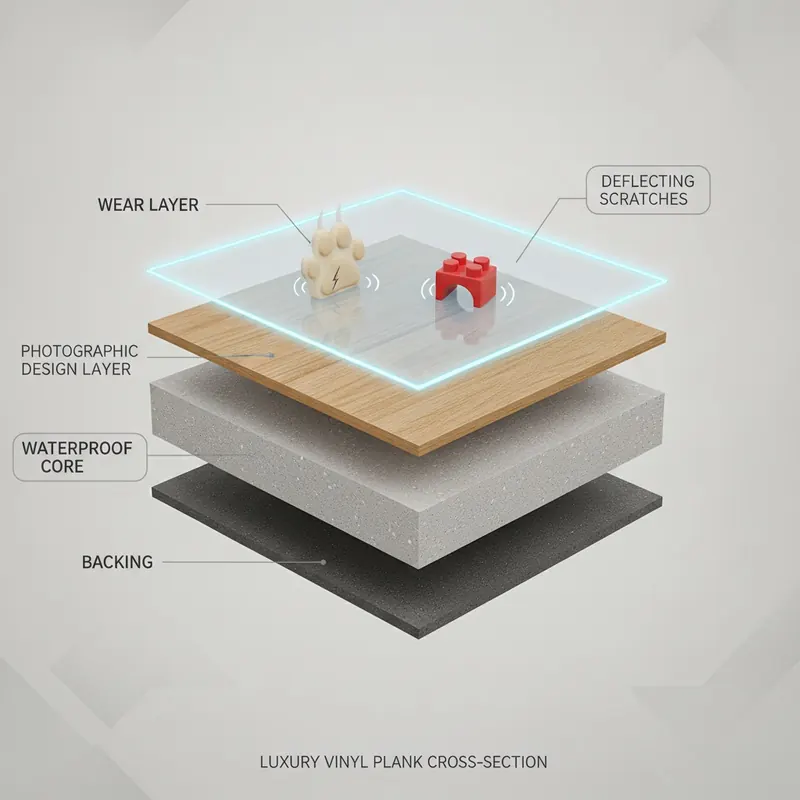
For luxury vinyl and laminate flooring, the single most important factor for scratch and scuff resistance is the wear layer. This is a transparent top coating that protects the photographic design layer beneath it from daily abuse.
The thickness of this layer is measured in mils (one-thousandth of an inch). For residential use, a 12 mil wear layer is a good starting point, but for homes with pets, kids, or high traffic, a 20 mil or thicker wear layer is highly recommended. To put that in perspective, a 20 mil wear layer is roughly the thickness of a credit card, providing a substantial barrier against damage.
But it’s not just about thickness; it’s also about what the wear layer is made of. The most advanced wear-resistant flooring incorporates microscopic particles of extremely hard materials, such as aluminum oxide or ceramic beads, into the coating. These additives dramatically increase the surface hardness, making it far more difficult for grit and friction to cause scratches.
The Ultimate Material Showdown: Comparing the Top Durable Flooring Options
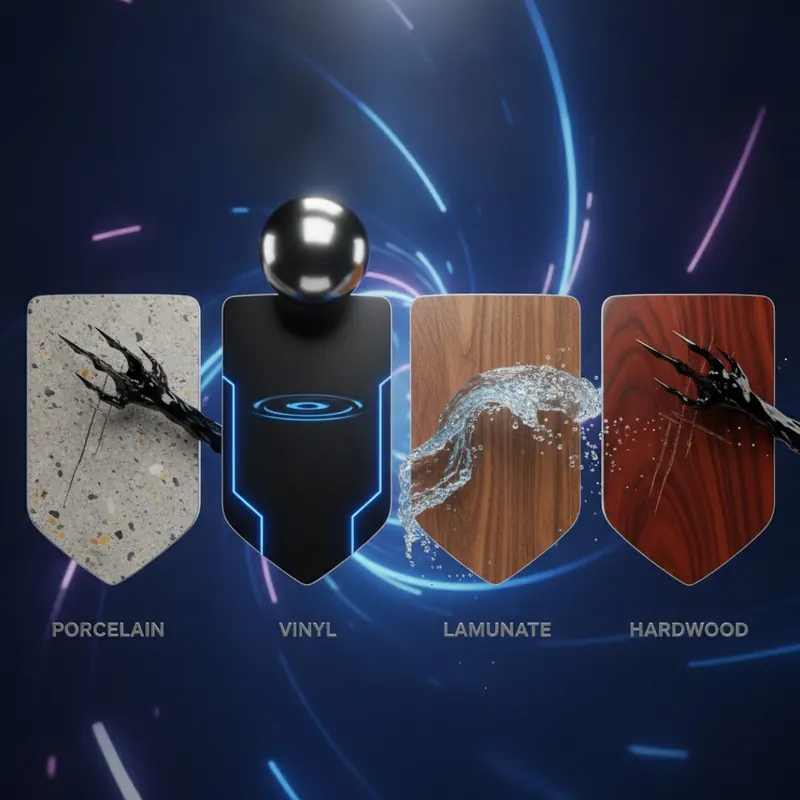
Now that you understand the science, let’s apply it. We’ve developed a “Durability Scorecard” to rate the top contenders on the factors that matter most to a discerning homeowner: Scratch Resistance, Impact Resistance, Water Proofing, and Maintenance Effort.
There’s always a trade-off. The hardest surfaces like tile are incredibly durable but can feel cold and unforgiving underfoot. The key is finding the right balance of resilience and livability for your family.
Porcelain & Ceramic Tile: The Hardness Champion
Tile has been used for centuries for a reason: it’s exceptionally long-lasting. Modern porcelain tile, which is fired at higher temperatures and made from more refined clay, is a top performer in durability.
- Scratch Resistance: Excellent. The hardness of porcelain comes from its primary component, quartz, which ranks a 7 on the Mohs scale of hardness (where diamond is a 10).[5] This makes it one of the most scratch-resistant flooring options available, standing up easily to pet claws and dragged furniture. Always check the PEI rating; a Class 4 or 5 is ideal for any high-traffic area.
- Impact Resistance: Good. While extremely hard, tile can be brittle. A very heavy object dropped from a height can cause a crack or chip.
- Water Proofing: Excellent. Porcelain tile has a water absorption rate of less than 0.5%, making it functionally waterproof and perfect for kitchens, bathrooms, and mudrooms.
- Maintenance Effort: Low to Medium. The tile surface itself is very easy to clean. The primary maintenance challenge comes from grout lines, which can stain or discolor over time. Pro Tip: Using larger format tiles and a high-quality epoxy grout can significantly minimize this issue.
Luxury Vinyl Tile/Plank (LVT/LVP): The Resilient All-Rounder
Luxury vinyl is arguably the most popular durable flooring choice today, offering a fantastic balance of performance, comfort, and aesthetics.
- Scratch Resistance: Good to Excellent. This is entirely dependent on the wear layer. A cheap LVP with a 6 mil wear layer will scratch easily. A high-quality LVP with a 20+ mil, ceramic-bead-infused wear layer will resist scratches almost as well as laminate. This is the most critical specification to check.
- Impact Resistance: Excellent. LVP’s flexible core makes it highly resistant to cracking or chipping from dropped objects.
- Water Proofing: Excellent. Most modern LVP products feature a waterproof core (WPC or SPC), making them a fantastic choice for any room in the house, including basements.
- Maintenance Effort: Very Low. LVP is one of the easiest floors to maintain, requiring only regular sweeping and occasional mopping with a pH-neutral cleaner. When considering if LVP is safe for kids and pets, look for products with FloorScore® certification, which ensures low VOC (Volatile Organic Compound) emissions for better indoor air quality, as certified by authorities like UL’s Greenguard program.[6]
Laminate Flooring: The Scratch-Resistant Impersonator
Modern laminate flooring is a far cry from the products of the past. It’s a tough, rigid product engineered specifically for wear resistance.
- Scratch Resistance: Excellent. This is laminate’s superpower. Its top layer is typically infused with aluminum oxide, one of the hardest materials available. This gives it exceptional resistance to scratches from pets, kids, and daily traffic. Look for a product with an AC rating of AC4 or AC5 for the highest level of durability.
- Impact Resistance: Good. The high-density fiberboard core is strong, but a severe impact can cause a chip that is difficult to repair.
- Water Proofing: Fair to Good. While many modern laminates are marketed as “water-resistant,” their core is still wood-based. They can handle topical spills if wiped up quickly, but they are not waterproof and should not be installed in full bathrooms. As certified installers will attest, proper installation with a quality underlayment is critical to its performance and longevity. A critical warning: never use a steam mop on laminate flooring, as the moisture and heat can damage the core and cause the planks to swell.
- Maintenance Effort: Very Low. Like LVP, laminate is very easy to clean with sweeping and a damp mop.
Hardwood: The Timeless & Refinishable Investment
Solid hardwood is the classic choice for a reason. While it may not have the surface invulnerability of tile or laminate, its unique superpower is its ability to be renewed.
- Scratch Resistance: Fair to Good. This depends heavily on the wood species (check the Janka rating) and the quality of the finish. Harder woods like Hickory or Brazilian Walnut will resist dents and scratches better than softer woods like Pine.
- Impact Resistance: Good. Hardwood can dent under a heavy impact, but it will not crack or shatter.
- Water Proofing: Poor. Hardwood is susceptible to water damage and is not recommended for bathrooms or high-moisture areas.
- Maintenance Effort: Medium. Requires specific hardwood cleaners and care to protect the finish. Its greatest advantage is its longevity. A solid hardwood floor can be sanded and refinished 5-7 times, with each refinishing adding 10-15 years to its life. This means a single hardwood floor can last 100 years or more, making it a true long-term investment. Furthermore, data from the National Association of Realtors (NAR) suggests that hardwood floors can increase a home’s resale value by up to 2.5%.[7]
Right Floor, Right Life: The Best Durable Flooring for Your High-Stress Home
The theoretical best floor means nothing if it doesn’t solve your specific, real-world problems. This is where we apply our knowledge to the most demanding scenarios.
For High-Traffic Zones: Entryways, Hallways, and Kitchens
According to insights from commercial interior designers, who regularly specify flooring for the most demanding environments, “The principles for a hotel lobby apply directly to a busy family’s entryway: you need maximum abrasion resistance and ease of cleaning.”[8]
For these zones, you must prioritize wear ratings. Look for laminate with an AC4+ rating or porcelain tile with a PEI rating of 4 or 5. These products are specifically engineered to handle constant foot traffic without showing wear patterns. High-quality LVP with a 20-28 mil wear layer is also an excellent contender.
Equally important is the subfloor. The International Certified Flooring Installers Association (CFI) emphasizes that a perfectly flat and stable subfloor is non-negotiable for longevity in high-traffic areas, as any flex or movement will compromise the integrity of the flooring joints over time.[9]
For Homes with Pets & Kids: The Ultimate Scratch, Stain, and Spill Test
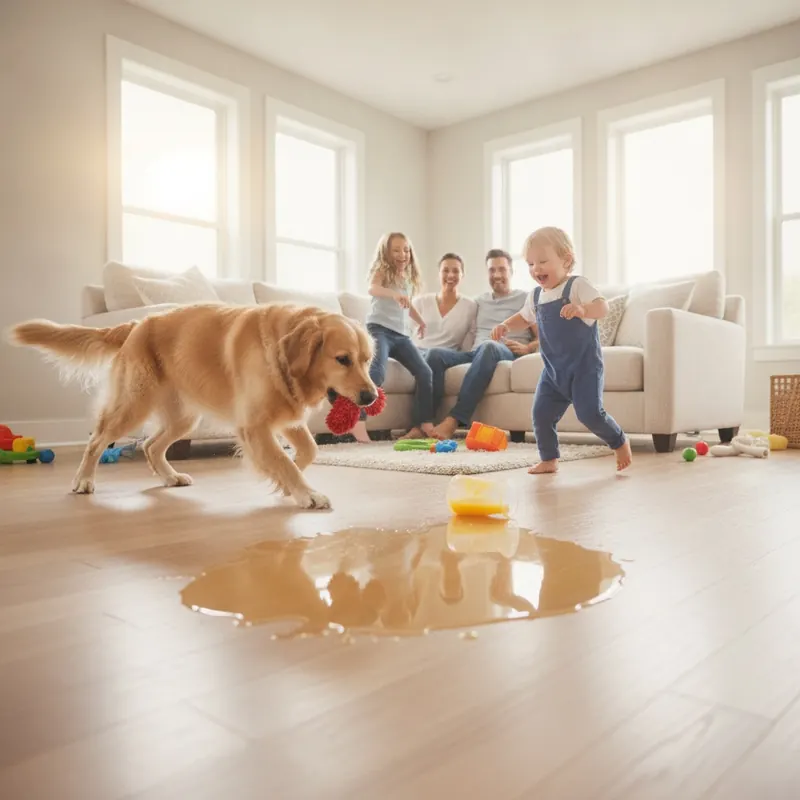
This is a multi-faceted challenge that goes beyond simple durability. You need a floor that is tough, safe, and forgiving.
- For Scratches & Spills: High-quality LVP and laminate are the top choices. LVP’s waterproof core provides peace of mind against pet accidents and spilled drinks, while laminate’s aluminum oxide surface is the best defense against claw marks.
- For Health & Safety: Consider the advice of experts. The American Kennel Club (AKC) often recommends textured surfaces to provide better grip for dogs, helping to prevent slips and potential joint issues.[10] For children, indoor air quality is paramount. The Asthma and Allergy Foundation of America (AAFA) notes that hard-surface floors are generally easier to keep free of allergens like dust mites and pet dander compared to wall-to-wall carpeting.[11] Always look for low-VOC products with FloorScore® or Greenguard Gold certification.
- For Hiding Imperfections: Don’t underestimate the power of design. A floor with a textured or wire-brushed finish, or one with multi-tonal patterns and color variations, will do a much better job of camouflaging minor scratches and pet hair than a smooth, dark, uniform surface.
Maximizing Your Investment: A Guide to Maintenance, Repair, and Lifetime Value
Choosing a durable floor is the first step. Protecting that investment through proper care and understanding its long-term value is what truly makes it a smart decision. Instead of focusing only on the upfront cost, consider the “cost per year of life.” A $10/sq.ft. hardwood floor that lasts 75 years has a better lifetime value than a $4/sq.ft. floor that needs replacing in 10 years. This investment mindset is backed by reports like Remodeling Magazine’s “Cost vs. Value” Report, which consistently shows flooring upgrades providing a strong return on investment at resale.[12]
The ‘Scratch Audit’: How to Prevent and Repair Scratches on Any Floor
Even the most durable floor can get a scratch. Here’s how to handle it.
- Prevention is Key: The best repair is the one you never have to make. Use high-quality felt pads on all furniture legs. Place walk-off mats at all exterior doors to trap abrasive grit. Keep pet nails trimmed regularly.
- Repairing Scratches:
- On LVP/Laminate: For minor scuffs, sometimes a tennis ball or a microfiber cloth is enough. For small scratches, use a manufacturer-recommended acrylic repair kit or wax pencil that matches the floor’s color.
- On Hardwood: Minor surface scratches in the finish can often be buffed out or concealed with a stain marker or finish restoration product from an authoritative brand like Bona or Minwax.[13] Deeper gouges that reach the bare wood will require wood filler and refinishing.
According to professionals certified by the Institute of Inspection, Cleaning and Restoration Certification (IICRC), the general rule is if your fingernail catches in the scratch, it may be too deep for a simple DIY fix and might require professional attention.[14]
Solving Pet Damage: A Step-by-Step Guide to Stains and Odors
Pet urine is a floor’s worst enemy, not just because of the stain, but because the uric acid can damage finishes and the odor can penetrate deep into the subfloor.
- Act Immediately: Blot up as much of the liquid as possible. Do not rub.
- Use an Enzymatic Cleaner: This is the most critical step. Standard cleaners will not work. You must use an enzymatic cleaner specifically designed for pet urine. These cleaners release beneficial bacteria that consume the uric acid crystals, permanently eliminating the source of the odor.
- Address the Subfloor (If Necessary): If an accident has been left to sit on a floor with seams (like hardwood or laminate), the urine can penetrate to the subfloor. In severe cases, the flooring may need to be removed, and the subfloor cleaned and sealed with an odor-blocking primer. The IICRC sets professional standards for this type of odor and water damage restoration.[14]
Beyond cleaning, consider behavioral solutions. The Humane Society of the United States often provides resources on house training and managing pet behaviors that can help prevent these accidents from happening in the first place.[15]
Our Verdict: The Best Durable Flooring for Most Homes in 2026
After analyzing the science, the ratings, and the real-world applications, we can make a confident recommendation.
For the majority of discerning homeowners seeking the ultimate balance of durability, water resistance, low maintenance, and value, the best choice is high-quality Luxury Vinyl Plank (LVP) with a wear layer of 20 mil or greater.
It wins because it scores highly across our entire Durability Scorecard. It offers excellent scratch resistance (with the right wear layer), is functionally waterproof, is comfortable underfoot, and is incredibly easy to maintain. It successfully solves the primary pain points of families with pets, kids, and high-traffic areas without the installation complexity or grout maintenance of tile.
Runner-Up: For situations where absolute scratch-proof performance is the non-negotiable top priority, and factors like comfort and sound are less of a concern, Porcelain Tile (PEI Class 4 or 5) remains the undisputed champion of hardness.
Ultimately, this guide has armed you with the knowledge to look past the marketing and see the science. The “best” floor is the one that has the right specifications to stand up to the unique challenges of your home and your life. You are now prepared to make that choice with confidence.
This article may contain affiliate links. All recommendations are based on extensive research and expert opinion, independent of any affiliate relationships.
References & Authoritative Sources
- United States Patent and Trademark Office (USPTO). Referenced for verifying trademarked brand names in the flooring category.
- ASTM International. An authoritative body that provides technical standards for material testing, which forms the basis of many durability claims.
- National Wood Flooring Association (NWFA). The leading authority on hardwood flooring standards, including the Janka Hardness Scale.
- Resilient Floor Covering Institute (RFCI) & American National Standards Institute (ANSI). Authoritative organizations that set and oversee standards for flooring ratings such as the AC (Abrasion Class) rating for laminate and the PEI (Porcelain Enamel Institute) rating for tile.
- Geological and Material Science Publications. Authoritative sources for the scientific principles of material hardness, such as the Mohs scale.
- Greenguard Certification (UL). A globally recognized authority on chemical emissions and indoor air quality standards for building materials, including flooring.
- National Association of Realtors (NAR). A leading source for data and reports on home features that add value, including the impact of flooring types on resale price.
- The International Interior Design Association (IIDA). A professional organization providing resources and expertise on material selection for high-demand commercial environments.
- International Certified Flooring Installers Association (CFI). An authority on installation standards, which are critical for the long-term performance and lifespan of any flooring material.
- The American Kennel Club (AKC). A trusted source for advice for dog owners on home products and environments that promote pet health and safety.
- Asthma and Allergy Foundation of America (AAFA). An authoritative source for recommendations on home environment choices, such as flooring, that can improve indoor air quality for individuals with asthma and allergies.
- Remodeling Magazine’s ‘Cost vs. Value’ Report. An annual, data-driven industry standard for information on the return on investment (ROI) of various home improvement projects.
- Bona & Minwax. Recognized industry leaders and authorities in wood floor care, finishing, and repair products.
- Institute of Inspection, Cleaning and Restoration Certification (IICRC). The primary standards-setting body for the professional cleaning, inspection, and restoration industry, including water and odor damage remediation.
- The Humane Society of the United States. A leading animal welfare organization offering authoritative advice on pet behavior and care.