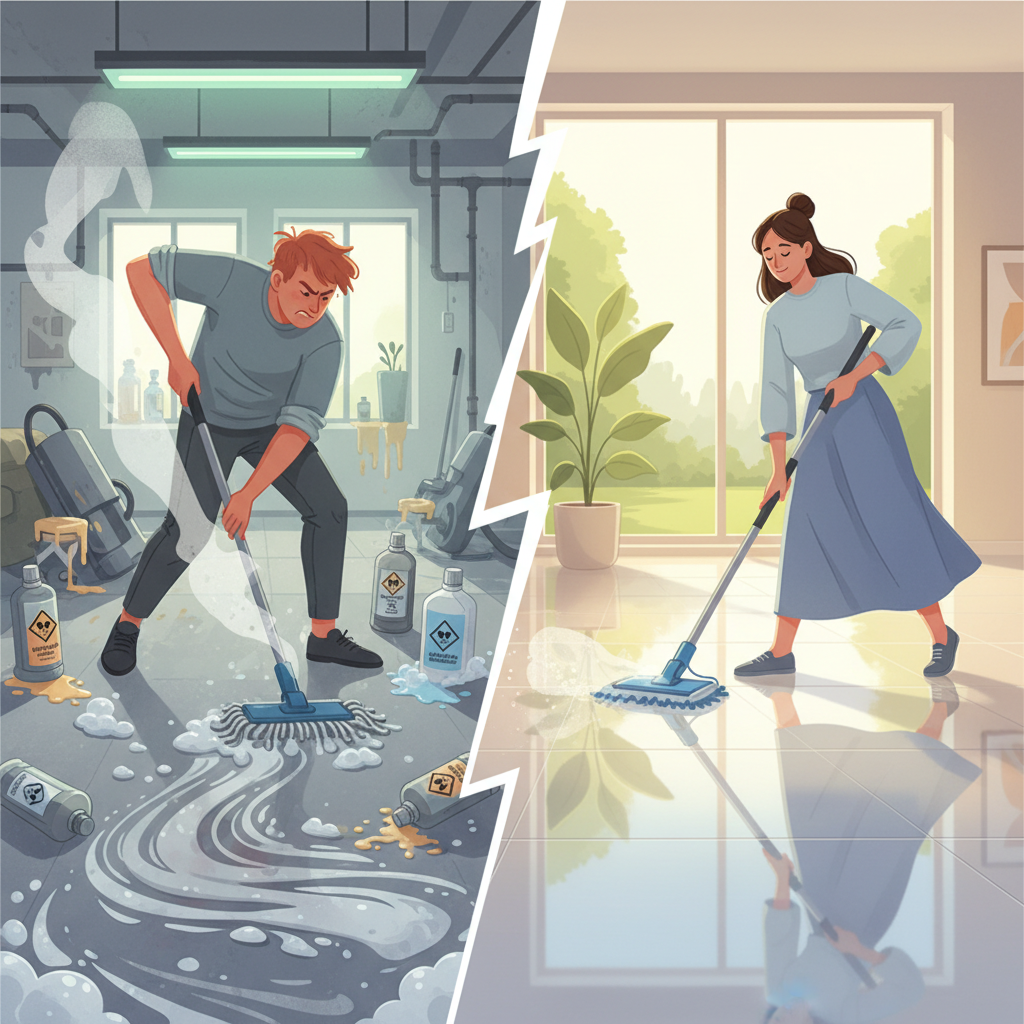
You have just made a premium investment in your home. By choosing Adamantine flooring, you secured a surface renowned for its incredible 50-year durability and flawless aesthetic. Yet, despite this high-tech engineering, many homeowners find themselves frustrated by cloudy residues, mysterious streaks, and a lingering anxiety over scratches. The startling truth? The very methods you are using to clean your floors are likely the exact things ruining them.
Traditional cleaning habits—slathering on aftermarket waxes, blasting surfaces with steam mops, or relying on acidic DIY vinegar solutions—are actively degrading your high-tech finish. When it comes to Adamantine floor care, the ultimate secret is a “do less” minimalist approach. By understanding the unique science of your floor’s aluminum oxide finish, you can protect your investment with a fraction of the effort. This definitive guide will walk you through the material science of your flooring, provide a strict “Do Not Use” list, outline a time-blocked cleaning matrix, and show you exactly how to troubleshoot dullness without breaking a sweat.
- The Science of the Surface: Understanding Adamantine’s Aluminum Oxide Finish
- The Definitive “Do Not Use” List: What Ruins Adamantine Floors
- The Minimalist Floor Care Matrix: A Time-Blocked Routine
- Preventative Protection: Safeguarding Your 50-Year Investment
- Diagnostic Troubleshooting: Fixing Dull Floors and Scratches
- Conclusion
- References & Authoritative Sources
The Science of the Surface: Understanding Adamantine’s Aluminum Oxide Finish
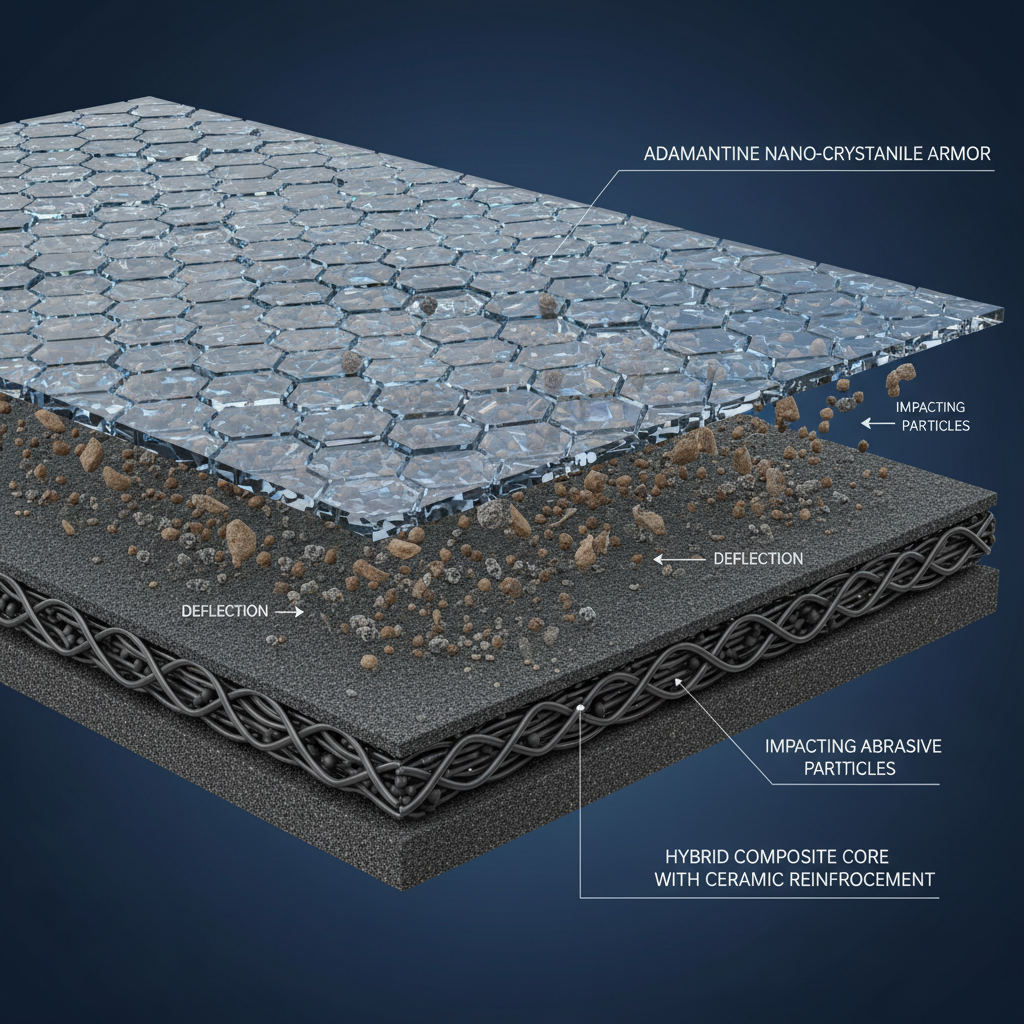
To master durable floor cleaning, you must first understand what you are actually cleaning. Adamantine flooring is fundamentally different from traditional polyurethane-coated hardwood. Traditional wood floors rely on relatively soft topical layers that require periodic sanding, buffing, and waxing to maintain their luster. Adamantine, however, utilizes a hybrid core construction topped with a factory-applied, UV-cured aluminum oxide nanoparticle finish.
This microscopic armor is what gives the flooring its legendary resilience. According to the official manufacturer specifications at Adamantine.info, this specific engineering provides a comprehensive 50-year residential warranty on structural integrity and finish durability [1]. Because aluminum oxide is one of the hardest materials on earth—sharing properties with rubies and sapphires—it delivers 50% more dent resistance than standard wood floors and maintains UV color stability for over 25 years.
When comparing traditional hardwood wear layers to this advanced technology, the National Wood Flooring Association (NWFA) highlights a stark contrast in maintenance requirements [2]. While standard polyurethane floors eventually show Adamantine floor wear if not regularly recoated, Adamantine demands a strict “no-wax, no-refinish” approach. The finish is so dense and hard that aftermarket waxes cannot penetrate it; instead, they sit on top, creating a sticky, dirt-trapping film.
The Definitive “Do Not Use” List: What Ruins Adamantine Floors
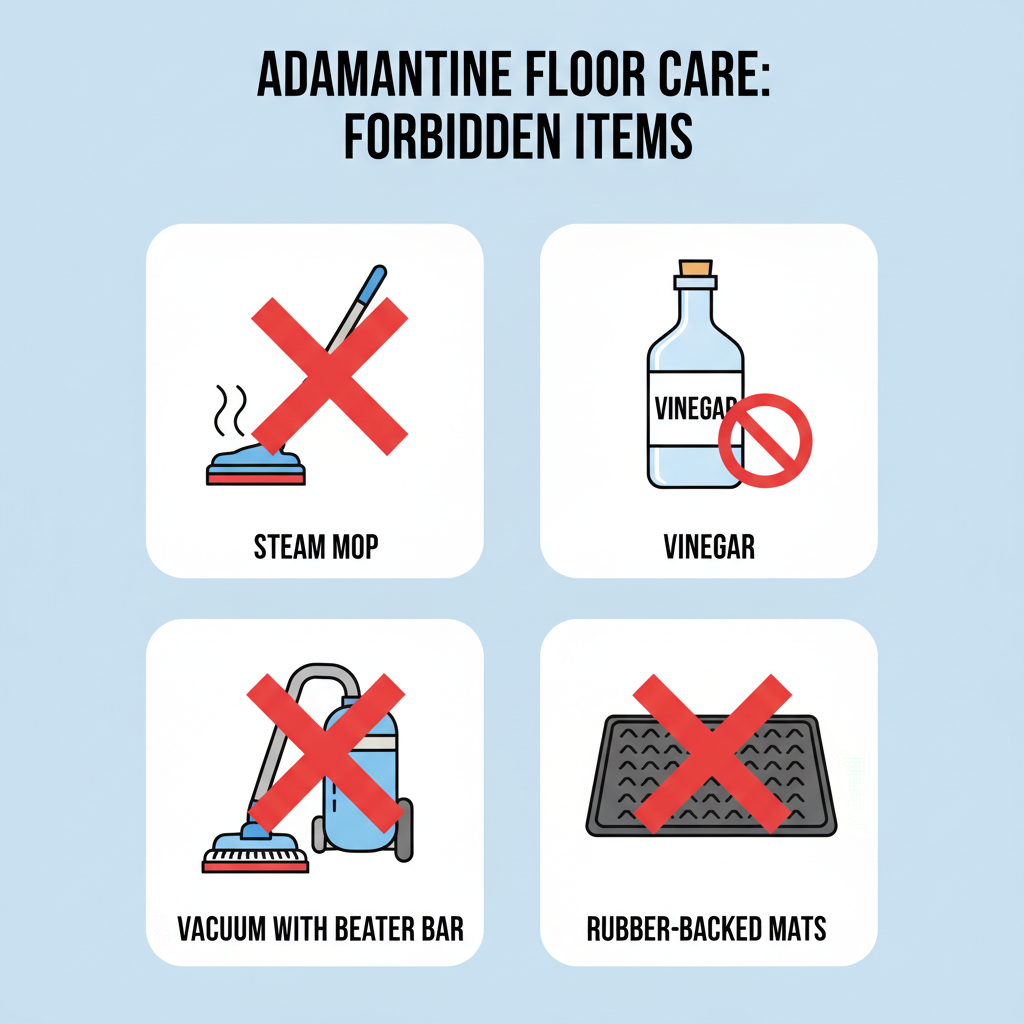
The most crucial step in protecting adamantine floors is knowing what to avoid. Because the factory finish does the heavy lifting, introducing the wrong tools or chemicals will cause immediate aesthetic damage and potentially void your warranty. If you are wondering how to clean adamantine floors safely, start by banning these common culprits from your home:
- Steam Mops: Never use a steam mop on your Adamantine floors. The NWFA explicitly warns against the use of steam cleaning on wood and hybrid floors, as the intense heat and forced moisture can penetrate microscopic seams, leading to irreversible warping, delamination, and finish degradation [2].
- Vacuums with Beater Bars: While vacuuming is encouraged, rotary brush rolls (beater bars) act like sandpaper against the finish, causing micro-abrasions over time. Always switch your vacuum to the “hard floor” setting to disengage the brush.
- Acidic Cleaners (Including Vinegar): Despite its popularity as a natural cleaner, vinegar is highly acidic. Repeated use will chemically etch the aluminum oxide nanoparticles, permanently dulling the shine.
- Rubber-Backed Mats: This is a lesser-known but critical danger. Industry consensus, supported by leading flooring experts like Metroflor, reveals that the antioxidants used in manufacturing rubber and latex mat backings react chemically with high-tech floor finishes [3]. This reaction causes permanent, irreversible yellowing or discoloration known as “antioxidant staining.”
The Minimalist Floor Care Matrix: A Time-Blocked Routine
The secret to simple maintenance for durable floors is shifting your mindset from reactive scrubbing to preventative micro-maintenance. A plug-and-play schedule ensures your floors stay pristine without consuming your weekends. Professional flooring contractors, such as those at Builders Interiors and Flooring n Beyond, consistently emphasize that the long-term ROI of daily micro-maintenance far outweighs the cost and effort of intensive deep cleaning [4, 7].
Here is your easy flooring maintenance routine, broken down by time investment.
Daily & Weekly Tasks: The 10-Minute Routine
Adamantine flooring maintenance should be practically effortless. Your daily routine requires no more than one minute: a quick sweep using a soft-bristle broom or a vacuum (without the beater bar) to remove abrasive dirt and grit tracked in from outside.
For your weekly routine, dedicate 10 minutes to a damp mop. The manufacturer explicitly recommends using approved, pH-neutral cleaners, such as Bona [1]. When using these solutions, beware of the “more is better” fallacy. Applying excessive water or heavy concentrations of soap will not make the floor cleaner; it will only leave behind a cloudy buildup. Lightly mist the floor and use a microfiber mop.
Furthermore, mastering how to clean adamantine floors means managing liquid spills immediately. Always use the “Blot, Don’t Rub” technique. Rubbing a spill can grind abrasive particles into the finish; gently blotting absorbs the liquid without causing micro-abrasions.
Seasonal Maintenance & Environmental Control
To truly extend flooring longevity, you must look beyond the mop and consider your home’s environment. Seasonal changes bring unique challenges: winter introduces abrasive rock salt, while summer brings fluctuating humidity.
Experts at Cobalt Surfaces and AG Construction note that relative humidity drastically impacts the expansion and contraction of hybrid and wood-based flooring [5, 8]. To prevent gapping or buckling, utilize humidifiers during dry winter months and dehumidifiers during humid summers to maintain a stable indoor environment (ideally between 35% and 55% relative humidity).
Preventative Protection: Safeguarding Your 50-Year Investment
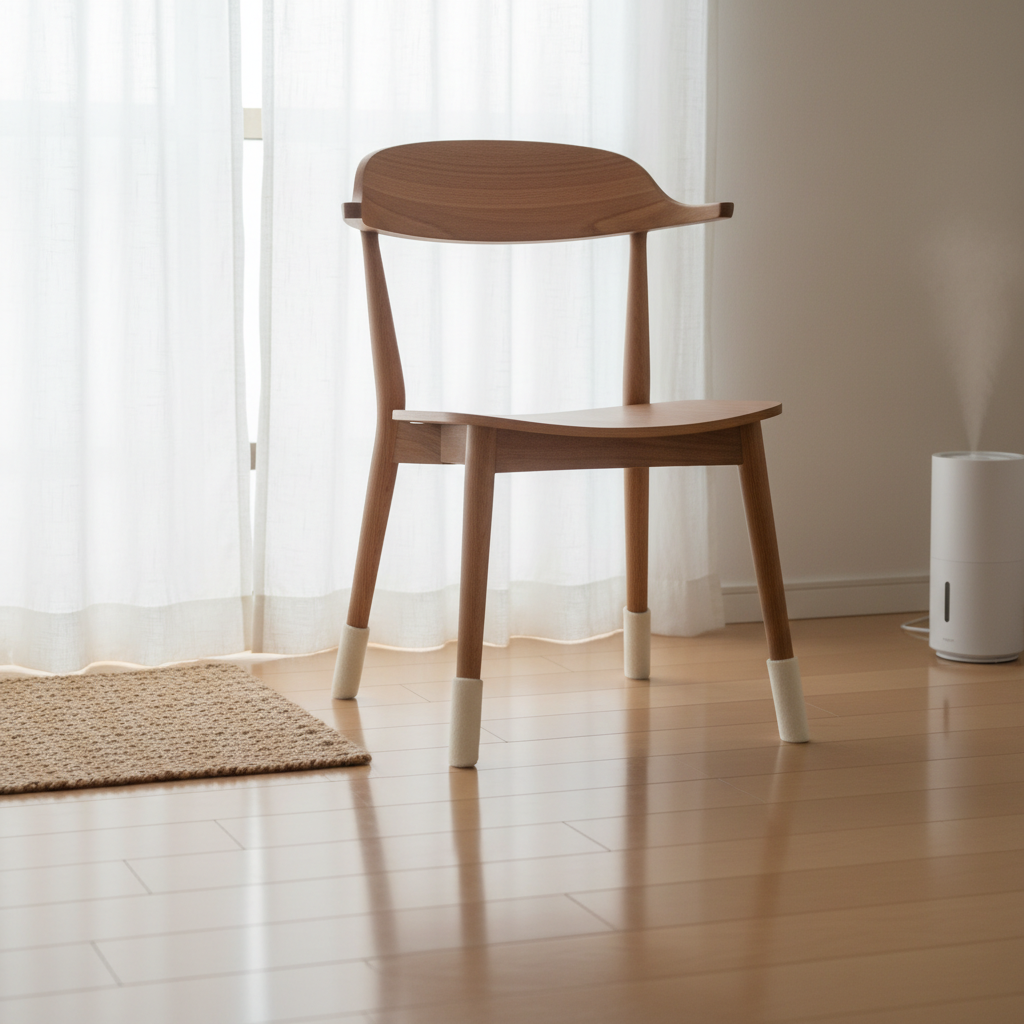
The most effective way to keep adamantine flooring looking new is through “Passive Protection”—setting up your home so the floor naturally protects itself from daily hazards. Protecting adamantine floors requires a few strategic investments in the right accessories.
First, address your furniture. Every chair leg, table base, and sofa foot should be equipped with non-staining floor protectors. Industry standards provided by Mannington recommend using hard plastic or high-quality felt pads that are at least one inch in diameter to properly distribute weight and prevent core denting [6].
Second, when moving heavy appliances or furniture, never drag them across the floor. Always use hardboard runways or thick plywood strips to create a protective bridge, preventing catastrophic gouges [6]. Finally, assist your floor’s built-in UV resistance by utilizing window treatments like blinds or sheer curtains during peak sunlight hours to prevent thermal expansion and ensure decades of color stability.
Diagnostic Troubleshooting: Fixing Dull Floors and Scratches
Even with the best care, you may occasionally encounter an issue. The key to troubleshooting is accurately diagnosing the problem. Because of the specific engineering of your flooring, you must differentiate between chemical residue and actual physical damage.
The Residue Removal Protocol for Cloudy Floors
If you are dealing with dull adamantine floors, take a deep breath: your finish is likely perfectly intact. Because aluminum oxide is incredibly hard, a loss of shine is almost certainly caused by a buildup of soap film, improper use of wet mops, or the mistaken application of aftermarket acrylic waxes.
To fix this, you do not need to sand the floor—in fact, Adamantine.info explicitly states that this flooring cannot be sanded or refinished like traditional polyurethane wood floors [1]. Diagnosing this strictly as a chemical residue issue means the solution is a neutralizing wash. Use a manufacturer-approved heavy-duty stripper or a specialized residue remover designed for factory-finished floors to safely dissolve the acrylic wax or soap film. Once the residue is stripped away, the original factory shine will instantly return.
Scratch Triage: Assessing and Addressing Damage
While Adamantine is incredibly resilient, no flooring is entirely scratch-proof. If you discover scratched durable flooring, you must perform a quick triage to assess the depth of the damage.
- Level 1 (Surface Scuffs): These are micro-scratches that only affect the topmost clear coat, often visible only at certain angles. Note that high-gloss finishes will naturally highlight these micro-scratches more than matte finishes, which is why high-gloss is generally advised against in homes with large, active pets.
- Level 3 (Core Penetration): These are deep gouges that have broken through the aluminum oxide layer and exposed the hybrid core beneath.
For Level 1 scuffs, specialized color-matched blending pencils can mask the visual impact. However, for Level 3 core penetration, patching compounds will not adhere properly to the nanoparticle finish. The official, manufacturer-approved repair method for deep hybrid core damage is a complete plank replacement.
Conclusion
Maintaining your Adamantine floors is a masterclass in doing less, not more. By respecting the advanced science of the aluminum oxide finish, you can abandon the back-breaking labor of waxing, buffing, and heavy scrubbing. Remember that avoiding harsh chemicals, utilizing passive preventative pads, and sticking to a simple, damp-mopping routine are the true secrets to ensuring your floor lasts its full 50-year lifespan.
Audit your cleaning closet today: throw out the vinegar and the steam mops, invest in a high-quality pH-neutral cleaner like Bona, and check your furniture pads to ensure your floors stay pristine for decades to come.
Always consult your specific flooring manufacturer’s warranty guidelines (e.g., Adamantine.info) before applying any new cleaning solution or technique. Failure to follow manufacturer instructions may void your 50-year warranty.
References & Authoritative Sources
- Adamantine Flooring Manufacturer. (N.D.). Warranty and Care Specifications. Adamantine.info. Retrieved from https://adamantine.info/
- National Wood Flooring Association (NWFA). (N.D.). Wood Floor Maintenance and Cleaning Guidelines. Retrieved from https://woodfloors.org/
- Metroflor. (N.D.). Preventative Maintenance for High-End Wear Layers. Retrieved from https://www.metroflor.com/
- Builders Interiors. (N.D.). Expert Flooring Maintenance Advice. Retrieved from https://www.buildersinteriors.com/
- Cobalt Surfaces. (N.D.). Seasonal Floor Maintenance and Moisture Management. Retrieved from https://cobaltsurfaces.com/
- Mannington. (N.D.). Industry Standards on Furniture Protectors and Appliance Moving. Retrieved from https://www.mannington.com/
- Flooring n Beyond. (N.D.). Structured Daily, Weekly, and Monthly Cleaning Routines. Retrieved from https://www.flooringnbeyond.com/
- AG Construction. (N.D.). Hardwood Care and the Dangers of Excess Water. Retrieved from https://agconstructionmd.com/
