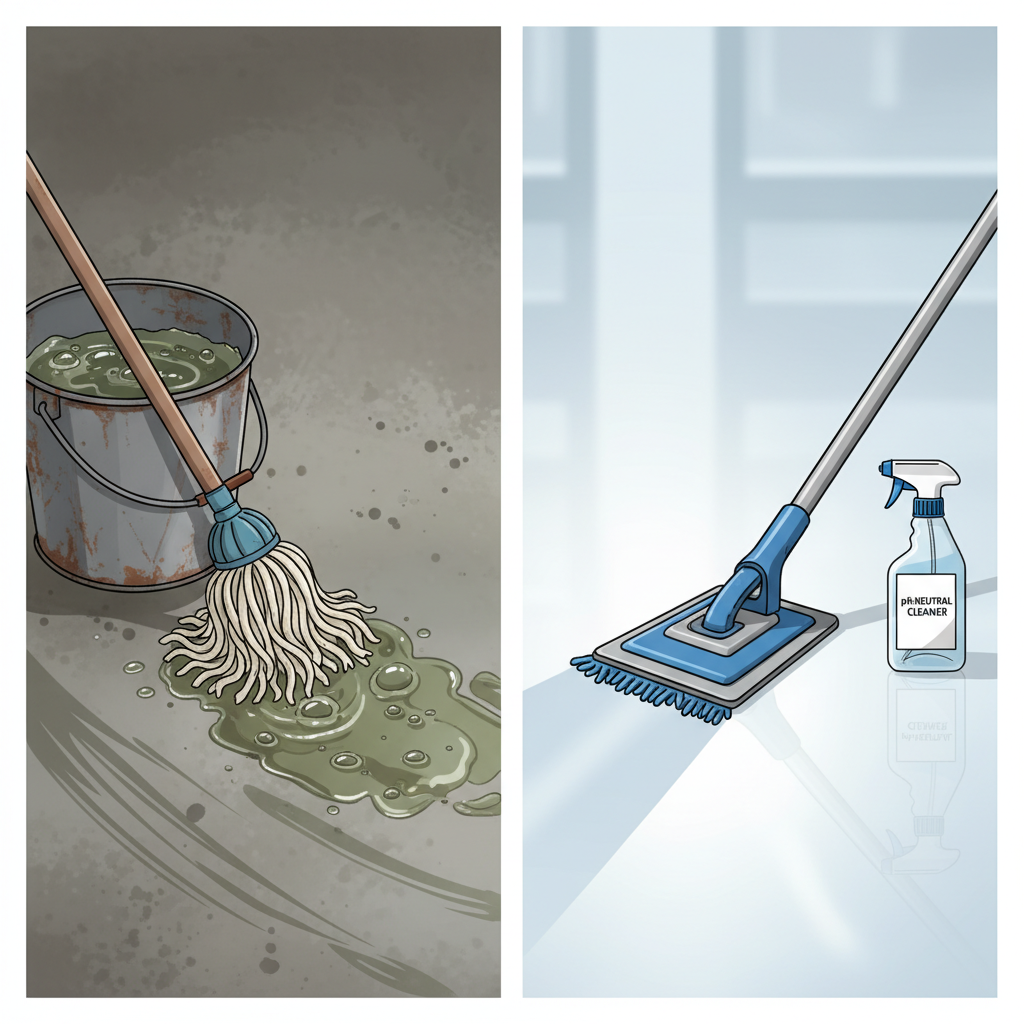
Investing in premium adamantine flooring is a commitment to decades of elegance and unparalleled durability. Engineered to withstand the rigors of daily life, this remarkable hybrid hardwood boasts an incredible 50-year potential lifespan. Yet, despite its resilience, a silent problem plagues many homeowners: the unintentional destruction of their floors through traditional, outdated hardwood care methods.
Applying old-school cleaning habits to next-generation flooring is the leading cause of cloudy dullness, sticky residues, and voided warranties. To protect your investment, you must unlearn what you know about wood care. Welcome to the 50-Year Adamantine Survival Guide. By mastering the “Less is More” approach, this definitive, science-backed roadmap will teach you how to protect your floor’s specialized aluminum oxide finish, eliminate dulling residue, and avoid the costly replacement mistakes that catch so many property owners off guard.
- The Science of Adamantine: Why the ‘Less is More’ Approach is Critical
- The 3-Step Adamantine Safe-Clean Method
- The 50-Year Adamantine Maintenance Roadmap
- Troubleshooting: The Residue Trap and Restoring Factory Shine
- The Adamantine Repair Protocol: Handling Wear, Tear, and Scratches
- Hiring Professionals for Adamantine Floor Polishing
- Conclusion
- References & Authoritative Sources
The Science of Adamantine: Why the ‘Less is More’ Approach is Critical
To understand proper adamantine flooring care, you must first understand its unique material composition. Adamantine is not your standard hardwood; it is a highly advanced hybrid core topped with a specialized protective layer.
What exactly is this adamantine floor protective coating made of? It utilizes an aluminum oxide nanoparticle finish that is industrially UV-cured. This state-of-the-art manufacturing process creates a surface that is exceptionally safe for homes while providing 50% more dent resistance than traditional hardwood. According to Adamantine Flooring Manufacturer Guidelines, this structural integrity and finish durability are precisely what allow the manufacturer to offer a comprehensive 50-year residential warranty [1].
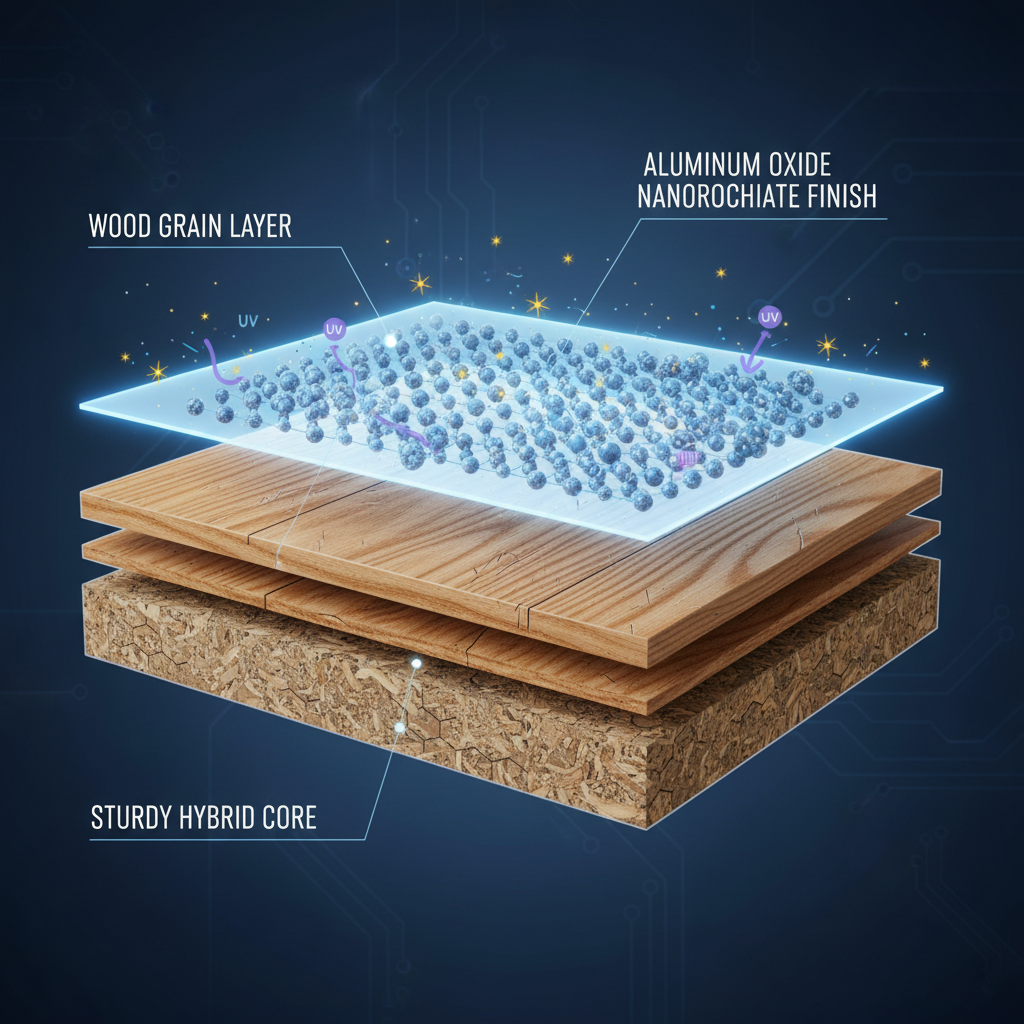
Because the factory finish is so advanced, many homeowners wonder if they can apply aftermarket “adamantine-like” coatings to their existing floors to boost protection. The official product specifications from Adamantine.info explicitly state that this is impossible; the proprietary coating technology requires a controlled, factory UV-curing environment, and aftermarket topical applications will not bond correctly to existing planks [2].
The Danger of Traditional Hardwood Treatments
The most critical rule of durable flooring upkeep is recognizing that adamantine must never be treated like standard hardwood. Traditional wood maintenance relies on feeding the wood with oils or building up protective layers of wax. On an aluminum oxide finish, these methods are not just unnecessary—they are highly destructive.
Does adamantine flooring need to be stripped and waxed? Absolutely not. The World Floor Covering Association (WFCA), a leading authority on industry standards for hybrid hardwood care, emphasizes the strict incompatibility of natural waxes and oil soaps with aluminum oxide finishes [3]. Because the adamantine surface is non-porous, waxes and oils cannot absorb. Instead, they sit on top of the planks, trapping dirt, creating a cloudy film, and eventually requiring harsh chemical stripping that can permanently degrade the factory finish. Furthermore, traditional sanding will instantly destroy the nanoparticle layer, ruining the floor beyond repair.
The 3-Step Adamantine Safe-Clean Method
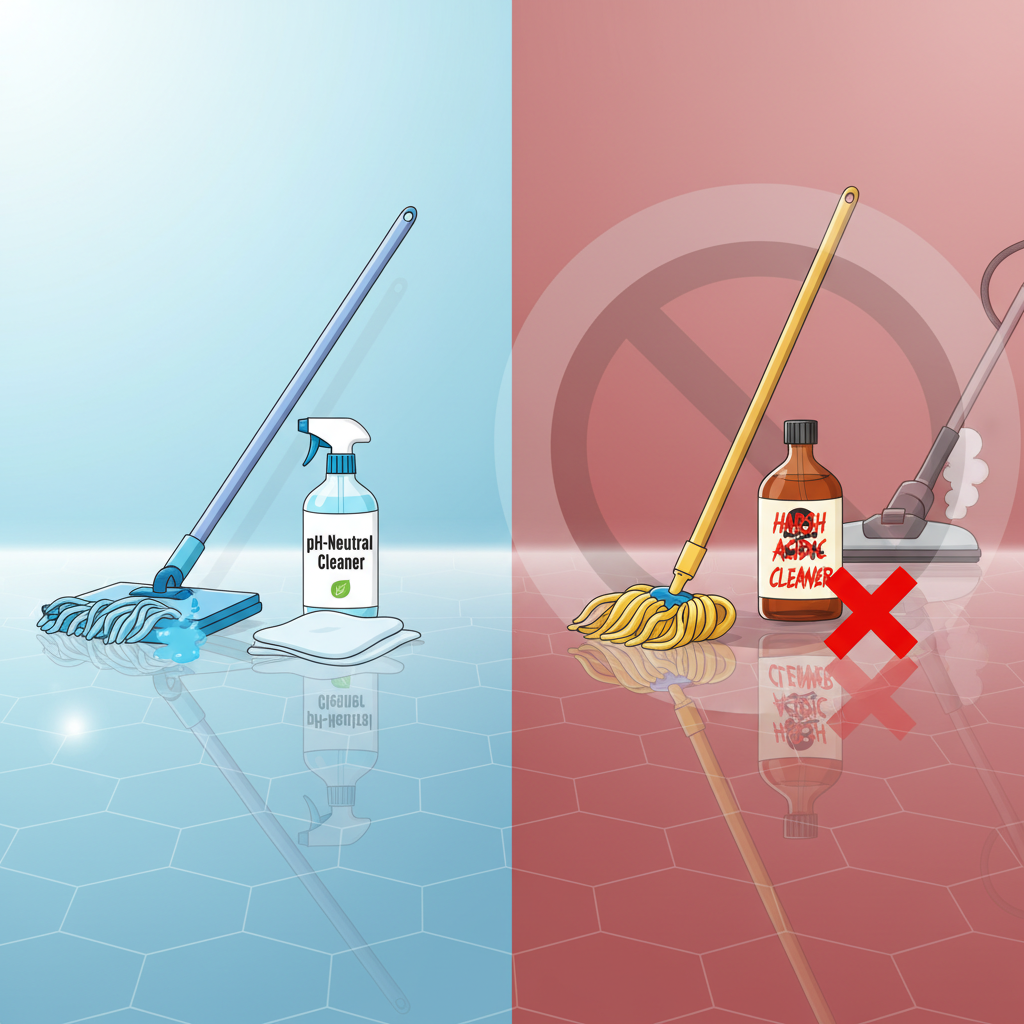
Proper adamantine floor maintenance revolves around a simple, preventative routine rather than aggressive restorative work. The secret to learning how to clean adamantine floors safely lies in avoiding abrasive agents at all costs.
For daily care, sweeping or vacuuming is essential to remove grit that can cause micro-abrasions. When selecting a vacuum, ensure the beater bar (the rotating bristle brush) is turned off, or use a vacuum specifically designed for hard floors. Robotic vacuums are generally safe for adamantine, provided they do not have aggressive, stiff-bristled brushes that could scuff the surface over time. When dealing with pet accidents, clean them up immediately with a soft cloth and a manufacturer-approved cleaner to prevent localized chemical reactions without damaging the coating.
To elevate your routine, adopt commercial cleaning best practices for your residential setting. McKowski’s Maintenance Systems, an authority on commercial floor care, recommends using specific, non-abrasive tools—namely, flat microfiber mops rather than traditional sponge or string mops, which tend to push dirty water into the floor’s micro-bevels [4].
Mastering the Damp Mop and pH-Neutral Cleaners
When it comes to the best maintenance routine for adamantine floors, mastering the “damp mop” technique is crucial. “Damp” means the microfiber pad should be barely moist to the touch—never dripping wet. Excess water can seep into the seams of the hybrid core, leading to swelling or delamination over time.
Equally important is the chemical makeup of your cleaner. The pH scale has a direct, profound impact on factory floor finishes. You must use a strictly pH-neutral cleaner (pH of 7). Can you use the classic DIY mixture of vinegar and water? No. Floorseal, an expert in hard floor chemical interactions, explains the science behind this: acidic cleaners (like vinegar) or highly alkaline solutions (like ammonia or bleach) will slowly etch and degrade the aluminum oxide nanoparticle finish over time, stripping away its scratch and UV resistance [5]. A pH-neutral cleaner ensures you can remove sticky residue without scraping, preserving the floor’s integrity.
The Steam Mop Warning
One of the most frequently asked questions regarding adamantine flooring wear and tear is: “Can I use steam mops on adamantine floors?” The answer is a resounding, unequivocal no.
Steam mops combine two of the most damaging elements for hybrid flooring: intense heat and forced moisture. This combination can easily penetrate the protective wear layer, causing the hybrid core to delaminate, warp, and permanently cloud the finish. Standard flooring manufacturer warranties explicitly void all coverage if a steam mop has been used on the floor [1].
The 50-Year Adamantine Maintenance Roadmap
Protecting your investment requires a structured, easy-to-follow maintenance schedule. The financial ROI of proper durable flooring upkeep is staggering. Data from the International Facility Management Association (IFMA) on commercial flooring lifecycle costs highlights that proactive maintenance saves thousands [6]. To put this in perspective for residential spaces: repairing damaged hardwood floors typically costs between $478 and $1,624, while a full replacement can run anywhere from $2,480 to $7,028.
By adapting hard surface floor maintenance standards from the Institute of Inspection, Cleaning and Restoration Certification (IICRC) for residential use, you can easily avoid these replacement costs [7].
High-Traffic vs. Low-Traffic Schedules
Your best maintenance routine for adamantine floors should be customized based on household activity.
- Daily: Sweep or dust-mop all areas to remove abrasive dirt.
- Weekly: Damp-mop high-traffic zones (hallways, kitchens, entryways) using a pH-neutral cleaner and a microfiber pad. Low-traffic areas (guest bedrooms) may only need mopping bi-weekly.
- Annually: Conduct a deep inspection and restorative cleaning procedure.
How often should you deep clean? According to Imperial Dade, experts in hard floor maintenance schedules, restorative floor care on commercial durable floors—or high-traffic residential adamantine floors—should be evaluated every 12 months [8]. This doesn’t mean sanding; it means a professional-grade, neutral deep-extraction cleaning to remove embedded soils that regular mopping misses. Seasonal changes, such as winter salt tracking or spring mud, may require you to increase your damp-mopping frequency temporarily.
Environmental Factors: Humidity, Sunlight, and Entryways
Extending the life of adamantine flooring also means managing your home’s environment. Does sunlight fade adamantine floors over time? Thanks to the aluminum oxide finish, adamantine maintains exceptional UV color stability for 25+ years. The nanoparticles physically block and reflect UV radiation, preventing the oxidation that causes traditional wood to bleach or yellow.
However, indoor humidity can warp the hybrid core if left unchecked; aim to keep your home’s relative humidity between 35% and 55% year-round.
Furthermore, the mathematics of dirt mitigation cannot be ignored. The REMI Network notes that proper matting can absorb and trap significant amounts of tracked-in dirt and moisture, drastically reducing micro-abrasions on your floor [9]. Place high-quality, non-rubber-backed entry mats at all exterior doors. Finally, equip all heavy furniture with thick felt pads to prevent gouging when items are shifted.
Troubleshooting: The Residue Trap and Restoring Factory Shine
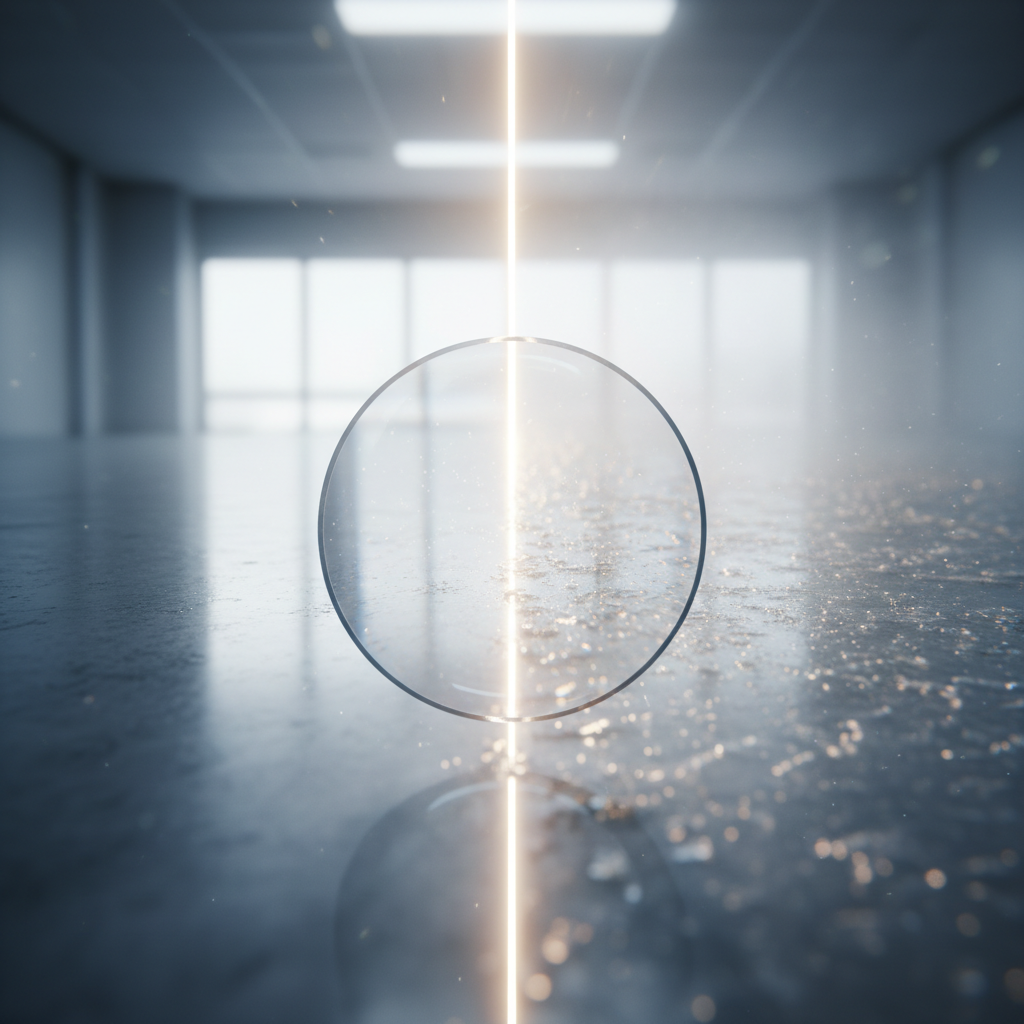
The most common complaint from homeowners is a dull adamantine floor surface. If your floor looks cloudy after mopping, it is rarely due to actual finish degradation. Instead, you are likely caught in the “Residue Trap.”
Using incorrect cleaners—especially oil-based soaps or heavily marketed “mop-and-shine” products—leaves a microscopic film behind. Premium Wood Floors KC, experts in hardwood finish troubleshooting, expertly differentiate between actual finish wear and topical buildup [10]. They explain the optical physics of dullness: when chemical residue or micro-scratches accumulate on the surface, they scatter light in multiple directions rather than reflecting it uniformly. This light scattering is what your eye perceives as a cloudy, dull finish.
How to Safely Strip Residue
To restore adamantine floor shine, you must safely strip this residue without stripping the actual factory finish.
Flooring 101, an authority on resilient flooring care, recommends a specific residue removal technique [11]. Use a manufacturer-approved, heavy-duty neutral floor stripper or a specialized residue remover designed for polyurethane/aluminum oxide finishes. Apply the solution, let it dwell for the specified time to break down the acrylic or oil buildup, and then gently agitate with a non-abrasive microfiber mop before wiping it completely clean. Never use scraping tools or abrasive scrubbing pads, as these will permanently scratch the floor.
The No-Wax Rule for Restoring Gloss
Once the floor is deep cleaned and the residue is gone, the original factory shine should return. But what if you want to add an extra layer of protection?
You must follow the No-Wax Rule. Never use mop-and-shine products or natural waxes. If a polish is absolutely necessary to hide minor micro-scratches, it must be a specialized laminate/hybrid-safe acrylic restorer. Fissel Floor Covering details the exact technique for this: you must apply the hybrid-safe acrylic restorer in incredibly thin, even coats using a clean microfiber applicator [12].
It is vital to understand the difference: a cleaner removes dirt, a polish (often wax-based) temporarily fills scratches but traps dirt, and an acrylic restorer bonds a new, clear, micro-thin sacrificial wear layer to the floor. If you use a restorer, adhere strictly to the exact drying times on the bottle (often 1 to 2 hours between coats, and 24 hours before heavy traffic) to prevent a sticky, ruined finish.
The Adamantine Repair Protocol: Handling Wear, Tear, and Scratches
Even with a 50% higher dent resistance, adamantine flooring wear and tear is inevitable over decades of use. Understanding the limits of the floor’s durability is key to managing expectations and keeping your warranty intact.
What is considered normal wear and tear versus property damage? Maple Leaf Management provides objective criteria: normal wear includes slight dulling in high-traffic pivot points or microscopic surface scratches from daily living [13]. Property damage, however, includes deep gouges from dragging heavy appliances, water damage from flooding, or deep pet scratches that penetrate the wear layer. While the 50-year warranty guarantees structural integrity and protects against the finish wearing completely through to the bare core under normal use, it does not cover abusive damage or deep pet gouges [1].
When to Touch Up vs. When to Replace a Plank
If you are faced with a scratched adamantine floor finish, you must know how to execute the Adamantine Repair Protocol.
Can you sand an adamantine floor to remove scratches? Absolutely not. Coarse steel wool or heavy sanding will instantly ruin the aluminum oxide layer, leaving a permanent, unfixable dull patch.
For minor surface scratches, the best scratch concealers for dark floors are specialized blending pencils or tinted polyurethane markers designed for factory finishes. Experts at Buff and Coat and the Woodworking Stack Exchange community advise that if you must use an abrasive to blend a polyurethane touch-up, use only ultra-fine grit sandpaper (greater than 600 grit) exclusively for micro-blending the very edges of the touched-up spot [14], [15].
However, if you have a deep scratch or gouge that penetrates through the hybrid core, touch-ups will look messy and fail to protect the floor. In these cases, full plank replacement is the only manufacturer-approved solution.
Hiring Professionals for Adamantine Floor Polishing
Eventually, you may want to hire professional adamantine floor polishing services for a restorative deep clean. However, finding the right professional is fraught with risk.
Can professionals buff out scratches in adamantine? Yes, but only surface-level micro-scratches, and only by using chemical deep extraction and hybrid-floor acrylic restorers. Facility Specialists, experts in commercial hard surface restoration, expertly differentiate between stone restoration (which uses grinding) and hybrid floor restoration (which relies on chemical cleaning and recoating) [16]. Professional polishing for hybrid floors typically costs between $1.00 and $2.50 per square foot, depending on the level of residue stripping required.
The Danger of Diamond Polishing Pads
The most critical warning when hiring a professional is to avoid standard “marble or stone polishers.” Will diamond polishing pads ruin an aluminum oxide finish? Yes, catastrophically.
StoneShine, an authority on the limits of stone polishing, explains that the abrasive diamond grits used to grind and polish natural stone will instantly chew through the microscopic adamantine nanoparticle layer, destroying the floor’s UV and scratch resistance [17].
Before hiring anyone, use this Contractor Vetting Checklist:
- Ask if they have specific experience with aluminum oxide hybrid finishes.
- Ask what equipment they use (if they mention diamond pads or floor sanders, walk away).
- Confirm they use strictly pH-neutral extraction chemicals and hybrid-safe acrylic restorers.
Conclusion
Mastering adamantine flooring care ultimately comes down to embracing the “Less is More” philosophy. Your floor was engineered in a high-tech facility to be exceptionally durable; it does not need your help from heavy waxes, oil soaps, or abrasive scrubbers. By sticking strictly to pH-neutral cleaners, avoiding the intense heat of steam mops, and following a consistent, preventative maintenance schedule, you will secure your 50-year warranty and save thousands of dollars in premature replacement costs. Treat the finish with respect, mitigate dirt at your entryways, and your adamantine floors will reward you with decades of flawless, factory-grade beauty.
Download our printable “50-Year Adamantine Maintenance Checklist” to keep your cleaning routine on track, or share this guide with your cleaning professional to ensure they use the correct, safe methods on your premium hybrid floors.
Disclaimer: Always consult your specific flooring manufacturer’s warranty guidelines before applying any chemical, polish, or restorative treatment to your floors.
References & Authoritative Sources
- Adamantine Flooring Manufacturer Guidelines. (N.D.). Official Warranty and Technical Specifications. Adamantine.info.
- Adamantine.info. (N.D.). Product Specifications and Maintenance Limits. Adamantine.info.
- World Floor Covering Association – WFCA. (N.D.). Industry Standards for Hybrid and Treated Hardwood Care.
- McKowski’s Maintenance Systems. (N.D.). Commercial Cleaning Best Practices and Chemical Usage.
- Floorseal. (N.D.). Authority on Stone and Hard Floor Cleaning Chemical Interactions.
- International Facility Management Association – IFMA. (N.D.). Data on Commercial Flooring Lifecycle Costs.
- Institute of Inspection, Cleaning and Restoration Certification – IICRC. (N.D.). Authority on Hard Surface Floor Maintenance Standards.
- Imperial Dade. (N.D.). Authority on Hard Floor Maintenance Schedules and Commercial Restorative Cleaning.
- REMI Network. (N.D.). Authority on Facility Management, ESG Goals, and Flooring Lifespans.
- Premium Wood Floors KC. (N.D.). Experts in Hardwood Finish Troubleshooting and Residue Identification.
- Flooring 101. (N.D.). Authority on Resilient Flooring Care and Safe Residue Removal.
- Fissel Floor Covering. (N.D.). Authority on Laminate/Hybrid Floor Polishing Techniques and Safe Chemical Use.
- Maple Leaf Management. (N.D.). Authority on Property Management Wear-and-Tear Standards and Tenant Guidelines.
- Buff and Coat. (N.D.). Experts in Wood Floor Scratch Repair and Finish Restoration.
- Woodworking Stack Exchange. (N.D.). Community Consensus and Expert Advice on Fine-Grit Polyurethane Repair.
- Facility Specialists. (N.D.). Experts in Commercial Hard Surface Restoration and Maintenance.
- StoneShine. (N.D.). Authority on the Limits of Stone Polishing vs. Other Flooring Materials.
