The beautiful chaos of family life—toddlers racing down hallways, large dogs skidding around corners, and the inevitable spills of daily living—can turn standard home finishes into a battleground. For busy homeowners, the search for truly durable home flooring often leads to a frustrating maze of misleading marketing jargon. Words like “indestructible” and “life-proof” are thrown around loosely, leaving consumers confused when their newly installed floors begin to show premature wear and tear.
This guide bypasses the promotional fluff to reveal the scientific “Adamantine Standard” for life-proofing your floors. We will demystify the material science behind ultra-durable surfaces, offering you a transparent Cost-Per-Year matrix and actionable maintenance protocols. Whether you are dealing with scratched hardwood floors or trying to select the best flooring for high traffic homes, this comprehensive blueprint will help you permanently solve the chaos of active lifestyles and secure a lasting return on your investment.
- Demystifying ‘Adamantine Flooring’: The Science of Indestructible Floors
- The High-Traffic Material Showdown: Best Flooring for Busy Families
- The ‘Cost per Year of Service’ Metric: Rethinking Flooring ROI
- Triage, Repair, and Replacement: Fixing Worn Out Home Flooring
- Preventative Architecture: Low Maintenance Flooring for Active Lifestyles
- Conclusion
- References & Authoritative Sources
Demystifying ‘Adamantine Flooring’: The Science of Indestructible Floors
In the realm of material science, “adamantine” refers to a non-metallic, brilliant luster and extreme hardness, historically associated with diamonds. In the flooring industry, adamantine flooring is not made of diamonds, but rather utilizes advanced chemical engineering to achieve ultra-hard, virtually indestructible surfaces. To understand how these scratch resistant adamantine floors work, we must look at standardized scientific metrics rather than marketing brochures.
Material scientists rely on the Mohs hardness scale to measure a mineral’s resistance to scratching. When evaluating flooring finishes, top-tier manufacturers incorporate microscopic particles of exceptionally hard minerals to armor the floor against daily friction [1]. The World Floor Covering Association (WFCA), a leading authority on flooring standards and terminology, emphasizes the importance of understanding these chemical compositions when evaluating durability claims [2].
Installer’s Corner: It is crucial to set realistic expectations. While advanced top coats fiercely resist the microscopic friction of pet claws and shoe grit, certified flooring installers warn that no floor is entirely immune to blunt force trauma. Dragging heavy furniture, like a solid oak dining table or a loaded refrigerator, across even the most premium adamantine flooring can still cause gouging.
Top Coats vs. Wear Layers: Deconstructing Scratch Resistance
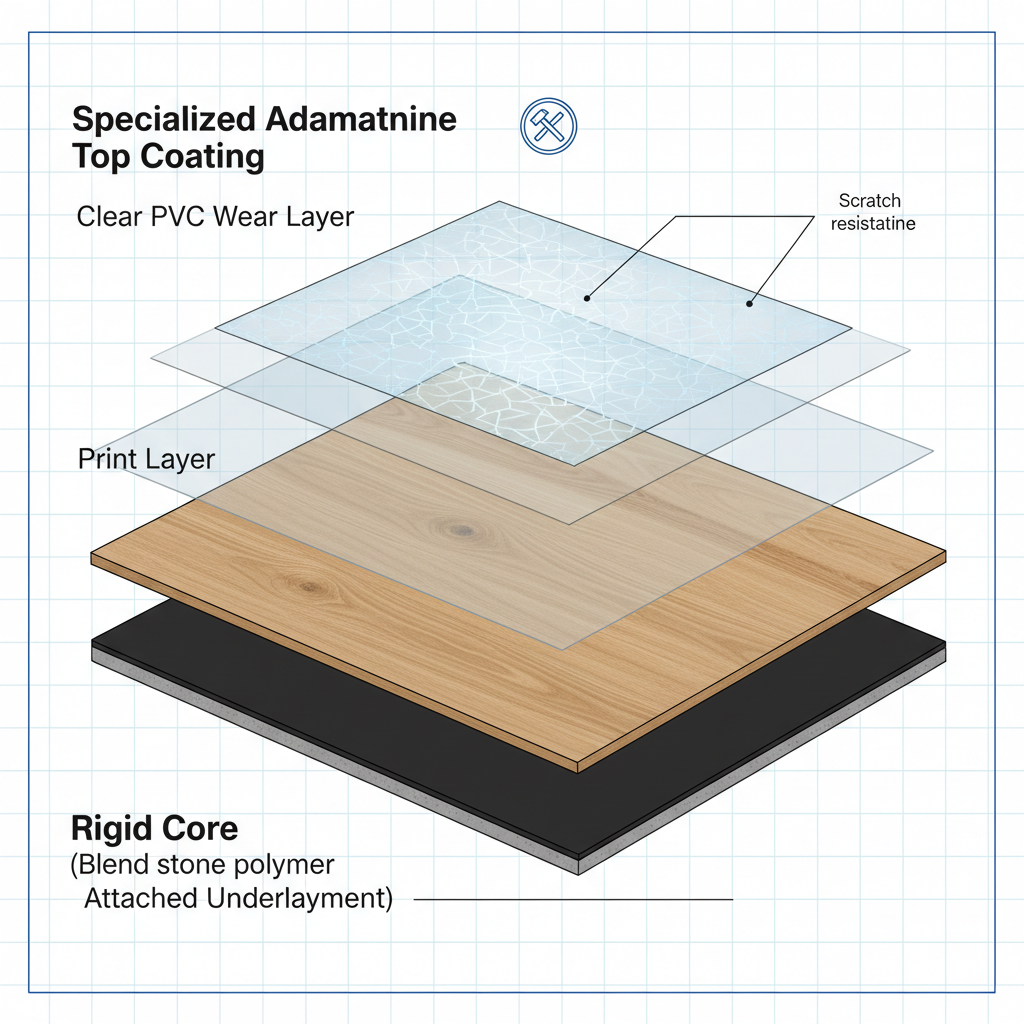
A massive point of consumer confusion lies in the difference between a floor’s “wear layer” and its “top coating.” When shopping for luxury vinyl, consumers often assume that a thicker wear layer automatically equals better scratch resistance. This is a myth. The wear layer (measured in mils) protects the printed design from wearing away, while the microscopic top coating is what actually prevents the scratches.
According to technical insights from Landmark Interiors, modern Luxury Vinyl Plank (LVP) is composed of a print layer, a clear PVC wear layer, and a specialized top coating [3]. It is this top coating—often infused with Aluminum Oxide, Ceramic Bead, or Nano Silver technologies—that provides the adamantine strength. In fact, Aluminum Oxide coatings provide up to three times greater scratch resistance compared to standard polyurethane finishes.
For optimal residential durability, retail experts at The LVP Warehouse recommend a wear layer of 12 to 20 mils to prevent wearing through the pattern, paired with a high-quality ceramic or aluminum oxide top coat to fend off surface scratches [4]. Nano Silver technology is also frequently integrated into these top coats, offering antimicrobial properties alongside extreme scratch resistance.
The High-Traffic Material Showdown: Best Flooring for Busy Families
Selecting the right high-traffic floors requires balancing extreme durability with aesthetic appeal and underfoot comfort. To cut through the noise, we can look at a “Durability Matrix” inspired by the performance testing standards of Flacks Flooring [5]. This matrix evaluates materials across impact resistance, scratch resistance, and moisture tolerance.
While porcelain tile is the raw durability winner—capable of lasting 50+ years and boasting near-perfect moisture and scratch resistance—it is incredibly hard and cold underfoot. For this reason, experts at Luxx Flooring strongly advise readers to perform physical scratch and water tests on flooring samples, and to walk on them in bare feet, before making a final purchase [6].
Luxury Vinyl Plank (LVP) & Laminate: The Undisputed Family Champions
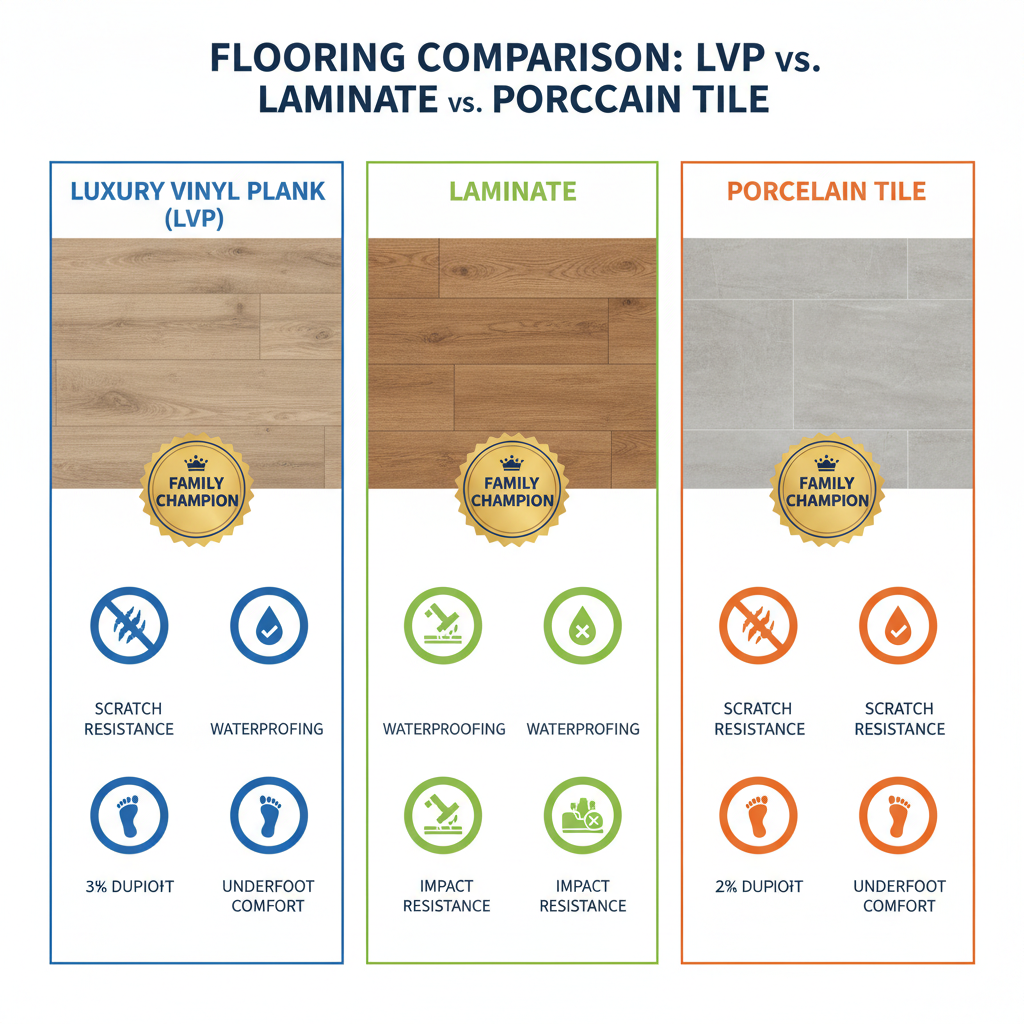
When evaluating durable adamantine floors for busy families, Luxury Vinyl Plank and modern Laminate consistently emerge as the undisputed champions. They offer the perfect intersection of high durability, waterproofing (in the case of LVP and specific laminates), and a softer acoustic and physical feel underfoot.
For laminate flooring, the Abrasion Class (AC) rating is the ultimate indicator of toughness. To survive the rigors of a busy household, you must look for an AC4 or AC5 commercial wear rating. Retail experts at Baker Bros confirm that these specific kid and pet-approved flooring specs are non-negotiable if you want the floor to withstand heavy foot traffic without degrading [7]. Furthermore, premium LVP and laminate options feature integrated acoustic underlayments that dampen the hollow “clicking” sounds often associated with hard surfaces, making them ideal for bustling homes.
Room-by-Room Recommendations: The Durability Blueprint
Rather than applying a single material to an entire house, the smartest architectural approach is to categorize options by specific room traffic types. Real-world case studies of flooring performance in busy homes over 5+ years, analyzed by Scharm Floor Covering, reveal that a tailored approach yields the best longevity [8]:
- Mudrooms and Entryways: Porcelain Tile. This area sees the highest concentration of abrasive dirt, moisture, and winter salts. Tile is impervious to these elements.
- Living Rooms and Hallways: High-mil LVP or AC4/AC5 Laminate. These areas require high scratch resistance for pets and kids, but benefit from the warmer, softer feel of vinyl or laminate.
- Kitchens: LVP or Glazed Ceramic Tile. Both offer excellent spill resistance and are easy to clean durable floors.
The ‘Cost per Year of Service’ Metric: Rethinking Flooring ROI
When shopping for durable home flooring, consumers are often paralyzed by the upfront installation price. However, true value is found by shifting the focus to the “Cost per Year of Service.” This metric divides the total cost of materials and installation by the expected lifespan of the floor, revealing the true long lasting flooring solutions.
For example, data from SoCal Flooring demonstrates that while solid hardwood has a high initial cost, its ability to be refinished multiple times gives it an incredibly low annual cost—often breaking down to just $0.11 to $0.17 annually per square foot over its lifetime [9]. The National Wood Flooring Association (NWFA) notes that with proper maintenance and refinishing every 10 to 20 years, hardwood can easily last 50 to 100+ years [10]. Conversely, while LVP is cheaper upfront, it cannot be refinished; once the wear layer is gone after 20 to 30 years, it requires a 100% replacement.
Subfloor Preparation: The Hidden Key to Extreme Longevity
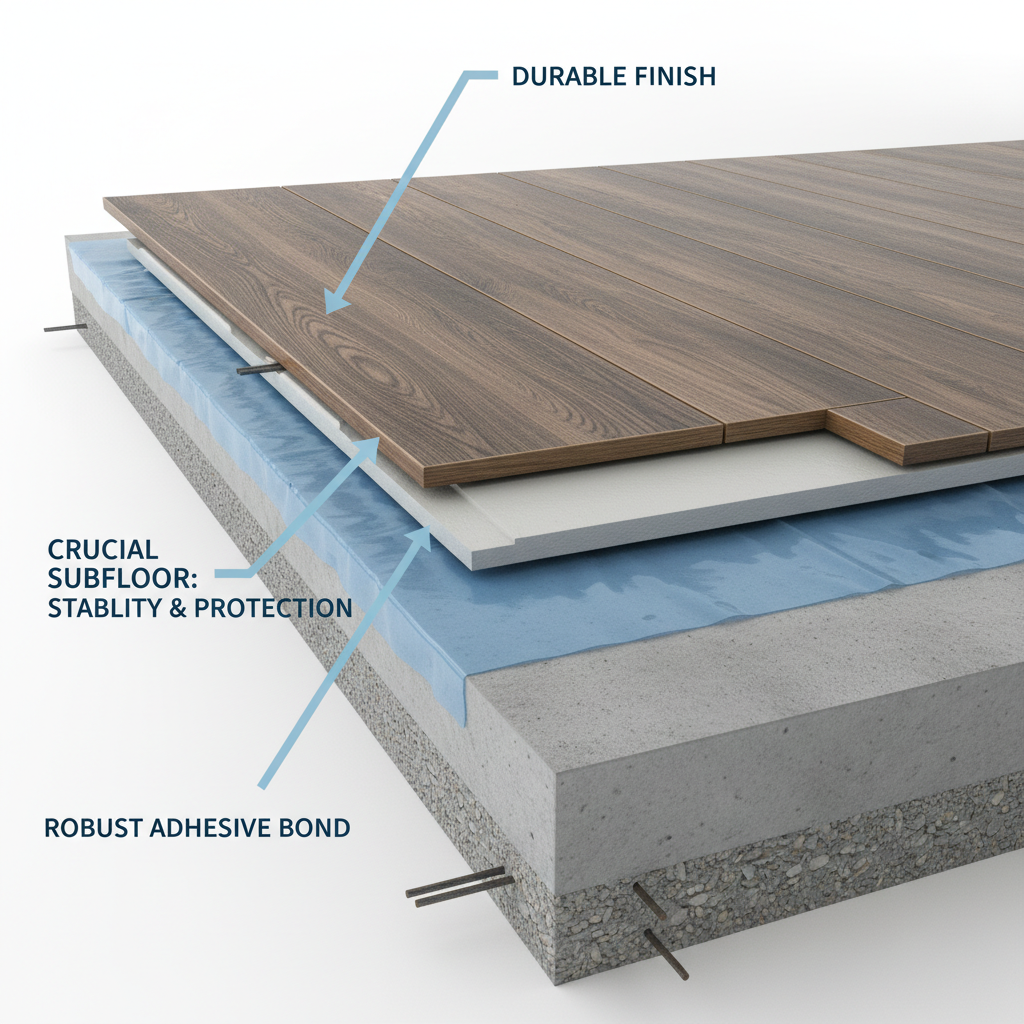
Even the most expensive, adamantine-grade flooring will fail prematurely if the subfloor beneath it is compromised. The secret to “The Lifetime Floor” lies in what you cannot see.
Commercial flooring authorities at Spectra Contract Flooring emphasize that proper subfloor preparation is non-negotiable [11]. This includes using urethane patching compounds to perfectly level concrete slabs, applying robust moisture barriers to prevent vapor emissions from warping the planks above, and utilizing the correct epoxy grouts or thin-set adhesives for tile. Ignoring the subfloor guarantees that your high-traffic floors will buckle, squeak, or crack long before the surface material actually wears out.
Triage, Repair, and Replacement: Fixing Worn Out Home Flooring
Eventually, even the toughest floors face the reality of high traffic floor damage. When faced with worn out home flooring, homeowners must navigate the financial and logistical dilemma of whether to spot-repair, professionally refinish, or completely replace the surface.
According to cost comparisons by The Flooring Specialist, professionally refinishing existing hardwood typically costs between $3 and $5 per square foot, which is often significantly cheaper than ripping it out and installing brand new, high-end LVP [12]. However, the decision depends entirely on the material and the extent of the damage.
The Triage Guide for Scratched Hardwood Floors
If you are dealing with scratched hardwood floors, do not panic. Minor surface scratches—those that have only breached the clear polyurethane topcoat but haven’t damaged the wood grain—can often be repaired in minutes using DIY blending pencils or specialized floor wax.
For deeper gouges, experts at Portercraft recommend a step-by-step technique using a soldering iron and hard wax to melt and fill the scratch, carefully blending it into the surrounding plank [13]. However, professional flooring contractors at Straight Edge Tile & Flooring advise that when scratches are widespread, or if the wood has turned gray from water penetrating the compromised finish, DIY methods will fail, and a full professional drum-sanding and refinishing is required [14].
The Refinish vs. Replace Decision Tree
To determine your next steps, use this simple decision tree:
- Identify the Material: Is it solid hardwood or engineered wood with a thick veneer? You can likely refinish it. Is it Laminate or LVP? These materials have a strict point of no return. Once the wear layer is breached, they cannot be sanded or refinished; 100% replacement is required.
- Assess for Structural Damage: Are the floors simply dull and scratched, or are they buckling, cupping, and warping? Experts at District Floor Depot explain that warping is a technical failure usually caused by moisture seeping into the seams or a failing subfloor [15]. Structural damage almost always necessitates full replacement and subfloor remediation.
Preventative Architecture: Low Maintenance Flooring for Active Lifestyles
The ultimate goal for busy families is low maintenance flooring for active lifestyles. The best way to handle damage is to practice “Preventative Architecture”—stopping the damage before it ever occurs and minimizing your weekly cleaning time.
When conducting a “Cleaning Time Audit,” hard surfaces vastly outperform carpets. Yonan Carpet One highlights that ceramic tiles, particularly glazed varieties, are entirely impervious to water and resist dust, pollen, and allergens, significantly improving indoor air quality while requiring minimal upkeep [16].
Defeating the ‘Sandpaper Effect’ of High Traffic
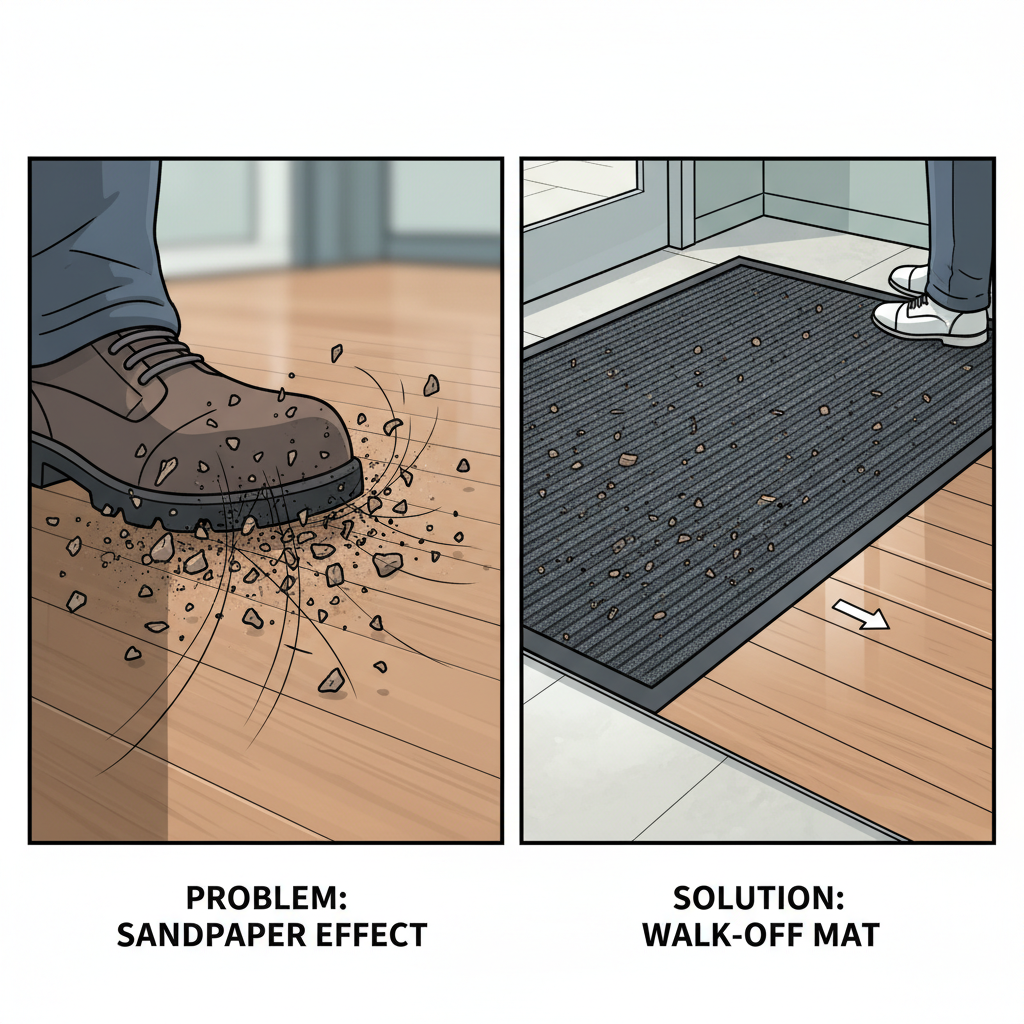
The number one enemy of any floor finish is microscopic dirt and grit. When walked upon, this grit acts exactly like sandpaper, slowly grinding away the adamantine top coat.
Commercial cleaning authorities at ServiceMaster Clean stress that routine sweeping or vacuuming at least once a day is critical to defeating this sandpaper effect, especially in winter when corrosive salts are tracked indoors [17]. Furthermore, experts at Hardwood Revival point out that the specific factors degrading floors can be mitigated by using walk-off mats [18]. Place an abrasive mat outside the door to scrape off heavy debris, and an absorbent mat inside to capture moisture and fine grit before it reaches your main living areas.
Warranty-Safe Cleaning Protocols & The Spill Test
Finally, maintaining easy to clean durable floors means using the right chemicals. Many homeowners accidentally void their warranties and accelerate floor degradation by using improper, corrosive cleaning agents or excessive water.
For LVP and Laminate, the “Spill Test” proves their worth—they handle liquid spills beautifully if wiped up promptly. However, Duke’s Coastal Flooring warns heavily against allowing standing water to remain on laminate floors, as it can seep into the locking mechanisms and cause irreversible swelling [19]. Similarly, experts at Flooring America advise against using steam cleaners on LVP, as the extreme heat can warp the planks and melt the adhesives [20]. Always use manufacturer-approved, pH-neutral cleaners and a damp (never soaking wet) mop to preserve your adamantine finish for decades to come.
Conclusion
Achieving a truly “adamantine” floor that can withstand the rigors of a busy, high-traffic home is not about chasing marketing buzzwords. It is about matching material science—specifically wear layers, advanced top coats, and proper subfloor preparation—to your family’s unique traffic patterns. By shifting your perspective from upfront pricing to the long-term Cost-Per-Year metric, you can invest in materials that offer genuine longevity. We highly encourage you to order physical flooring samples to conduct your own scratch and spill tests at home, and to consult with a certified flooring installer to assess your subfloor’s health before making your final purchase.
Disclaimer: General home improvement disclaimer: Flooring installation and structural subfloor assessments should be evaluated by certified professionals. Prices and lifespans are estimates based on industry averages.
References & Authoritative Sources
- Material Science Journals. (N.D.). Analysis of Aluminum Oxide and Ceramic Bead Durability in Surface Coatings. Retrieved from material science industry publications.
- The World Floor Covering Association (WFCA). (N.D.). Flooring Standards and Terminology. Retrieved from WFCA Official Guidelines.
- Landmark Interiors. (N.D.). The Chemical Composition of Flooring Top Coats: Ceramic Bead and Nano Silver. Retrieved from Landmark Interiors.
- The LVP Warehouse. (N.D.). Realistic Limits of LVP Scratch Resistance and Wear Layer Requirements. Retrieved from The LVP Warehouse.
- Flacks Flooring. (N.D.). Detailed Performance Matrices for Flooring. Retrieved from Flacks Flooring.
- Luxx Flooring. (N.D.). The Importance of Real-World Sample Testing. Retrieved from Luxx Flooring.
- Baker Bros. (N.D.). Kid and Pet-Approved Flooring Specs. Retrieved from Baker Bros.
- Scharm Floor Covering. (N.D.). High-Traffic Material Selection and Performance Over Time. Retrieved from Scharm Floor Covering.
- SoCal Flooring. (N.D.). Residential Flooring Lifespans and Cost-Per-Year Analysis. Retrieved from SoCal Flooring.
- National Wood Flooring Association (NWFA). (N.D.). Hardwood Lifespan and Refinishing Guidelines. Retrieved from NWFA Official Guidelines.
- Spectra Contract Flooring. (N.D.). Commercial Flooring Authority on Epoxy and Subfloor Installations. Retrieved from Spectra Contract Flooring.
- The Flooring Specialist. (N.D.). Comprehensive Guides on the Refinish vs. Replace Dilemma. Retrieved from The Flooring Specialist.
- Portercraft. (N.D.). Detailed, Step-by-Step Wood Scratch Repair Techniques. Retrieved from Portercraft.
- Straight Edge Tile & Flooring. (N.D.). Professional Triage Advice for Hardwood Scratches. Retrieved from Straight Edge Tile & Flooring.
- District Floor Depot. (N.D.). Identifying Unrepairable Floor Damage and Warping. Retrieved from District Floor Depot.
- Yonan Carpet One. (N.D.). Pros and Cons of Tile vs. LVP for Busy Households. Retrieved from Yonan Carpet One.
- ServiceMaster Clean. (N.D.). Commercial Cleaning Authority on Maintaining High-Traffic Surfaces. Retrieved from ServiceMaster Clean.
- Hardwood Revival. (N.D.). Specific Factors That Degrade Hardwood in Busy Areas. Retrieved from Hardwood Revival.
- Duke’s Coastal Flooring. (N.D.). Low-Maintenance Residential Flooring Options and Warnings. Retrieved from Duke’s Coastal Flooring.
- Flooring America. (N.D.). Modern Low-Maintenance Flooring Technologies and Cleaning Protocols. Retrieved from Flooring America.
