We have all experienced the distinct, sinking frustration of watching a relatively new purchase fail. A zipper detaches from a “premium” jacket after a single season; a sleek, modern appliance suddenly stops whirring just weeks after its warranty expires; a stylish chair wobbles and splinters under normal use. You are not imagining this decline in quality, nor is it a simple stroke of bad luck. You are experiencing the “cheap garbage” epidemic—a systemic era of manufacturing where products are deliberately engineered to break.
This phenomenon, known as planned obsolescence, has transformed us into a society of perpetual consumers, trapped in a cycle of buying, discarding, and repurchasing fragile modern products. But there is an antidote to this costly and environmentally devastating cycle. Enter “The Adamantine Standard.”
Derived from the mythological concept of an unbreakable, diamond-like material, the adamantine standard represents a return to unyielding artisan durability. It is a rejection of disposable consumerism in favor of heirloom quality goods. In this comprehensive guide, we will deconstruct the physics of true durability, provide a tactile framework to help you spot faux-artisan fakes, and prove the undeniable financial return on investment (ROI) of generational goods.
- The ‘Cheap Garbage’ Epidemic: Why Modern Products Are Engineered to Break
- Defining the ‘Adamantine’ Standard in Artisan Durability
- The Craftsman’s Tell: How to Identify True Craftsmanship
- The Heirloom Matrix: 5 Non-Negotiable Traits of Generational Goods
- The ROI of Heirloom: Why Investing in Quality Pays for Itself
- Safeguarding the Trade Secret: Traditional Techniques and Post-Purchase Care
- Conclusion
- References & Authoritative Sources
The ‘Cheap Garbage’ Epidemic: Why Modern Products Are Engineered to Break
The shift from durable, generational manufacturing to disposable consumerism was not an accident; it was a highly calculated economic strategy. Planned obsolescence in manufacturing is the deliberate limiting of a product’s lifespan to force frequent repurchasing. It is a design philosophy that prioritizes corporate revenue over consumer value and environmental sustainability.
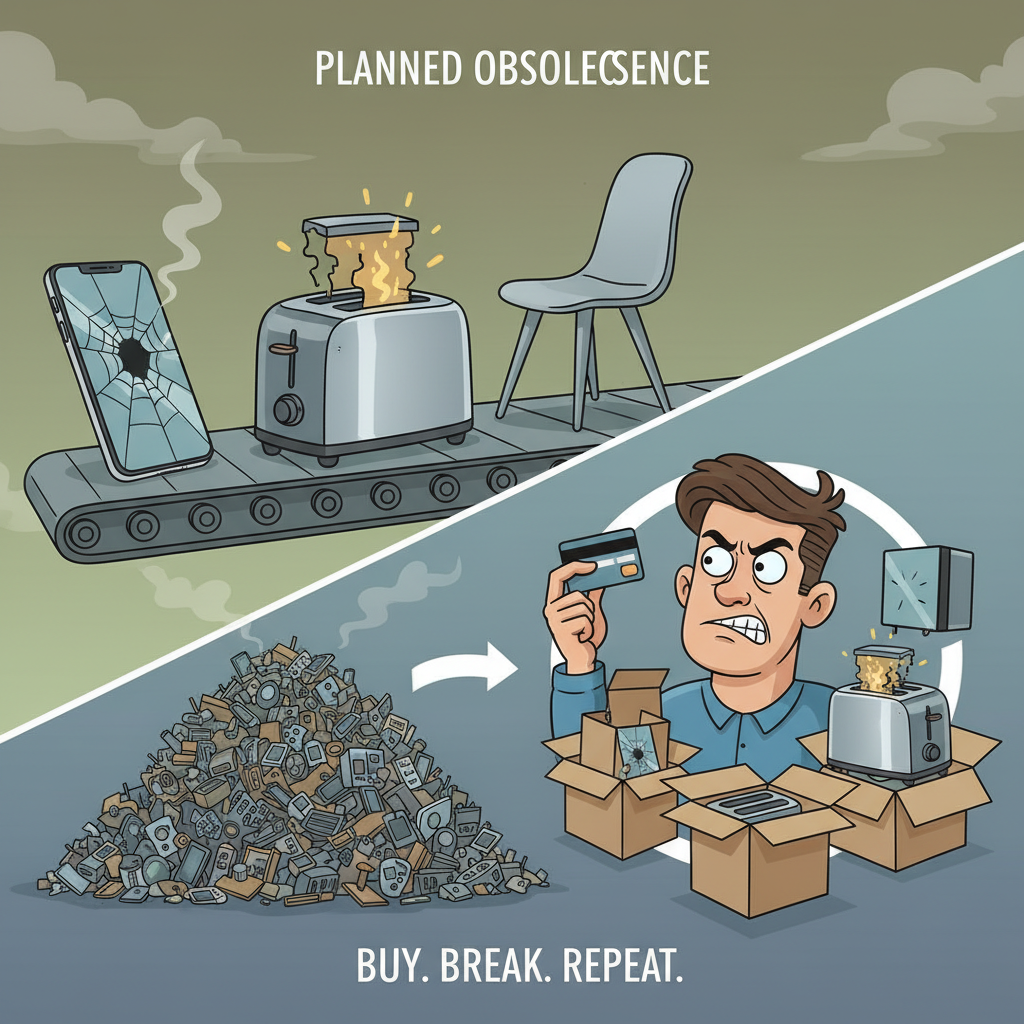
To understand the sheer scale of this issue, we must look at the academic focus it now demands. According to data from the National Library of Medicine, out of 221 scientific articles reviewed on the subject of product lifespans, 34% focused specifically on methodological design approaches for addressing obsolescence [1]. The scientific community is actively trying to reverse-engineer a problem that manufacturers have spent decades perfecting.
Fortunately, the tide is beginning to turn. Recognizing the massive environmental waste and consumer financial drain caused by low quality mass produced goods, regulatory bodies are stepping in. Regional legislation, such as Québec’s recent anti-obsolescence laws, is being drafted to protect consumers and penalize companies that intentionally shorten the lifespan of their goods [2]. However, legislation alone cannot fix the systemic design issues inherent in modern manufacturing.
Matthew Bird, Professor of Industrial Design at the Rhode Island School of Design (RISD), highlights the core of the issue: the hidden costs of reducing manufacturing labor. As companies strive to cut costs, they inevitably shift from durable materials like metal to cheaper, injection-molded plastics, sacrificing longevity for immediate profit margins [3].
The Hidden Cost of Reducing Manufacturing Labor
When we examine the anatomy of expiration in fragile modern products, the downgrade in material composition is stark. Consider the vintage stand mixers from the 1950s, built with solid metal gears and heavy-duty steel housings. Many of these appliances are still operational today. Compare them to their modern equivalents, which often feature plastic internal gears that strip under heavy loads.
This shift is driven by immense supply chain pressures and a relentless drive to lower the retail price. However, this creates a fascinating and destructive design paradox: in solving the problem of immediate affordability, industrial design has invented the new problem of extreme fragility. Consumers have been psychologically conditioned to expect short product lifespans, accepting that a toaster or a piece of flat-pack furniture will inevitably end up in a landfill within a few years.
Defining the ‘Adamantine’ Standard in Artisan Durability
To combat this epidemic, we must look to “adamantine craftsmanship.” While “adamantine” historically refers to a mythological, unbreakable substance, in the context of modern artisan durability, it represents the absolute pinnacle of structural integrity and material science. It is the pursuit of creating products with unyielding strength.
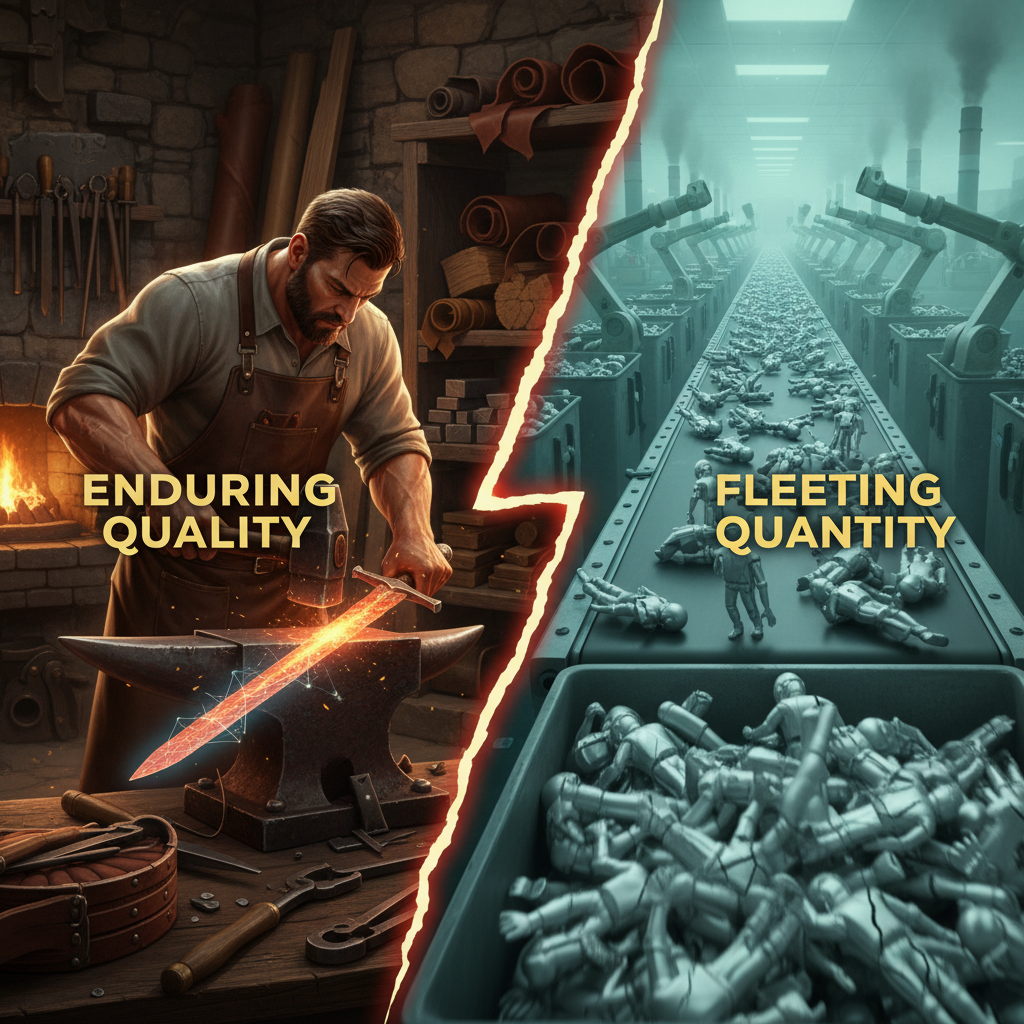
Achieving this standard requires bridging the gap between traditional techniques and modern scientific understanding. For instance, the Journal of Materials Science regularly publishes peer-reviewed data on material hardness, tensile strength, and the specific alloy compositions required to withstand extreme stress [4]. True artisans apply these principles, whether they realize it or not, through their meticulous techniques.
Consider the expert forging techniques championed by the American Bladesmith Society [5]. A master bladesmith doesn’t just heat and hit metal; they manipulate the very molecular structure of the steel, aligning the grain to achieve a blade that is both incredibly hard (to hold an edge) and remarkably flexible (to prevent snapping).
This same physics applies to woodworking. Why does a handmade chair outlast a machine-welded metal stool? It comes down to the physics of traditional joinery. A properly executed mortise and tenon joint, crafted from solid hardwood, is designed to flex and absorb stress. It moves with the natural expansion and contraction of the environment. In contrast, rigid machine welds on cheap metal furniture cannot absorb this kinetic energy, leading to sudden, catastrophic snapping under pressure.
Forging the Unbreakable: Materials and Single-Piece Construction
Creating products with unyielding strength often involves a hybrid of legacy techniques and cutting-edge engineering. One of the most effective methods for achieving adamantine strength is single-piece construction, or SolidBody construction, where a product is formed from a single continuous material rather than assembled from multiple weak points.
We see this structural integrity utilized in high-stress product engineering. Braun Ambulances, for example, utilizes a specialized SolidBody construction process to ensure maximum safety and durability in life-or-death, high-impact environments [6].
In the realm of consumer goods, modern continuous process manufacturing—a methodology detailed extensively by supply chain authorities like Fishbowl Inventory—allows for the creation of seamless, ultra-durable components that eliminate the fragile joints and screws where low-quality goods typically fail [7].
The Craftsman’s Tell: How to Identify True Craftsmanship
Understanding the physics of durability is only half the battle; you must also know how to identify true craftsmanship in the wild. The market is flooded with faux-artisan marketing—mass-produced items dressed up with rustic finishes and premium price tags. To avoid being scammed, you need a practical, tactile inspection framework.
When evaluating a potential purchase, engage your senses. Do not just look at the facade; investigate the “invisible” aspects of the piece.
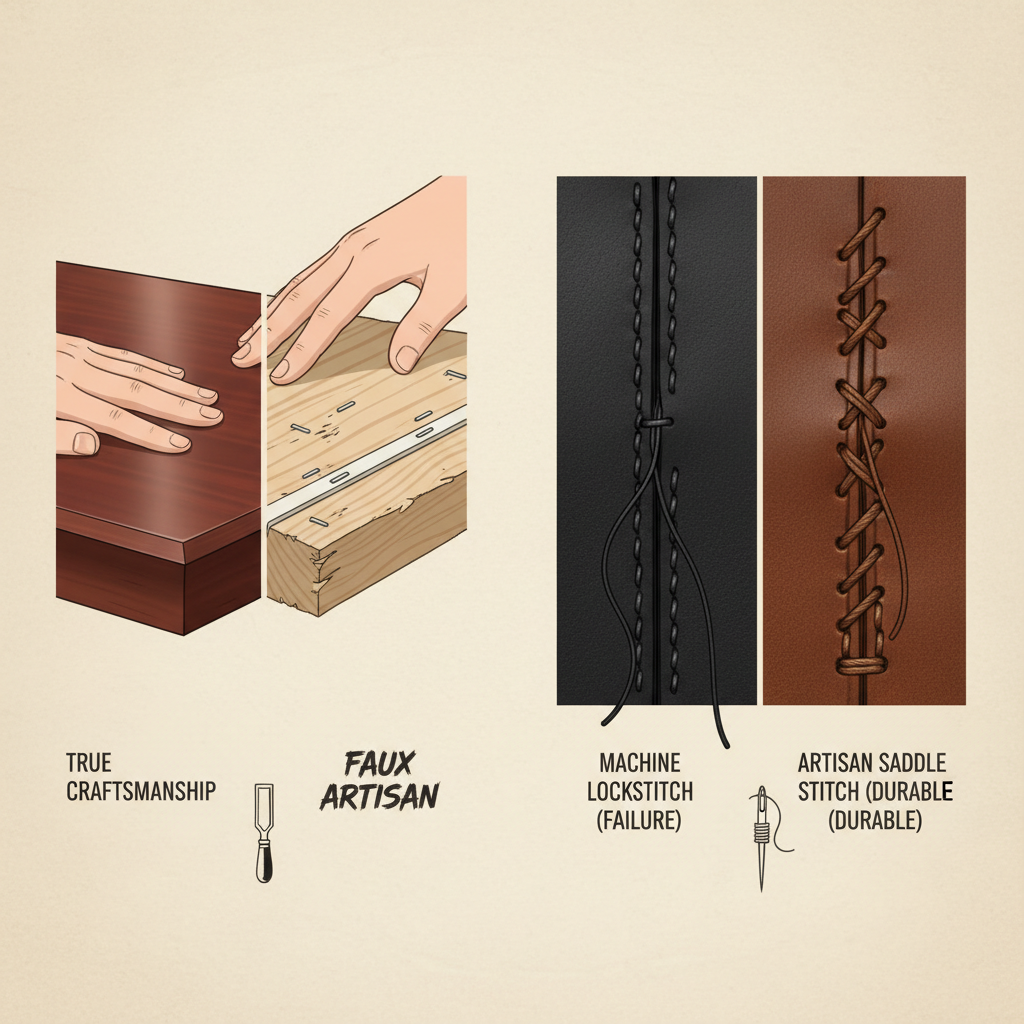
- The Underside Test: Run your hands along the underside of a table or chair. True craftsmen finish the unseen areas. If you feel rough, unsanded wood, globbed glue, or see industrial staples, it is not heirloom quality.
- The Stitch Tension Test: When inspecting leather goods, look closely at the stitching. Machine lockstitches sit perfectly flat and, if one thread breaks, the entire line unravels. Traditional artisan saddle stitching, however, features a slight, durable angle. Because it uses two needles passing through the same hole, if one thread breaks, the other holds the piece firmly together.
Established design authorities like Smashing Magazine emphasize that great design is inherently tied to meticulous, user-centric craftsmanship [8]. Similarly, bespoke furniture makers like Penny Mustard note that the top traits of incredible craftsmen include an obsession with structural integrity over mere aesthetics [9].
Pro Tip: To empower your next shopping trip, we highly recommend creating your own “Craftsmanship Inspection Checklist” based on these principles—checking for solid materials, traditional joinery, lack of synthetic glues, and high-tension stitching.
The Heirloom Matrix: 5 Non-Negotiable Traits of Generational Goods
What elevates a product from merely “good” to true heirloom quality goods? It is not just a high price tag or a vintage aesthetic. Building durable artisan goods requires adhering to a strict set of criteria we call the Heirloom Matrix.
- Material Purity: Heirlooms are made from unadulterated materials. This means solid, sustainably harvested wood instead of toxic particleboard and veneers; full-grain leather instead of bonded “genuine” leather; and solid brass or stainless steel hardware instead of coated plastics.
- The Repairability Index: This is perhaps the most critical trait. A true heirloom is designed to be repaired, not replaced. It utilizes screws, bolts, and traditional joints rather than permanent, unyielding industrial glues. If a part breaks, a skilled artisan should be able to disassemble and fix it.
- Timeless Design: Generational goods eschew fleeting micro-trends. They rely on classic proportions and functional aesthetics that will look as appropriate in fifty years as they do today.
- Structural Integrity: The internal framing—the skeleton of the piece—must be as robust as the exterior.
- Provenance and Story: Heirlooms carry the mark of their maker.
Insights from professional antique appraisers, such as those featured on Antiques Roadshow, confirm these traits. When evaluating what survives a century of use, appraisers consistently look for solid material composition and evidence of repairable, traditional joinery [10].
The ROI of Heirloom: Why Investing in Quality Pays for Itself
The most common barrier to investing in heirloom quality items is the upfront cost. It is undeniably cheaper today to buy a flat-pack desk than a handcrafted solid oak one. However, we must shift the narrative from pure sentimentality to financial and environmental pragmatism.
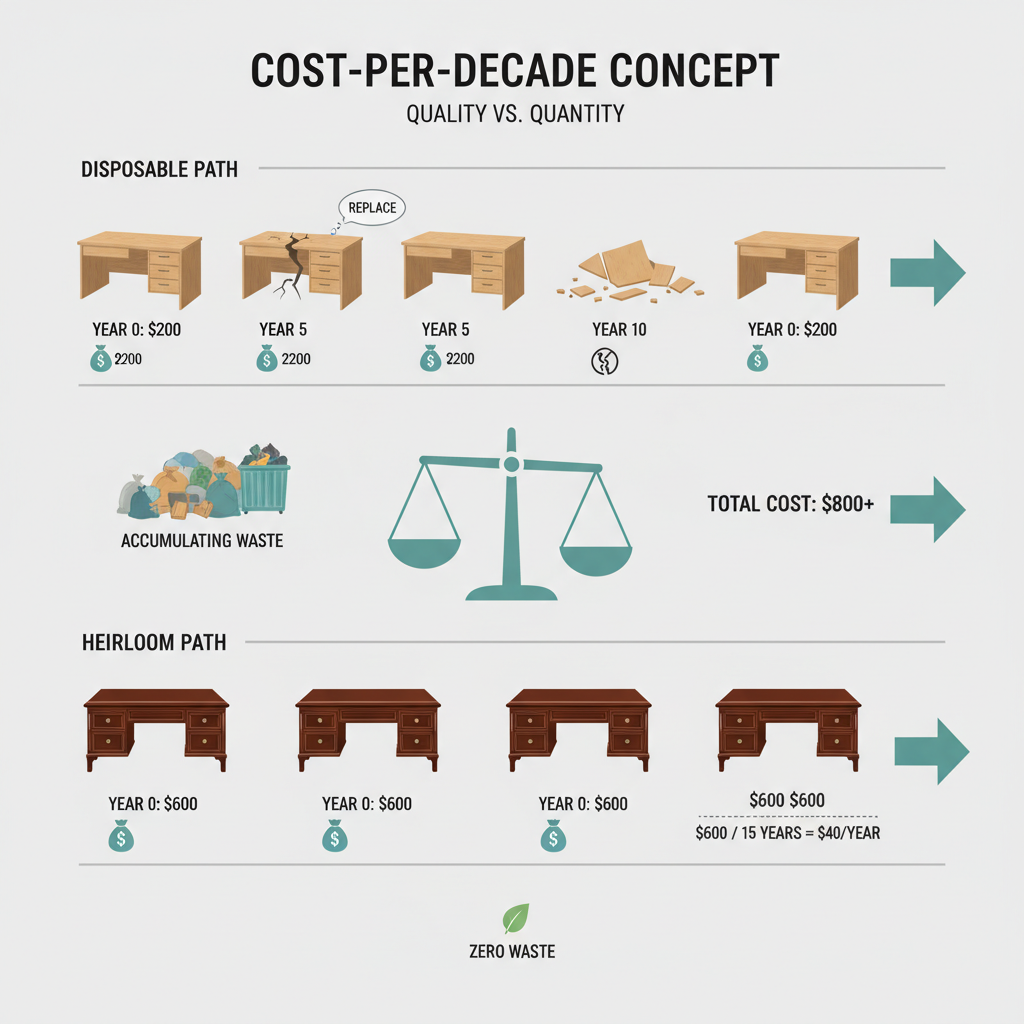
Consider the “Cost-Per-Decade” calculator concept. If you purchase a $200 particleboard desk that chips, sags, and breaks every 4 years, you will spend $500 over a single decade, not including the time and frustration of assembly and disposal. Over 40 years, that is $2,000 spent on garbage. Conversely, a $1,500 artisan-crafted solid wood desk represents a higher initial output, but its cost over those same 40 years remains $1,500—and it retains residual value to be passed down or resold.
The benefits of heirloom quality handcrafted goods extend far beyond your wallet. Wild Edgewood Craft, an authority on sustainable furniture, emphasizes that true long-term value lies in breaking the cycle of consumption [11]. Similarly, Earlywood Designs operates on the philosophy of manufacturing to the “theoretical best”—creating a product so perfect and durable that it literally never needs to be replaced [12].
By investing in the adamantine standard, you are making a profound environmental choice. You are keeping massive amounts of non-biodegradable plastics and toxic glues out of landfills, reducing waste through lifelong purchases.
Safeguarding the Trade Secret: Traditional Techniques and Post-Purchase Care
The creation of building durable artisan goods is deeply intertwined with global cultural heritage. Traditional craftsmanship techniques are not just methods of production; they are living histories.
UNESCO’s framework for Intangible Cultural Heritage highlights the urgent importance of preserving these generational skills, which are constantly threatened by the convenience of digital, mass-produced alternatives [13]. By purchasing genuine artisan goods, you are actively funding the survival of these techniques. Organizations like SERRV International showcase how supporting highly specific global techniques—such as Indonesian Batik or intricate Indian block printing—empowers local communities and preserves ancient artistry [14].
However, the adamantine standard is a partnership between the maker and the owner. Even the most robust heirloom requires proper post-purchase care to last a lifetime.
According to expert maintenance instructions from sources like Grayhill Woodworking, the longevity of handmade wooden products relies heavily on environmental management [15].
- Moisture Prevention: Wood is hydroscopic; it breathes. Keep artisan furniture away from direct, localized heat sources (like radiators) which can cause severe cracking, and maintain a stable indoor humidity.
- Airflow: Ensure proper airflow around solid wood pieces to prevent warping.
- Nourishment: Regularly apply specific, maker-recommended oils or natural beeswax finishes to feed the material and maintain its protective barrier against daily wear.
Conclusion
The “cheap garbage” epidemic and the frustrating reality of planned obsolescence are not inevitable facts of modern life; they are choices made by mass manufacturers. But as consumers, we have the power to make a different choice.
By understanding the physics of artisan durability, learning the craftsman’s tell to spot genuine quality, and recognizing the long-term financial and environmental ROI of generational goods, we can escape the cycle of disposable consumerism. The adamantine standard is more than just a measure of unyielding strength—it is a commitment to sustainability, a respect for traditional heritage, and a profound investment in our own financial future.
Challenge yourself today: Audit your next major purchase using the principles of the Heirloom Matrix. Refuse to pay for engineered failure, and commit to investing in at least one true, adamantine heirloom piece this year.
References & Authoritative Sources
- National Center for Biotechnology Information (NCBI). (N.D.). Data on methodological design approaches for addressing obsolescence. Retrieved from peer-reviewed scientific literature on obsolescence metrics.
- Government of Québec. (N.D.). Anti-obsolescence laws and consumer protection legislation.
- Bird, M. (N.D.). Expert insights on design history, manufacturing, and the shift from metal to plastic. Rhode Island School of Design (RISD).
- Journal of Materials Science. (N.D.). Peer-reviewed data on material hardness and tensile strength.
- American Bladesmith Society. (N.D.). Expert forging techniques and metallurgical structural integrity.
- Braun Ambulances. (N.D.). Industry examples of high-strength structural engineering and SolidBody Construction.
- Fishbowl Inventory. (N.D.). Authority on manufacturing processes, supply chain, and continuous process manufacturing.
- Smashing Magazine. (N.D.). Principles of great design and craftsmanship.
- Penny Mustard. (N.D.). Traits of incredible craftsmen and structural integrity.
- Antiques Roadshow. (N.D.). Expert insights on identifying lasting quality and generational provenance.
- Wild Edgewood Craft. (N.D.). Authority on sustainable, generational furniture and the long-term value of quality.
- Earlywood Designs. (N.D.). Expert perspective on manufacturing to the ‘theoretical best’.
- UNESCO. (N.D.). Global authority and framework for Intangible Cultural Heritage.
- SERRV International. (N.D.). Authority on fair trade, global artisan techniques (Batik, block printing), and cultural preservation.
- Grayhill Woodworking. (N.D.). Expert source on wooden product maintenance, moisture prevention, and finishing.
