Introduction
Floor damage is one of the costliest and most common remodel overruns—scratches from grit, dents from carts and ladders, staining from paint, and moisture entrapment under the wrong coverings. The wrong choice in floor protection can mean finish failures, schedule slips, and tense handoffs. This guide is your field-tested, lab-verified playbook for preventing those losses with Adamantine floor protection. You’ll see when and why Adamantine delivers safer, warranty-backed performance than commodity boards and films (and how it compares with Ram Board, Trimaco, and Surface Shields—clearly labeled as manufacturer claims where applicable [7][8][9]). Inside, you’ll find a risk-based selector, ASTM benchmarks, install and removal SOPs, a tape/finish compatibility matrix, head‑to‑head comparisons, warranty clarity, and ROI guidance.
- Introduction
- Why Use Adamantine: The Zero-Damage Renovation Advantage
- What Adamantine Is and How It Works
- Risk-Based Protection Planning: Choose the Right Protection for Every Surface and Scenario
- Performance Benchmarks That Matter (ASTM-Verified)
- Tape and Finish Compatibility Matrix (Residue and Stain Avoidance)
- Installation, Maintenance, and Removal SOP
- Head‑to‑Head: Adamantine vs Ram Board, Trimaco, and Surface Shields
- Warranty, Trust, and ROI: What’s Covered and How to Claim
- Multi‑Surface Renovation Checklist: Floors, Stairs, Countertops, and Walls
- Field‑Proven Case Studies and Testimonials
-
FAQs: Floor and Surface Protection During Renovations
- What is Adamantine floor protection and how does it work?
- Is it safe on site‑finished hardwoods and curing floors?
- How does Adamantine compare to Ram Board, Trimaco, and Surface Shields?
- How do you install and remove Adamantine without residue?
- What is the best floor protection for hardwood, tile, concrete, or vinyl?
- Should floor protection be breathable on curing floors?
- Will adhesive films or tapes damage my floor finish?
- How thick should protection be for heavy traffic and rolling loads?
- How long can protection stay installed during a remodel?
- Is Adamantine resistant to jobsite chemicals and spills?
- Will it withstand carts, ladders, and scissor lifts?
- Is it reusable, and what’s the cost per use?
- What voids the warranty and how do I file a claim?
- How should water or chemical spills be handled?
- Which tapes are safest for delicate walls and fresh paint?
- What certifications or tests indicate a reliable product?
- Conclusion
- Disclaimer
- References
Why Use Adamantine: The Zero-Damage Renovation Advantage
On premium projects, “good enough” surface protection isn’t good enough. Adamantine is engineered for zero-damage outcomes, combining verified durability, breathability options for curing surfaces, chemical splash resistance, slip resistance, and a clear, enforceable warranty. Performance claims are substantiated with industry-standard test methods, including ASTM D4060 (abrasion), F970 (static load/rolling-load proxy), D1790/D5420 (impact), D1308 (chemical resistance), E96 (water vapor transmission), and D2047 (slip).
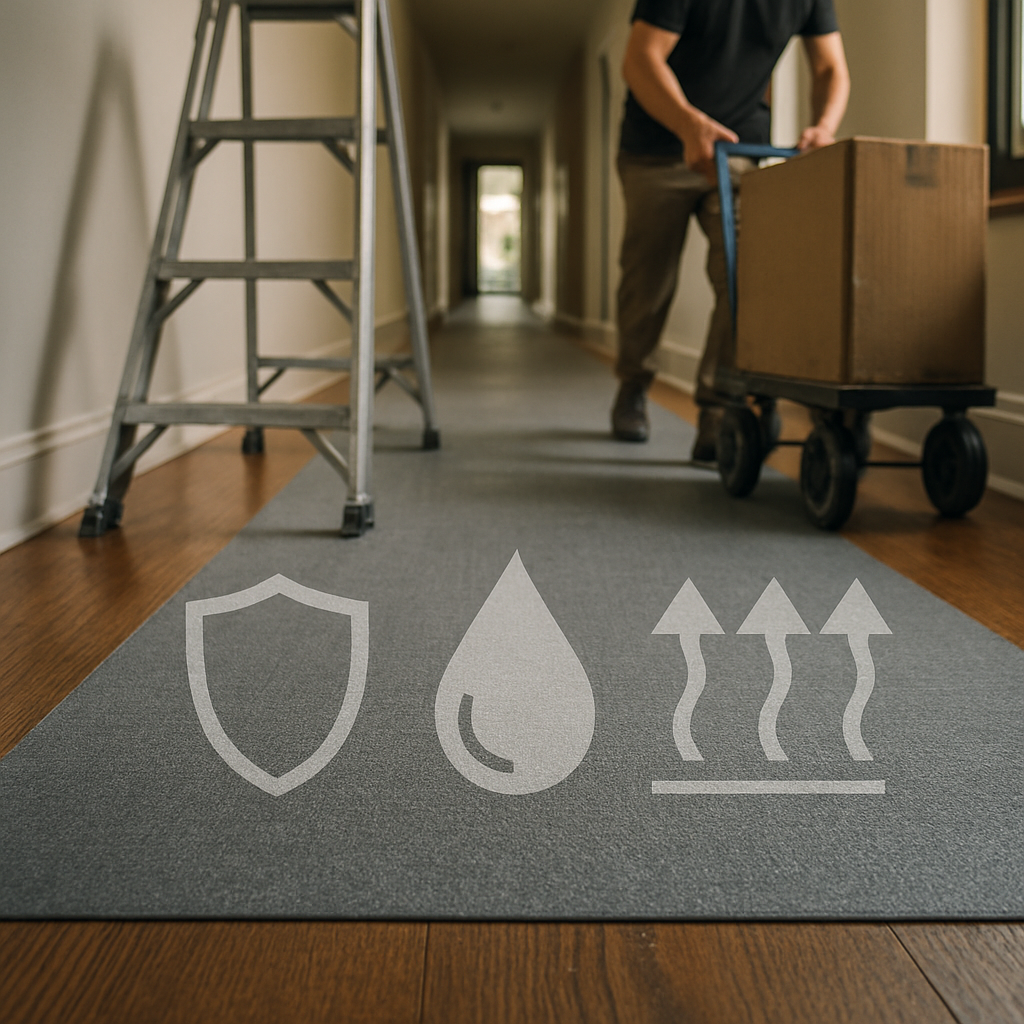
“On site-finished hardwoods, two numbers matter most on day one—permeance and load tolerance. A breathable protection with documented compressive strength prevents both moisture whitening and denting along traffic corridors.”
NWFA Installation Guidelines (context), summarized for renovation conditions [1]
Why this matters:
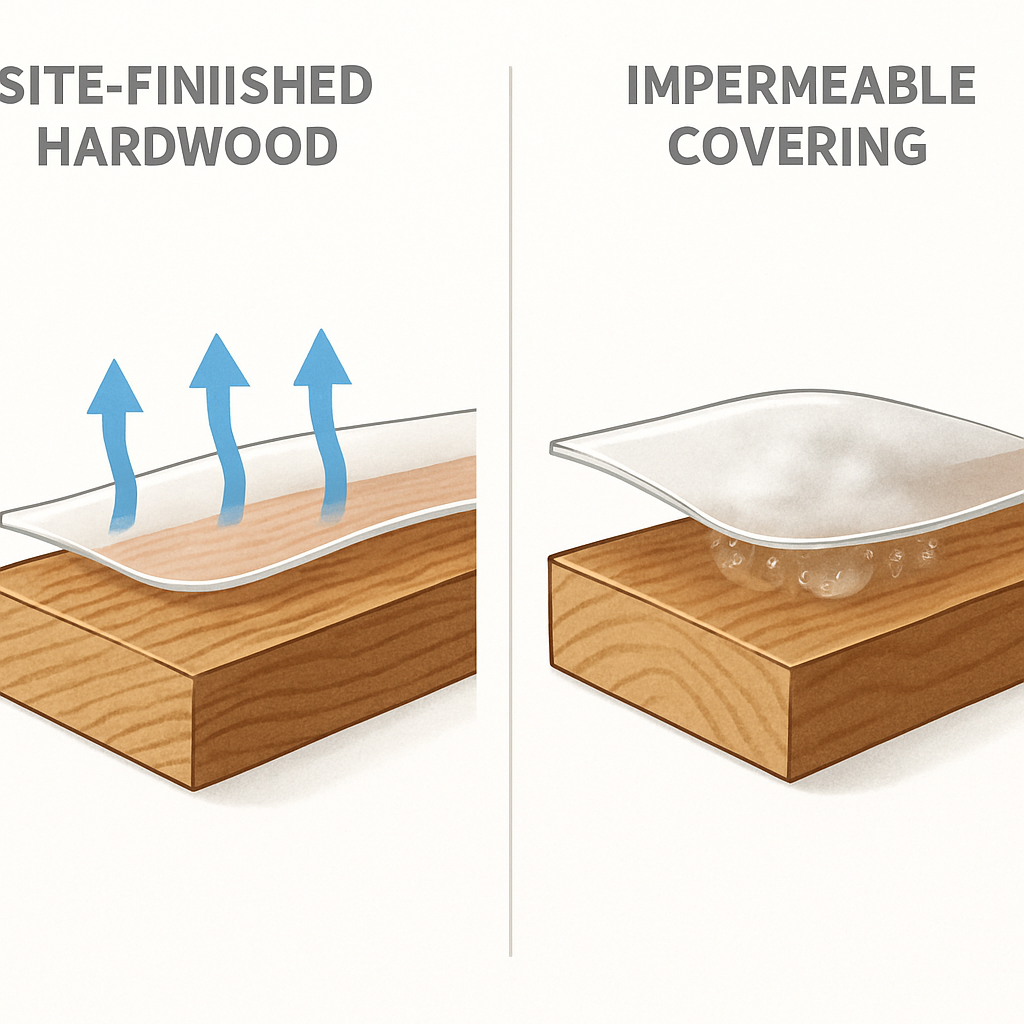
- Breathability: Impermeable coverings on curing finishes can trap moisture, risking finish whitening, cupping, or adhesion issues. Industry guidance warns against this practice on wood floors and in suboptimal jobsite conditions [1].
- Load capacity: Heavy carts, ladders, and scissor lifts demand documented compressive and puncture resistance—especially through high-traffic corridors.
- Chemical resistance: Real jobsites include paint, adhesive, and solvent exposure. D1308-style testing ensures the protection won’t soften, stain, or transfer under typical spill dwell times.
- Safety: Documented slip resistance supports worker safety when dust accumulates or ladders are in use.
Warranty-backed assurance: Adamantine’s coverage, exclusions, and claim workflow are presented in plain language, with a signed, dated Warranty PDF and claim checklist hosted alongside installation and tape-compatibility documents (see Warranty section).
Top Risks Adamantine Solves on Real Jobsites
- Scratches from tracked grit and debris: Adamantine’s abrasion-resistant surface and install SOP (pre-clean, tacky mats, inspection cadence) reduce micro-scratching that shows up at turnover. Practical housekeeping—pre-cleaning and tacky mats at entries—further cuts tracked debris [3].
- Dents and ruts from rolling loads: Verified compressive strength (F970 context) and puncture/impact resistance help prevent telegraphed damage from carts, ladders, and point loads.
- Moisture entrapment on curing floors: Breathable configurations (E96) allow vapor to escape, reducing risks cited by wood-flooring authorities for new finishes and sensitive substrates [1].
- Chemical spills and paints: D1308-style chemical resistance helps prevent staining/softening when accidents happen; SOPs specify immediate containment and SDS-informed cleanup.
- Slips, trips, and seam failures: Slip resistance (D2047) and approved seam tapes reduce trip hazards; install guidance covers low-profile overlaps and perimeter detailing.
What Adamantine Is and How It Works
Adamantine is a reusable, durable, multi-surface floor and surface protection system designed for heavy jobsite traffic and sensitive finishes. Its engineered composite and surface treatment deliver:
- Scratch and wear defense: Quantified via Taber abrasion (ASTM D4060) to correlate cycles-to-wear with corridor traffic.
- Impact and puncture resistance: Assessed under ASTM D1790/D5420-style testing to withstand dropped tools and sharp debris.
- Compressive and rolling-load tolerance: Contextualized with ASTM F970 deflection criteria to resist dents under carts and ladders.
- Breathability options (ASTM E96): Configurations with measured perm ratings to protect curing hardwood finishes and concrete while allowing safe vapor transmission.
- Chemical resistance (ASTM D1308 context): Evaluated against common jobsite chemicals (paints, adhesives, cleaners) with documented exposure times and outcomes.
- Slip resistance (ASTM D2047): Static coefficient of friction data supports ladder and worker safety.
Technical Data Sheets (TDS), Safety Data Sheets (SDS), and a substrate-specific Installation Manual provide detailed guidance for hardwood (site-finished and factory-finished), tile/stone, vinyl/resilient, and concrete.
Is Adamantine Safe on Site-Finished Hardwoods and Curing Floors?
Yes—when you match the protection’s permeance and tape system to the finish’s cure stage and maintain proper jobsite conditions. Industry guidance for wood floors emphasizes stable temperature and relative humidity, adequate cure times, and avoiding moisture entrapment under coverings [1]. Use Adamantine’s breathable configuration with published E96 perm ratings during early cure phases, and only transition to lower-perm, liquid-holdout layers when the finish manufacturer’s cure window and NWFA jobsite conditions are met [1]. Always pair with approved low- or medium-adhesion tapes and respect labeled dwell times to prevent residue.
Risk-Based Protection Planning: Choose the Right Protection for Every Surface and Scenario
Use this selector to align substrate, cure status, loads, and exposure to the right Adamantine configuration. Build reinforced corridors for rolling loads, manage dust to protect air quality during occupied renovations, and inspect regularly.
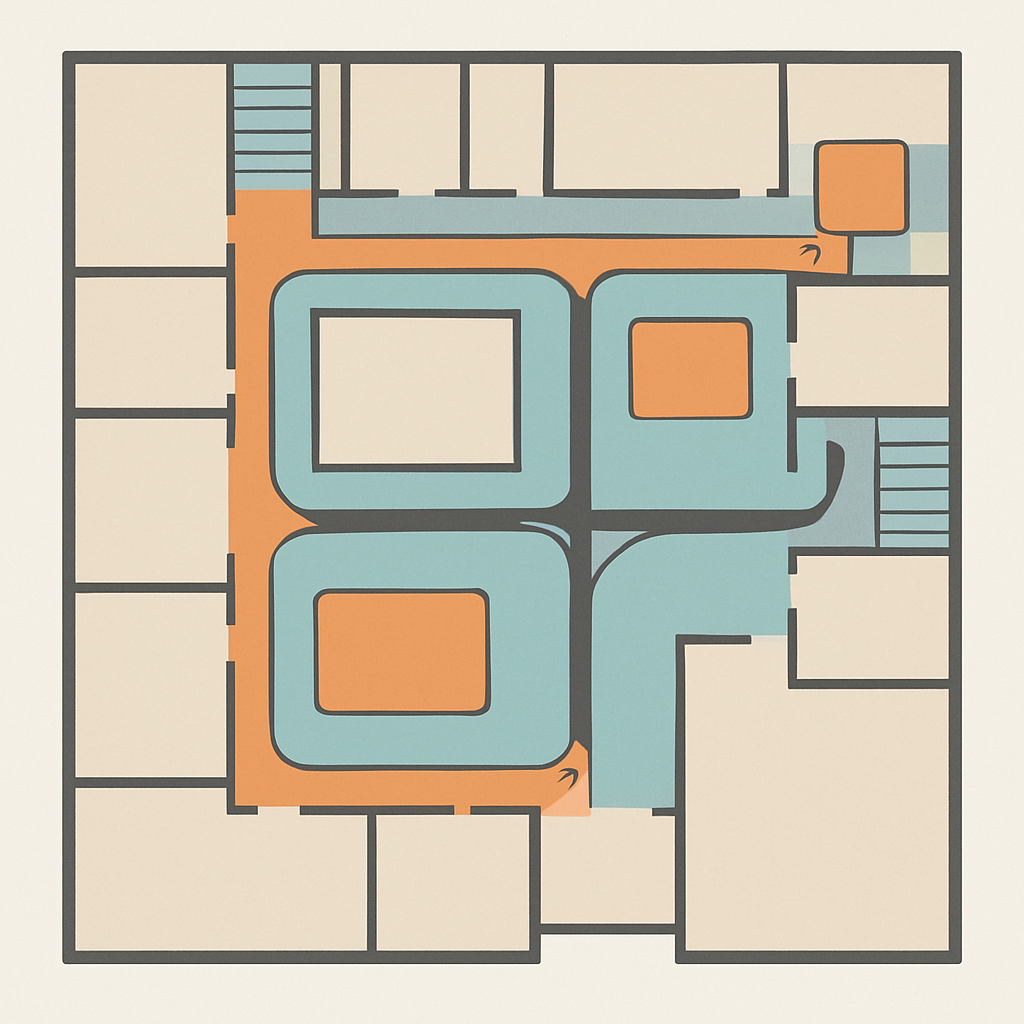
- Map traffic: Identify entries, corridors, stairs, staging areas, and bottlenecks where rolling loads concentrate.
- Moisture and curing: On new finishes and green concrete, prioritize breathable protection with defined perm ratings (E96).
- Chemicals and paint: In paint zones, specify chemical resistance and edge detailing to prevent liquid intrusion.
- Safety: Ensure slip resistance (D2047) and low-profile seams; manage dust and debris per jobsite housekeeping best practices.
Hardwood (Site-Finished and Factory-Finished)
- Curing finishes: Choose Adamantine’s breathable configuration (documented E96 perms). Maintain NWFA-recommended RH/temperature; avoid impermeable coverings that trap moisture [1].
- Tapes: Use approved low-adhesion painter’s tapes on finished wood and medium-adhesion seam tapes only on protection surfaces, not directly on the floor. Many tapes have label-rated dwell windows between 1–14 days—remove as soon as practical and always follow the specific label [2].
- Loads: For carts/ladders, use thicker or reinforced pathways; verify compressive performance (F970 context) and inspect daily.
Tile, Stone, and Grout
- Grout and stone sensitivity: Respect grout cure times before full coverage. Select Adamantine configurations with high puncture/impact resistance (D1790/D5420 context) to withstand dropped tools and point loads.
- Chemical splash: Prefer chemical-resistant surfaces for paint or solvent zones (D1308 context). Seal seams to reduce liquid migration.
Vinyl and Resilient Floors
- Non-staining priority: Vinyl and resilient floors can be susceptible to plasticizer migration and staining. Use non-staining configurations and approved tapes validated by residue testing. Pre-test in an inconspicuous area and adhere to labeled dwell times.
- Cleaning protocol: Pre-clean thoroughly to avoid embossing grit; inspect edges for creep and address immediately.
Concrete (Curing and Cured)
- Green concrete: Use breathable protection (E96 perms documented) to allow moisture egress. Avoid creating a “greenhouse effect” that slows cure or leads to surface issues.
- Heavy equipment and rolling loads: For scissor lifts or loaded carts, specify reinforced corridors with documented compressive strength and puncture resistance; distribute loads and bridge transitions cleanly.
- Moisture testing: Follow concrete moisture testing standards where applicable prior to installing non-breathable layers in later phases.
Performance Benchmarks That Matter (ASTM-Verified)
Look past marketing and anchor your selections to measurable, third-party-verifiable standards. Adamantine’s lab program aligns with ASTM methods relevant to renovation risks and is eligible for independent verification by nationally recognized labs.
Compressive Strength & Rolling Load (ASTM F970)
What it shows: Resistance to denting under static and rolling loads representative of carts, ladders, and equipment.
How to use it: In corridors, entries, and staging areas, specify Adamantine configurations with documented F970 performance at realistic load levels. Seek deflection limits and test conditions (load, dwell time, substrate stack-up) in the TDS. Reinforce high-load paths and use transitions to avoid point-loading edges.
Puncture & Impact Resistance (ASTM D1790/D5420)
What it shows: Ability to shrug off sharp debris and dropped tools without telegraphing damage.
How to use it: In demolition or tool-intensive areas, prefer the configuration with higher impact energy absorption and puncture resistance. Confirm specimen conditioning and test head specifics in the lab summary.
Abrasion Resistance (ASTM D4060)
What it shows: Scratch/wear durability of the protection’s surface. Higher cycles-to-wear at a defined endpoint mean better resistance to embedded grit and repeated traffic.
How to use it: For long-duration remodels, prioritize higher D4060 performance and couple with housekeeping (tacky mats, daily sweep) to reduce grit loading [3].
Chemical Resistance (ASTM D1308)
What it shows: Resistance to common jobsite chemicals (interior paints, construction adhesives, mild cleaners, mineral spirits). Results are documented by exposure time and observed effects (stain, softening, gloss change).
How to use it: In paint zones and near adhesives, use the chemical-resistant surface. Maintain a spill kit and follow SDS for cleanup steps.
Breathability/Permeance (ASTM E96)
What it shows: Water vapor transmission (perms), critical on curing wood floors and green concrete.
How to use it: Early in cure, use Adamantine’s breathable option within the recommended perm range; transition to lower-perm versions only after the finish or slab reaches target moisture/cure conditions per manufacturer and industry guidance [1].
Slip Resistance (ASTM D2047)
What it shows: Static coefficient of friction for pedestrian and ladder safety.
How to use it: Where ladders or dust are expected, choose configurations with documented D2047 performance. Enforce housekeeping to keep surfaces clean and reduce slip risk.
Tape and Finish Compatibility Matrix (Residue and Stain Avoidance)
Tapes can make or break the job. The wrong adhesive, dwell time, or removal technique leads to residue, finish pull, or shadowing. Adamantine publishes an approved tape list with residue/stain test results by finish type and labeled dwell-time limits.
Approved Tape Types by Finish
- UV-cured and factory-finished wood: Low-adhesion painter’s tape for perimeter detailing; medium-adhesion seam tapes only on Adamantine’s surface, never directly on the floor. Respect label dwell time (often 1–14 days) and remove at a low angle, back on itself [2].
- Site-finished hardwood (oil-based poly or waterborne): Use low-adhesion tapes after the manufacturer’s minimum cure window; verify in a test patch. Maintain NWFA-recommended RH/temp during dwell to avoid adhesive transfer [1].
- Vinyl/resilient: Use tapes validated by residue testing on vinyl; avoid aggressive adhesives and prolonged dwell. Pre-test and remove promptly if temperatures spike.
- Tile/stone: Generally forgiving for tape adhesion, but avoid aggressive tapes over fresh grout or soft stone. Use low-adhesion options near delicate finishes.
What to Avoid (High-Risk Tape/Finish Combos)
- High-adhesion tapes on fresh or soft finishes: Risk of finish pull and shadowing.
- Long dwell times beyond label limits: Adhesive cross-linking increases residue risk; many general-purpose tapes are not designed beyond 14 days [2].
- Taping directly to sensitive floors for seams: Keep seam tapes on Adamantine, not on the substrate. Where necessary, use buffer strips validated by testing.
Industry problem/solution references catalog finish damage causes and cures; moisture, tape choice, and jobsite conditions are recurring culprits [1].
Installation, Maintenance, and Removal SOP
Follow this end-to-end SOP to keep performance high and the warranty intact.
Pre-Install Surface Prep
- Clean: Sweep/vacuum thoroughly to remove grit that can emboss under pressure and cause scratches. Install tacky mats at entries to reduce tracked debris [3].
- Dry and conditioned: Verify substrate is dry; log RH and temperature in line with wood-flooring jobsite standards when applicable [1].
- Inspect: Photograph pre-existing conditions; confirm finish cure stage and select breathable vs. low-perm configuration accordingly.
Installation and Seams
- Layout: Roll out Adamantine with grain or ribbing oriented along traffic. Overlap edges per manual, keeping profiles low to avoid trip hazards.
- Seams: Use only approved seam tapes on the protection, never directly on sensitive floors. Document tape product and application date. Mind labeled dwell-time windows—many are 1–14 days; remove as soon as practical and always follow the tape’s specific label [2].
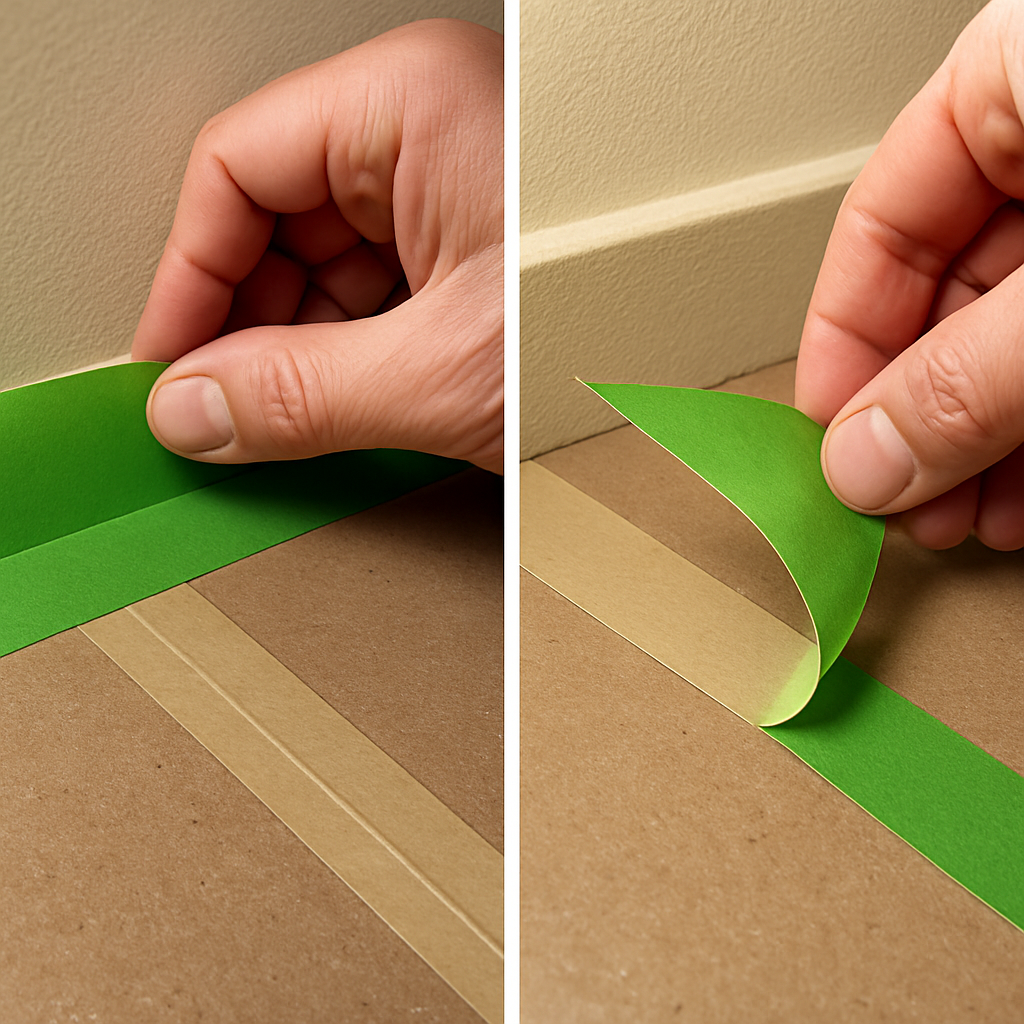
Residue-Safe Taping and Seam Technique - Perimeters and thresholds: Detail edges to block liquid intrusion; use sills, ramps, or transition protectors to prevent edge damage from rolling loads.
- Quick-start: Post the QR to the one-minute install refresher on site for crews.
Inspections, Housekeeping, and Load Management
- Daily: Sweep, check seams/edges, and verify no liquids are trapped. Photograph any changes.
- Weekly: Lift a corner in low-risk zones to verify no moisture buildup on curing surfaces; log RH/temperature [1].
- Load paths: Route heavy carts/ladders over reinforced corridors. Use load-spreading boards for scissor lifts and verify substrate tolerance.
- Housekeeping: Keep debris down to reduce slip hazards and abrasion. Good housekeeping reduces tracked damage risk and supports safety culture [3].
Spill and Incident Response
- Immediate action: Stop the source, contain the area, and absorb free liquid. Do not allow liquids to migrate under seams.
- Cleanup: Follow the chemical’s SDS for PPE and disposal; note that some solvents can soften finishes with prolonged contact—time matters.
- Document: Photograph the scene, note time-to-clean, chemicals involved, and actions taken. For water incidents, continue moisture checks to ensure no latent damage to subfloors (OSB can swell, plywood can delaminate if water lingers) [4].
- Follow-up: Replace affected protection and re-inspect the substrate.
Removal and Post-Job Verification
- Tape removal: Pull tape low and slow, back over itself, within labeled dwell times. If resistance increases, warm slightly and continue.
- Lift and clean: Roll up Adamantine; HEPA vacuum and dust the floor. Inspect for residue; if any, follow finish-safe cleaning approved by the floor manufacturer.
- Final verification: Use the post-job checklist and photos to confirm zero-damage outcomes; escalate any anomalies immediately for review.
Head‑to‑Head: Adamantine vs Ram Board, Trimaco, and Surface Shields
Manufacturer claims vs. measured performance should be distinguished. For example, Ram Board markets “5X the thickness of builder’s paper” and features like Spill Guard and Vapor-Cure (manufacturer claims) [7]; Trimaco and Surface Shields offer heavy-duty protection lines with various breathability and durability positions (manufacturer claims) [8][9]. Adamantine differentiates by publishing third‑party, ASTM-cited results and a transparent tape/finish matrix, plus a warranty and claim workflow designed for premium projects.
Performance Comparison Table (ASTM Results)
When comparing:
- Include method IDs (F970, D1790/D5420, D4060, D1308, E96, D2047).
- Note specimen conditioning (temperature, humidity), substrate stack-up, and failure endpoints.
- Seek independent lab verification for results where available (e.g., Intertek/UL certificates).
Adamantine’s data package is organized around these specifics, making apples-to-apples evaluations feasible.
Use‑Case and Substrate Compatibility Matrix
- Curing wood floors: Prefer Adamantine breathable configurations with documented perms (E96) and approved low-adhesion tapes; this aligns with wood-flooring guidance to avoid moisture entrapment [1].
- High rolling loads: Choose configurations with higher F970 performance and reinforced corridor details.
- Paint/chemical zones: Specify chemical-resistant top surfaces (D1308 context), sealed seams, and spill SOPs.
- Vinyl/resilient: Use non-staining configurations and tapes validated by residue testing; pre-test in an inconspicuous area.
Warranty, Trust, and ROI: What’s Covered and How to Claim
Adamantine’s warranty is written for real-world renovation risk. It spells out coverage scope (e.g., structural integrity of the protection, non-staining performance when used with approved tapes, and clean removability when installed per manual), exclusions, duration, and a step-by-step claim process. Brand-level product claims (such as waterproof and scratch-resistant features) are paired with ASTM-cited test summaries and independent verification pathways to keep marketing anchored to proof [10].
Coverage, Exclusions, and Duration
Coverage highlights
- Non-staining performance on approved substrates when installed with approved tapes.
- Clean removal within labeled dwell times and jobsite condition ranges.
- Material integrity under specified loads and exposures (per TDS).
Exclusions (examples)
- Non-approved tapes or adhesives; tape dwell beyond label limits (a common cause of residue) [2].
- Jobsite environmental noncompliance (excess humidity, temperature extremes) contrary to wood-flooring guidance [1].
- Standing water intrusions under seams or misuse outside published instructions.
Duration is specified per use case (residential/commercial) in the Warranty PDF, with clear definitions of “covered incident” and documentation needed.
How to File a Claim (Documentation and Timeline)
- Step 1: Contain and document—photos/video of the area before removal, detail of tapes used (labels), install dates, RH/temperature logs, and SDS references for any chemicals involved.
- Step 2: Submit—complete the Claim Form and attach your checklist packet.
- Step 3: Review SLA—claims are acknowledged promptly and reviewed within a defined business-day window; decisions and next steps are communicated in writing.
- Step 4: Resolution—approved remedies follow the Warranty terms, including guidance on restoration if applicable.
A redacted sample claim and a checklist are provided alongside the Warranty PDF.
Reusability and Total Cost of Ownership (TCO)
Adamantine is designed for multiple use cycles under normal jobsite conditions. TCO improves when you:
- Reuse boards across phases or projects (subject to inspection criteria).
- Reduce punch-list floor repairs and clean-up time.
- Maintain schedule by avoiding protection failures.
A calculator template helps you estimate cost per use based on acquisition, expected reuse cycles, damage-avoidance savings, and labor efficiencies. Field audits and multi-cycle durability tests define pass/fail criteria for reuse eligibility.
Multi‑Surface Renovation Checklist: Floors, Stairs, Countertops, and Walls
Use this room-by-room checklist to protect more than floors:
- Dust control: Stage barriers before demolition; maintain negative air where needed; keep seams tight to avoid dust migration into occupied zones.
- Delicate surfaces: For fresh paint and wallpaper, use low-adhesion tapes and adhere strictly to labeled dwell times; remove as soon as possible [2].
- Bill of materials: Publish your BOM with SDS/TDS links for all protection, tapes, and cleaning agents; keep it with the daily inspection log.
High‑Traffic Corridors and Stairways
- Corridors: Choose higher-compressive, higher-abrasion configurations; seal seams and reinforce transitions to bridge thresholds. Verify slip resistance (D2047) to support safe foot traffic and ladder work.
- Stairs: Use pre-scored stair protection with secure, low-profile edges; avoid wrapping that creates slip hazards. Inspect daily for edge lift and debris.
Countertops, Cabinets, and Delicate Walls
- Countertops: Use non-marring, non-adhesive cushioning where possible; avoid aggressive adhesives on natural stone and fresh sealers.
- Cabinets and walls: For fresh paint, rely on low-adhesion tapes with conservative dwell times; remove at a low angle. On wallpaper or specialty finishes, use mechanical holds or buffers instead of adhesive whenever feasible.
Field‑Proven Case Studies and Testimonials
Premium Residence Remodel: Site‑Finished Oak, 6‑Week Timeline
Scope: Whole-home remodel with site-finished white oak, high-traffic kitchen corridor, and two stair runs.
Controls: Breathable Adamantine configuration over the first 14 days; approved low-adhesion perimeter tape; medium-adhesion seam tape on protection only; daily housekeeping with tacky mats; weekly RH/temperature logs and corner lift checks [1][3].
Outcome: Zero finish claims; no schedule impact from floor repairs. Removal within labeled dwell times; clean edges and no residue. Photo-verified before/after included in the project file.
Commercial Tenant Improvement: Tile and Concrete Under Rolling Loads
Scope: 12-week TI; polished concrete corridors and porcelain tile in suites; frequent cart traffic.
Controls: High compressive and puncture-resistant configuration; reinforced load paths; sealed seams in paint areas; spill-response kit staged; removal documented.
Outcome: No telegraphed dents or punctures; zero residue; documented savings from avoided rework. Field conditions correlated to F970/impact guidance and slip notes for safety during ladder use.
FAQs: Floor and Surface Protection During Renovations
What is Adamantine floor protection and how does it work?
Adamantine is a reusable, multi-surface protection system engineered to resist abrasion (ASTM D4060), impact and puncture (D1790/D5420), compressive loads (F970 context), chemicals (D1308), while offering breathable options (E96) and slip resistance (D2047). Together with a jobsite SOP, it prevents scratches, dents, staining, and moisture entrapment.
Is it safe on site‑finished hardwoods and curing floors?
Yes—choose the breathable configuration with documented E96 perm ratings during cure phases, maintain NWFA jobsite conditions for RH and temperature, and use approved low-adhesion tapes with conservative dwell times [1][2].
How does Adamantine compare to Ram Board, Trimaco, and Surface Shields?
Manufacturer claims for these brands include thickness, breathability, and spill resistance features [7][8][9]. Adamantine differentiates with ASTM-cited data summaries, a transparent tape/finish matrix, and a clear warranty and claim workflow. Always compare by method (F970, D4060, D1308, E96, D2047) and test conditions.
How do you install and remove Adamantine without residue?
Follow the Installation Manual: pre-clean, use approved tapes only on the protection, log install dates, and remove tapes within labeled dwell times—many tapes are rated for 1–14 days; remove as soon as practical and per the label [2]. Pull tape low and slow, back on itself, then clean and inspect.
What is the best floor protection for hardwood, tile, concrete, or vinyl?
- Hardwood (site-finished/factory): Breathable configuration during cure; non-staining approach with approved tapes; respect NWFA conditions [1].
- Tile/stone: High puncture/impact resistance; sealed seams for paint zones.
- Concrete: Breathable on green slabs; reinforced corridors for heavy loads.
- Vinyl/resilient: Non-staining configuration; vinyl-safe tapes validated by residue testing.
Should floor protection be breathable on curing floors?
Yes. Breathability (E96 perms) helps prevent moisture entrapment that can damage wood finishes. Use breathable protection during cure and transition only when conditions and finish manufacturer guidance permit [1].
Will adhesive films or tapes damage my floor finish?
They can—especially with aggressive adhesives, long dwell times, or hot/humid conditions. Use the Tape/Finish Matrix, choose low-adhesion options for delicate finishes, pre-test, and remove promptly. Many tapes have 1–14 day dwell guidance—follow the specific label [2].
How thick should protection be for heavy traffic and rolling loads?
Thickness alone isn’t enough; verify compressive performance (F970 context) and reinforce load paths. In corridors and entries, choose higher-compressive configurations and use transitions to avoid edge point-loading.
How long can protection stay installed during a remodel?
Inspect daily and weekly; follow tape labels for maximum dwell. Many painter’s and masking tapes are rated for 1–14 days—remove as soon as practical and re-stage if projects run longer [2]. Environmental conditions also matter; log RH/temperature and lift corners periodically on curing floors [1].
Is Adamantine resistant to jobsite chemicals and spills?
Yes—configurations are validated against common jobsite chemicals with D1308-style exposure testing. Always follow SDS cleanup steps, contain spills immediately, and document incidents for warranty records.
Will it withstand carts, ladders, and scissor lifts?
Use configurations with higher compressive and puncture/impact performance and build reinforced corridors. For scissor lifts, add load-spreading underlayment and verify substrate tolerance.
Is it reusable, and what’s the cost per use?
Adamantine is designed for multiple cycles under defined conditions. Use the TCO calculator to model acquisition cost, expected reuse cycles, and savings from avoided rework and schedule risk.
What voids the warranty and how do I file a claim?
Wrong tape or excessive dwell time, out-of-spec jobsite conditions, or misuse outside instructions are common pitfalls [1][2]. File with photos, logs, tape labels, and receipts; claims are reviewed under a clear SLA with documented outcomes via the Warranty PDF.
How should water or chemical spills be handled?
Stop, contain, and clean immediately per the chemical’s SDS. For water, monitor for subfloor moisture risks; OSB can swell and plywood can delaminate if water is not addressed promptly [4]. Document everything for warranty support.
Which tapes are safest for delicate walls and fresh paint?
Use low-adhesion tapes, apply after paint reaches label-recommended cure stages, and remove as soon as practical—many tapes have 1–14 day windows [2]. Avoid high-adhesion tapes on delicate finishes.
What certifications or tests indicate a reliable product?
Look for ASTM-cited results: F970 (compressive/rolling load), D1790/D5420 (impact), D4060 (abrasion), D1308 (chemical), E96 (breathability), D2047 (slip). Independent verification by recognized labs strengthens trust.
Conclusion
If you need zero-damage outcomes on premium renovations, plan protection like you plan structure: by risk and by data. Adamantine’s lab-verified benchmarks, breathable options for curing surfaces, tape/finish compatibility matrix, and installation-to-claim protocol give you a clear, defensible path to better results—and a warranty to back them up. Download the Installation Manual, Tape/Finish Compatibility Matrix, and Warranty PDF, then request a field demo or starter kit to validate Adamantine on your next project.
Disclaimer
Jobsite conditions vary; always follow the product Installation Manual, TDS, and SDS. Test in an inconspicuous area before full install. Warranty coverage depends on proper installation, approved tapes, and environmental conditions. All third-party brand names and trademarks are property of their respective owners; references are for comparison only.
References
- National Wood Flooring Association (NWFA). (N.D.). Problems, Causes, and Cures. Crescent Hardwood. Retrieved from https://www.crescenthardwood.com/nwfa/ProblemsCauses.pdf
- Family Handyman Staff. (N.D.). Protect Your Home During a Remodel: Tips. Family Handyman. Retrieved from https://www.familyhandyman.com/list/protect-home-during-remodel-tips/
- Prince Lumber. (N.D.). 5 Ways to Protect Flooring During Construction and Renovation. Prince Lumber Blog. Retrieved from https://www.princelumber.com/5-ways-to-protect-flooring-during-construction-and-renovation/
- DIY StackExchange Community. (N.D.). How do builders prevent water damage during construction? DIY StackExchange. Retrieved from https://diy.stackexchange.com/questions/263041/how-do-builders-prevent-water-damage-during-construction
- This Old House Editors. (N.D.). How to Protect Wood Floors. This Old House. Retrieved from https://www.thisoldhouse.com/flooring/21019357/how-to-protect-wood-floors
- Consumer Reports. (N.D.). Best Flooring for High-Traffic Areas. Consumer Reports. Retrieved from https://www.consumerreports.org/home-garden/flooring/best-flooring-for-high-traffic-area-a2992906171/
- Ram Board. (N.D.). Ram Board Product Page (manufacturer claims). Ram Board. Retrieved from https://www.ramboard.com/product/ram-board/
- Trimaco. (N.D.). Heavy Duty Surface Protection (manufacturer claims). Trimaco. Retrieved from https://trimaco.com/products/heavy-duty-surface-protection/
- Surface Shields. (N.D.). Products Overview (FloorShell and Related) (manufacturer claims). Surface Shields. Retrieved from https://www.surfaceshields.com/
- Adamantine. (N.D.). Brand Overview and Warranty Claims (manufacturer claims). Retrieved from https://adamantine.info/
