Since the dawn of civilization, humanity has been captivated by the concept of an unbreakable, eternal metal. In ancient myths, this ultimate material was known as “adamantine”—a substance forged by the gods, capable of withstanding any force. Today, while true adamantine remains a legend, the desire for indestructible adamantine jewelry designed for family legacy is very real. Modern jewelry owners are frequently plagued by frustrating realities: jewelry that breaks easily, tarnishing metal rings that discolor the skin, and the profound anxiety of accidentally ruining fragile family heirlooms.
Welcome to the definitive guide on “The Heirloom Paradox.” This comprehensive masterclass decodes the science of indestructible metals, exposes the realities of daily wear and tear, and reveals the meticulous craftsmanship required to forge or repurpose jewelry that truly survives generations. Whether you are an active professional seeking an indestructible wedding band or a sentimental guardian looking to preserve your family’s history, this roadmap will guide you through the intricate world of metallurgy, safety, custom forging, and modern memorial preservation.
- The Myth and Reality of Adamantine Jewelry
- Indestructible Rings: The Lifestyle Matchmaker Matrix
- The Chemistry of Wear: Why Jewelry Breaks and Tarnishes
- Heirloom Metalwork: Forging Custom Pieces for Eternity
- Preserving the Past and Forging the Future
- Conclusion
- References
The Myth and Reality of Adamantine Jewelry
To understand the pursuit of indestructible adamantine forging, we must first separate fantasy lore from real-world metallurgy. The term “adamantine” derives from the ancient Greek word adamas, meaning “untameable” or “invincible,” historically used to describe the hardest known substances, most notably diamonds [1]. Over centuries, literature and pop culture morphed this concept into various fictional super-metals. However, as literary and mythological historians note, the classical adamantine of antiquity is distinctly different from the modern comic-book iterations of “adamantium” [2].
In the real world, jewelers use the term “adamantine” conceptually to market highly durable, legacy-focused pieces that represent unbreakable bonds. When we look at a Metallurgist’s Breakdown using the Mohs hardness scale, we see the reality of high-tensile alloys. While mythical adamantine would theoretically score infinitely high, real-world tungsten carbide scores an impressive 9 on the Mohs scale (just below a diamond’s 10). Titanium and cobalt chrome follow closely behind. Yet, creating adamantine jewelry isn’t just about finding the hardest metal on earth; it is about navigating the delicate balance between industrial strength and generational value.
The Heirloom Paradox: Value vs. Hardness
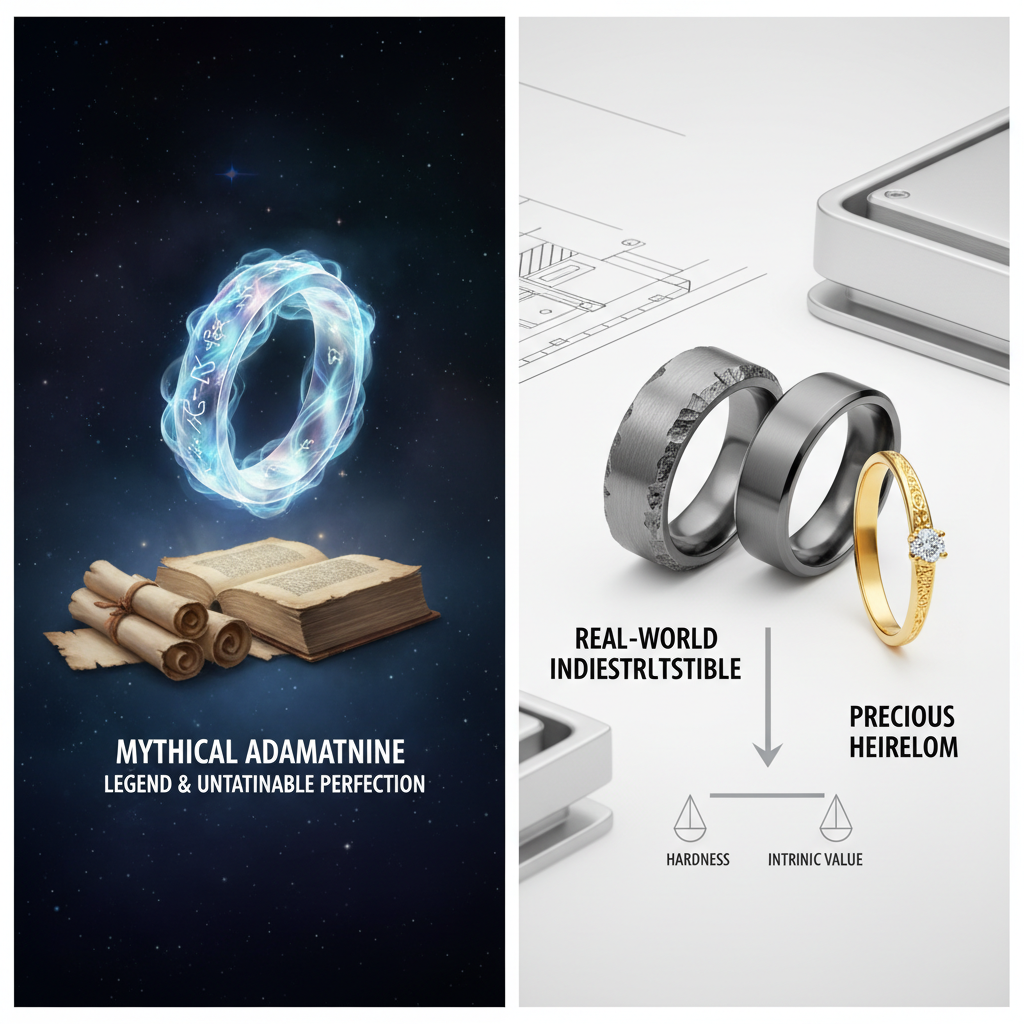
When searching for a scratch resistant heirloom metal, consumers inevitably encounter the Heirloom Paradox: the inverse relationship between a metal’s scratch resistance and its intrinsic financial value. Industrial metals like tungsten are incredibly hard, but they hold little to no monetary resale value. Conversely, precious metals—the traditional foundation of heirloom metalwork—are inherently softer.
For example, pure 24k gold is too malleable for daily wear. To create a durable piece, jewelers alloy it with other metals. 14k gold contains 58.3% pure gold and 41.7% alloy metals, making it significantly more durable and scratch-resistant than 18k gold (which contains 75% gold) [3]. However, it is vital to understand that no precious metal is entirely scratch-proof.
When platinum—the most durable of the precious metals—is scratched, the metal is not actually lost. Instead, the metal is merely displaced. Over time, these microscopic scratches create a frosted finish known as a “patina.” Master jewelers emphasize that this patina should be celebrated, as it represents the visual history and enduring journey of the heirloom, rather than a defect to be polished away [4].
Indestructible Rings: The Lifestyle Matchmaker Matrix
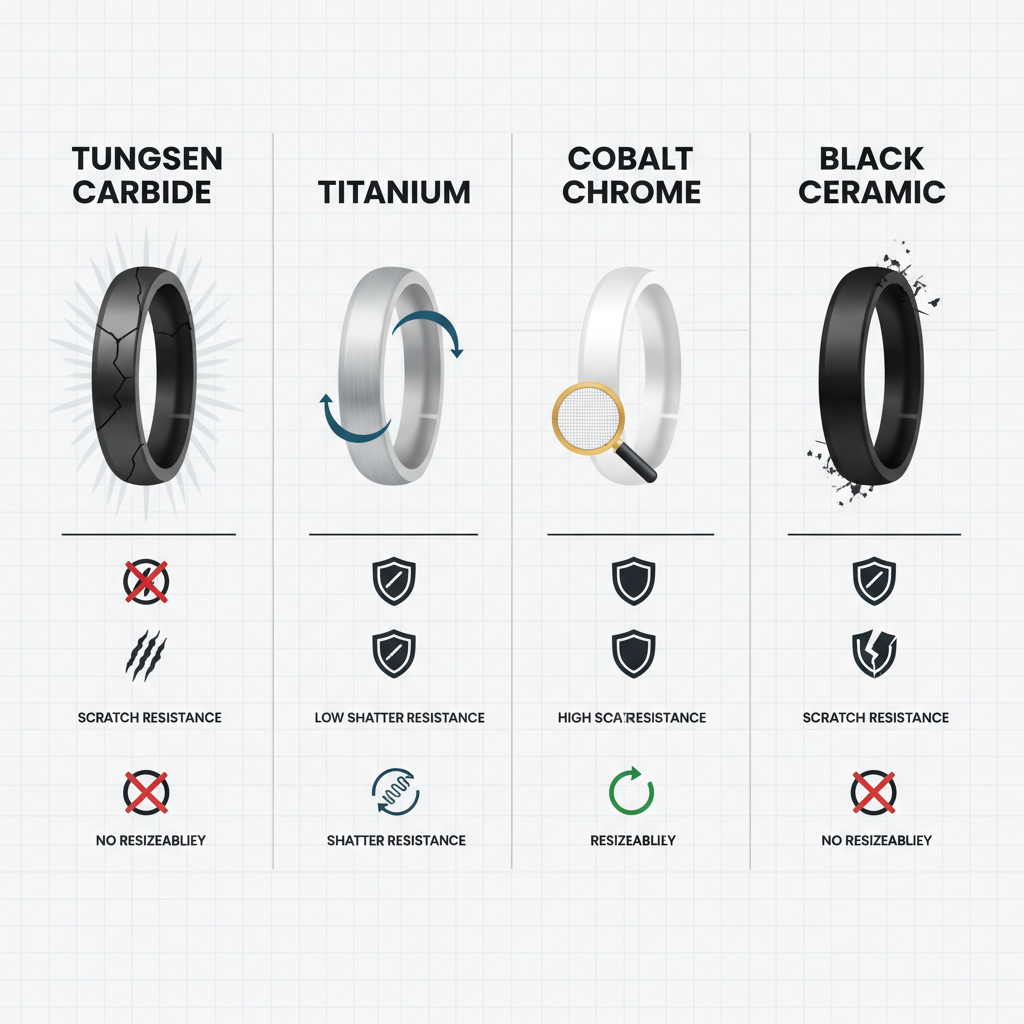
For mechanics, athletes, and individuals with highly active lifestyles, the priority is often finding indestructible metal rings that never tarnish. The alternative metal market offers several incredible options, but buyers must understand the critical difference between scratch resistance (hardness) and shatter resistance (brittleness).
To help you choose, here is the Lifestyle Matchmaker Matrix based on rigorous stress-testing of alternative metals [5]:
- Tungsten Carbide: The undisputed champion of scratch resistance. It will never lose its polish. However, because it is so hard, it is also brittle. If dropped on a hard surface or subjected to extreme pressure, tungsten will shatter rather than bend. It cannot be resized.
- Titanium: Incredibly lightweight and highly resistant to bending, making it highly shatter-resistant. It is less scratch-resistant than tungsten but will not tarnish. It is notoriously difficult, and often impossible, to resize.
- Cobalt Chrome: Offers the bright white look of platinum with the durability of titanium. It is highly scratch-resistant, shatter-proof, and, unlike tungsten or titanium, it can often be resized slightly by a skilled jeweler.
- Black Ceramic: Extremely scratch-resistant and lightweight, offering a permanent black color that will never fade or tarnish. Like tungsten, it is brittle and can shatter under heavy impact. It cannot be resized.
Crucial Safety Warnings: Ring Avulsion and Emergency Removal
While the appeal of indestructible rings is clear, their ultimate strength introduces hidden dangers. In the event of a severe hand injury, swelling can occur rapidly, turning a ring into a dangerous tourniquet.
MEDICAL SAFETY WARNING: The American College of Emergency Physicians (ACEP) warns of the risks of “ring avulsion”—a severe injury occurring when a ring catches on an object (like machinery or a fence) and violently strips tissue from the finger [6].
If you wear an alternative metal ring, you must know how it behaves in an emergency. Because tungsten and ceramic cannot be cut with standard emergency room ring cutters, they must be cracked or shattered off using a vice grip. Titanium and cobalt chrome can be cut, but they require specialized diamond-tipped saws that not all local emergency rooms may have on hand immediately. Always remove indestructible rings before operating heavy machinery or engaging in extreme sports.
The Chemistry of Wear: Why Jewelry Breaks and Tarnishes
Even the most carefully curated collections are subject to the laws of chemistry and physics. Understanding why jewelry degrades is the first step to preventative maintenance.
If you are distressed by tarnishing metal rings turning black or discoloring your skin, the culprit is oxidation. In 925 Sterling Silver, the metal consists of 92.5% pure silver and 7.5% alloy—usually copper. It is this copper content that reacts with sulfur gases in the air, sweat, and household chemicals to create silver sulfide, the dark film known as tarnish.
Furthermore, a closely guarded industry secret is the use of undisclosed rhodium plating on high-street silver jewelry. Many commercial jewelers plate their silver with rhodium (a bright, tarnish-proof metal from the platinum family) to make it look brilliantly white in the display case. When this microscopic plating inevitably wears off, the natural silver underneath begins to tarnish, leading consumers to falsely believe their jewelry is defective or “fake” [7].
Structural Failures and the Jump Ring Safety Debate
Mechanical wear is just as prevalent as chemical wear. If you find yourself constantly dealing with jewelry that breaks easily—such as snapped chains or lost gemstones—gravity and friction are to blame.
Prongs holding gemstones are subjected to daily friction against clothing and hard surfaces, slowly wearing the metal down until the stone falls out. Annual professional inspections and “prong re-tipping” by a master goldsmith are essential preventative measures [9].
However, in the Master Goldsmith’s Corner, there is a fascinating debate about making jewelry too unbreakable. The most common repair on a necklace is the “jump ring”—the small circular wire connecting the clasp to the chain. Consumers often ask why jewelers leave these rings unsoldered (meaning there is a tiny slit in the ring). This is an intentional safety feature. If a necklace is caught on a heavy object, an unsoldered jump ring is designed to pull open and break, preventing severe neck injury or strangulation [8]. Sometimes, a break is a sign that the jewelry functioned exactly as safely intended.
Heirloom Metalwork: Forging Custom Pieces for Eternity
True heirloom metalwork transcends basic assembly; it is the meticulous craft of creating generational wealth and sentimental value. Professional metalworking standards dictate that pieces designed to last centuries must be structurally sound from the molecular level up [10].
One of the most vital techniques in creating custom heirloom pieces forged for eternity is “cold forging.” Unlike casting, where molten metal is poured into a mold (which can leave microscopic air bubbles and a porous structure), cold forging involves repeatedly hammering and compressing the metal at room temperature. This process aligns and refines the molecular structure of the metal, dramatically increasing its density, tensile strength, and longevity [11].
The Repurposing Journey: Transforming Fragile Family Heirlooms
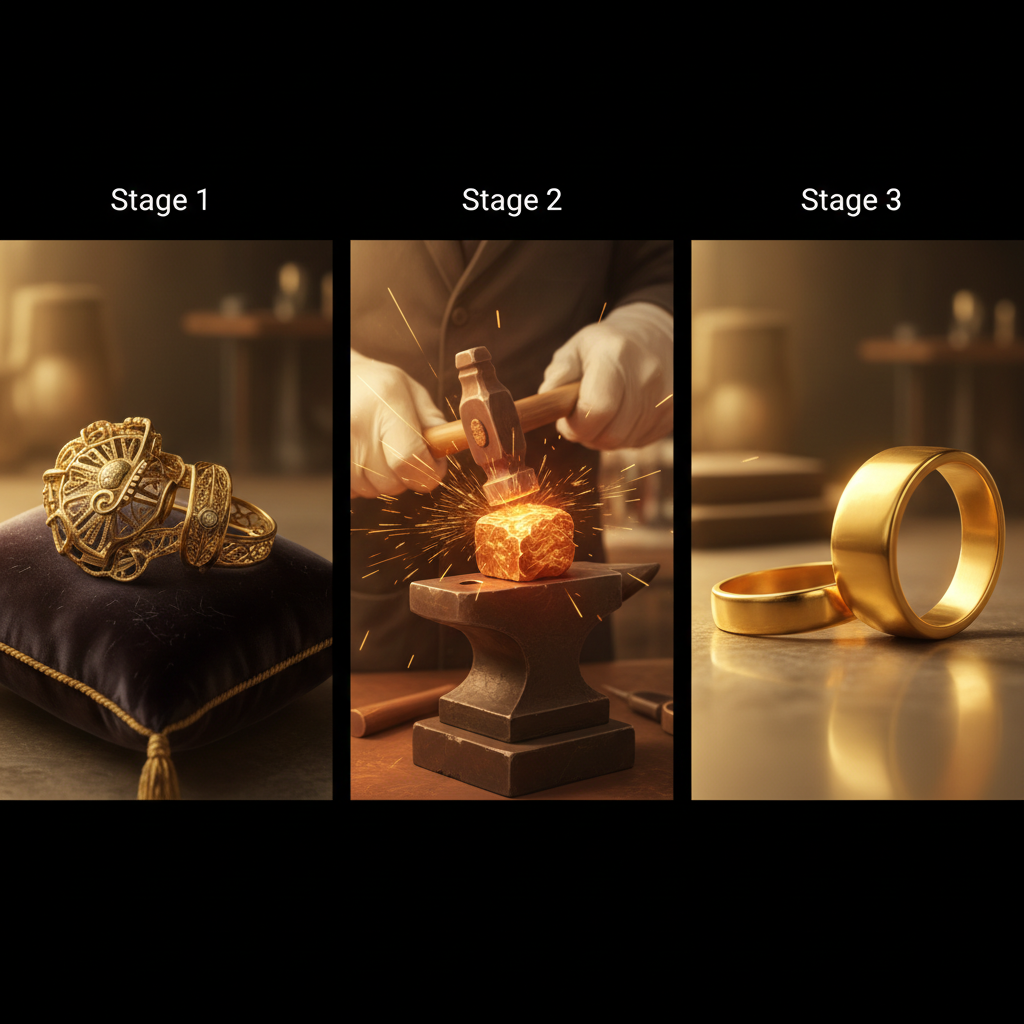
Often, the most meaningful jewelry comes from inheriting fragile family heirlooms that are no longer wearable due to severe damage or outdated aesthetics. The Repurposing Journey allows you to melt down the gold or platinum from a grandmother’s brooch to forge a structurally sound, modern ring.
However, transparency is key. Not all materials can survive this journey. While diamonds, sapphires, and rubies can easily be removed and reset, softer stones like opals, pearls, or emeralds are highly susceptible to heat and pressure and often cannot withstand the rigorous un-setting and resetting process [12].
When undertaking a custom redesign, it is imperative to have the finished piece formally appraised by a certified gemologist. Because the new piece features a denser, cold-forged structure and modern, secure settings, its replacement value for insurance purposes will often be significantly different from the original inherited item.
Preserving the Past and Forging the Future
Whether you are safeguarding a 19th-century pocket watch or commissioning a new family crest, preservation is paramount. The anxiety of ruining delicate items often leads to well-intentioned but disastrous DIY cleaning attempts.
Archival-grade preservation requires controlling the environment. For storing fragile family heirlooms, experts recommend climate-controlled environments and specific archival materials, such as acid-free tissue paper for documents and anti-tarnish cloth pouches for metals [13]. If an antique piece of jewelry is heavily oxidized or damaged, never use harsh household chemicals or ultrasonic cleaners. Always seek a professional restoration expert, as improper cleaning can strip away historical patina and instantly destroy the item’s antique value [14].
Everlasting Legacy Jewelry: The Modern Memorial
As our understanding of legacy evolves, so too does the concept of heirloom metalwork. Today, one of the most profound expressions of everlasting legacy jewelry is the creation of modern memorials—specifically, turning the ashes or hair of a deceased loved one into a lab-grown diamond.
The scientific process is a marvel of modern chemistry. Because the human body is roughly 18% carbon, specialized facilities can extract and purify this carbon from cremated ashes. This pure carbon is then placed into a machine that mimics the extreme heat and pressure of the earth’s mantle, growing a genuine, structurally identical diamond over several months [15].
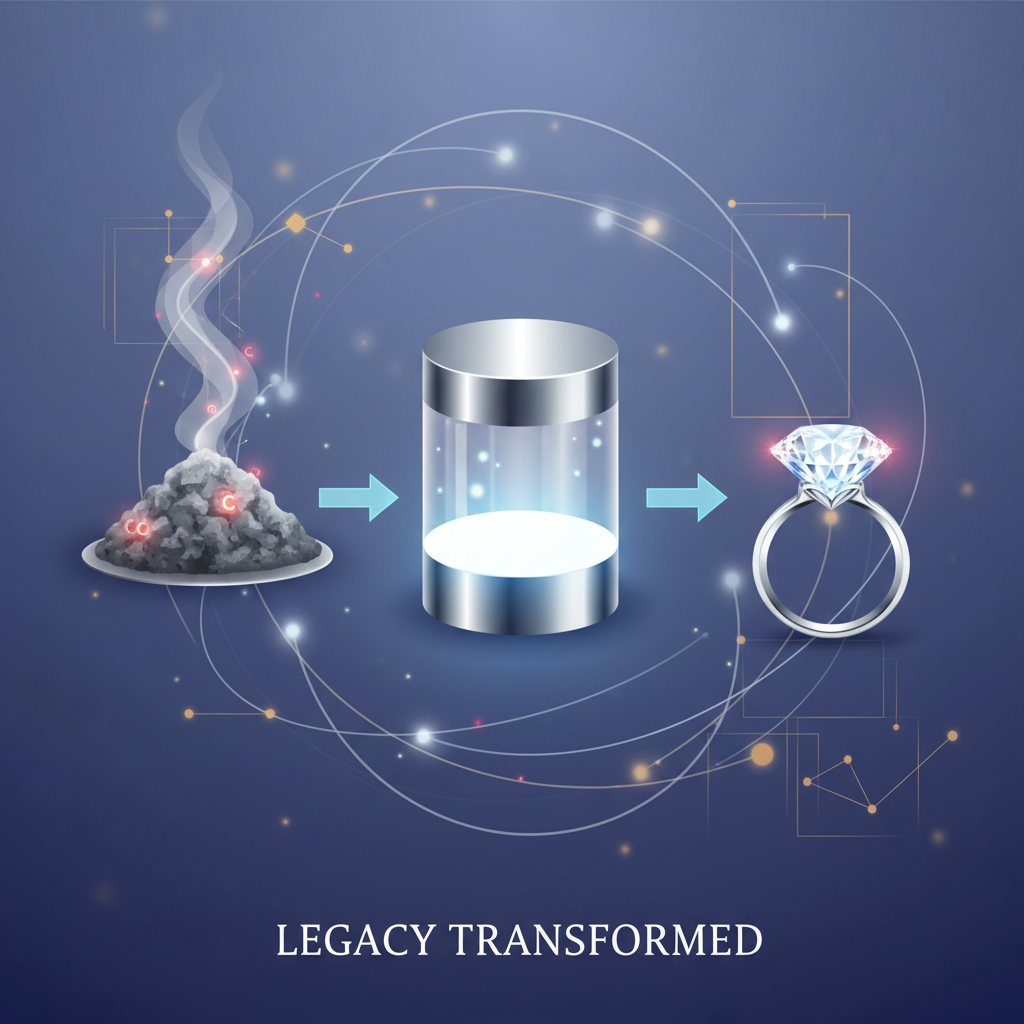
These memorial diamonds can then be set into bespoke cremation keepsakes or heavy, cold-forged rings [16]. While traditional end-of-life memorials vary in cost—with high-quality urns starting around $99 and granite monuments starting at $850—memorial diamonds represent a more significant financial investment, often starting in the thousands. Yet, for many, the emotional value of carrying a loved one’s physical essence in a brilliantly forged, indestructible stone is a priceless evolution of the family legacy.
Conclusion
The allure of adamantine jewelry is not merely a fantasy; it is a reflection of our deep human desire to create bonds and legacies that cannot be broken. As we have explored, true longevity requires navigating the Heirloom Paradox—balancing the indestructible, scratch-resistant nature of alternative metals with the enduring financial and sentimental value of precious gold and platinum.
By understanding the chemistry of wear, respecting the safety limits of industrial metals, and embracing the masterful art of cold forging, you can protect your investments from the ravages of time. Whether you are selecting a tungsten band for the workshop, preserving a fragile antique, or transforming ashes into a diamond, knowledge of metallurgy is your greatest tool. Evaluate your current jewelry collection for signs of wear, and consult a certified master jeweler or gemologist to begin your own custom heirloom repurposing journey today.
Medical Disclaimer: Contains safety information regarding ring avulsion and emergency removal; consult medical professionals for emergencies.
Financial Disclaimer: Information on appraisals and insurance is for educational purposes and does not constitute formal financial advice.
References
- Smith, W. (1844). Dictionary of Greek and Roman Biography and Mythology. (Etymological origins of adamas).
- Stuart, W. L. / Classic Marvel Forever. (N.D.). The Literary and Mythological History of Adamantine vs. Adamantium.
- Greenwich St. Jewelers. (N.D.). Gold Alloy Durability for Everyday Wear.
- Krikawa Jeweler. (N.D.). The Wear and Tear of Precious Metals and Platinum Patina.
- Ben Garelick / Vidar Jewelry. (N.D.). Wear Characteristics and Resizing Limitations of Alternative Metals.
- American College of Emergency Physicians (ACEP). (N.D.). Ring Avulsion Risks and Emergency Removal Procedures.
- Kernowcraft / House of Metalworks. (N.D.). Jewelry Making, Metal Oxidation Processes, and Rhodium Plating.
- Halstead Bead. (N.D.). Jewelry Chain Mechanics and Jump Ring Safety.
- Frank Adams Jewelers. (N.D.). Professional Goldsmith Repair Techniques and Prong Maintenance.
- Society of North American Goldsmiths (SNAG). (N.D.). Professional Metalworking Standards.
- Zemans, R. (N.D.). Cold Forging Techniques and Metal Molecular Structure.
- Sarah O. Jewelry. (N.D.). Custom Heirloom Redesign Processes and Stone Limitations.
- The Lock Up. (N.D.). Climate-Controlled and Archival Storage Methods.
- Mumford Restoration. (N.D.). Antique Furniture and Heirloom Restoration.
- Eterneva. (N.D.). The Science of Lab-Grown Memorial Diamonds from Carbon.
- Sugarberry Memorials. (N.D.). Bespoke Cremation Jewelry and Keepsakes.
