Have you ever felt the sting of disappointment when a new appliance, a piece of tech, or even a pair of shoes breaks just days after the warranty expires? It’s a near-universal frustration, a symptom of a much larger problem: we are living in an age of impermanence. Our world is saturated with a disposable product culture, a constant cycle of buying, breaking, and replacing, driven by low-quality manufacturing and the deceptive strategy of planned obsolescence. But what if there was an alternative?
This is your guide to the Durability Doctrine—a masterclass in rejecting throwaway culture by mastering the mindset, science, and strategy behind choosing and creating things that are truly built to last. We will move beyond brand names and marketing hype to deconstruct the very essence of adamantine quality.
Together, we will diagnose the problem of our disposable world, explore the fascinating science and art of premium durability, and arm you with a consumer’s counter-strategy to invest in products for life. Finally, for the creators and entrepreneurs, we will lay out the blueprint for building a legacy brand founded on an unbreakable promise of quality. This is your journey from temporary ownership to permanent value.
- The Age of Impermanence: Why Everything Feels Disposable
- The Science of Unbreakable: The Principles of Premium Durability
- The Art of Permanence: Mastering High-End Craftsmanship & Legacy Quality
- The Consumer’s Counter-Strategy: How to Invest in Durability
- The Creator’s Blueprint: How to Build a Legacy Brand
- Conclusion
- References
The Age of Impermanence: Why Everything Feels Disposable
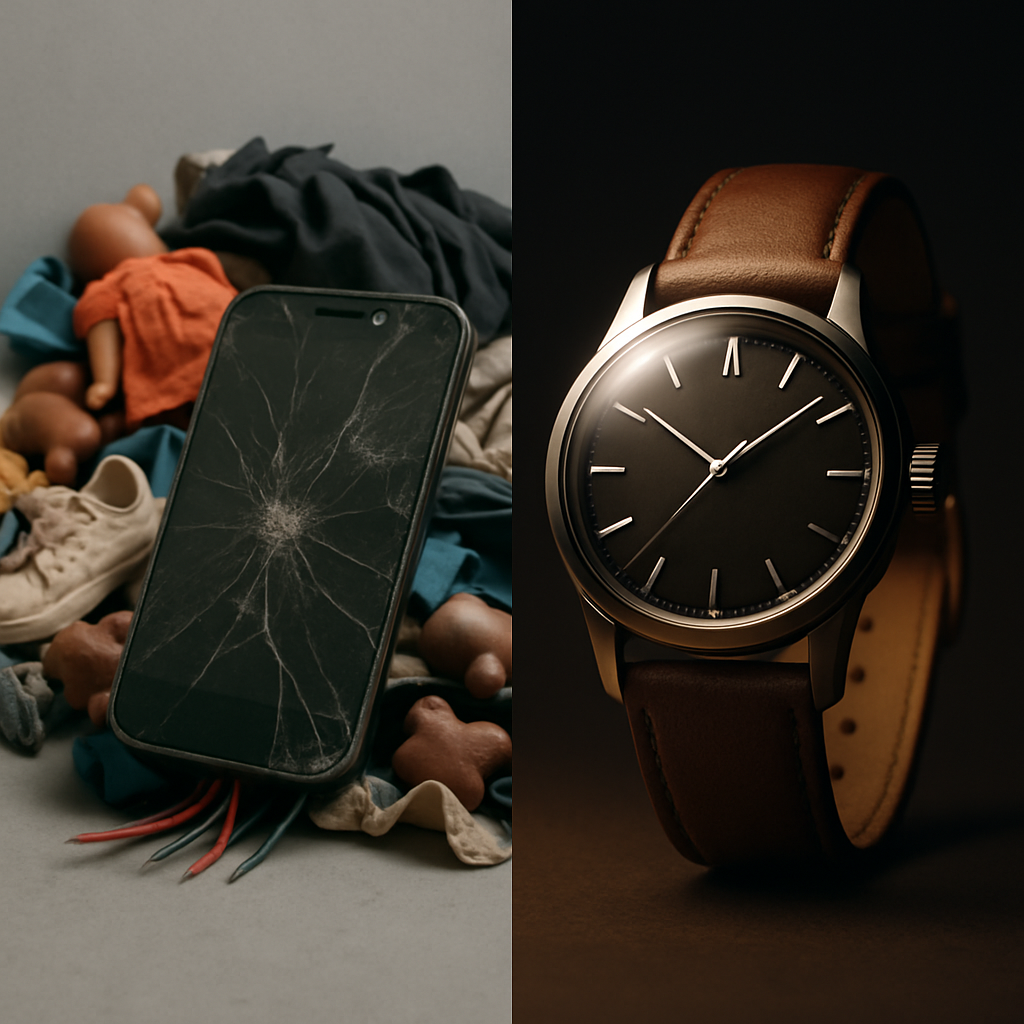
To find a solution, we must first understand the problem. The feeling that products are less reliable than they used to be isn’t just nostalgia; it’s a reality shaped by decades of economic, industrial, and cultural shifts. This section diagnoses the roots of our modern “throwaway culture” and sets the stage for the principles of permanence that follow.
The Rise of Throwaway Living
The shift to a disposable culture began in the mid-20th century, when the post-war manufacturing boom prioritized convenience and mass production. Single-use items became a symbol of modern living, but this convenience came at a staggering cost. The scale of the problem is difficult to comprehend. Consider that there are over 100 billion disposable Bic pens now sitting in garbage dumps worldwide.[1]
This constant stream of waste has severe environmental consequences. Plastic debris, for instance, has been found to contaminate the Buffalo River, which flows into Lake Erie—a source of drinking water for 11 million people.[1] But the impact isn’t just environmental. Living surrounded by disposable objects can foster a “disposable” mindset, subtly devaluing permanence and commitment in other areas of our lives.[2]
Inside the ‘Chain of Failure’: Deconstructing Low-Quality Manufacturing
Behind many broken products lies a cascade of compromises known as the “Chain of Failure.” This chain often begins long before a product reaches the consumer.[3] It starts with sourcing defective or substandard materials, is compounded by poor workmanship on the assembly line, and is ultimately missed by inadequate quality control processes.
A single weak link—a poorly vetted supplier, a rushed production schedule, a skipped inspection—can compromise the integrity of the entire product. Forward-thinking companies combat this with a preventative strategy known as “Design for Manufacturing” (DFM). This approach involves designing products from the very beginning with efficient, high-quality production in mind, ensuring that durability is engineered in, not just inspected for at the end.[3]
Planned Obsolescence: The Deceptive Art of Designing to Fail
Perhaps the most cynical driver of our disposable culture is planned obsolescence. This is a policy of planning or designing a product with an artificially limited useful life, so it will become obsolete after a certain period.[4] This isn’t accidental; it’s a deliberate business strategy to encourage repeat purchases.
This practice has a long history, with one of the earliest examples being the Phoebus cartel of the 1920s, an international group of lightbulb manufacturers who colluded to reduce the lifespan of their bulbs from 2,500 hours to just 1,000. Today, it manifests in various ways:
- Material Failure: Using plastics that yellow and crack or components that are designed to wear out.
- Software Incompatibility: Releasing software updates that slow down older devices, effectively forcing an upgrade.
- Unrepairable Designs: Gluing components together or using proprietary screws to make repairs impossible for anyone but the manufacturer.
The environmental toll is immense. The fast fashion industry, a prime example of planned obsolescence through rapidly changing trends and low-quality materials, contributes over 18 million tonnes of clothing waste annually.[5] This deceptive art of designing to fail is a direct assault on both the consumer’s wallet and the planet’s health.
The Science of Unbreakable: The Principles of Premium Durability

To fight back against impermanence, we must understand what makes something last. Premium durability isn’t magic; it’s the result of deliberate choices in materials and design. This section moves from the problem to the solution, exploring the scientific and engineering principles that create physically robust, unbreakable products. As a materials scientist would explain, longevity is a function of both composition and structure.
More Than Material: The Physics of Strong Design
A product’s shape and structure are just as critical as the material it’s made from. The legendary durability of the Nokia 3310 phone wasn’t just due to its tough plastic casing; its “over-engineered” design was brilliant at force distribution. Its rounded edges and slightly separated components allowed it to absorb and dissipate the energy from a fall, preventing catastrophic failure.
Industrial manufacturers who have been building durable goods since 1907 understand this principle intimately.[6] The shape of an object dictates how it handles stress. Imagine stepping on a flat sheet of plastic versus a curved arch made of the same material. The arch distributes your weight across its structure, making it exponentially stronger. This is the essence of strong design: using geometry to enhance the inherent strength of a material.
A Guide to Adamantine Materials
Of course, starting with an exceptionally strong material is fundamental. While no consumer product is truly “unbreakable,” certain materials come astonishingly close due to their unique molecular structures.
- Kevlar: This synthetic fiber is famous for its use in body armor. On an equal weight basis, it has a tensile strength five times greater than steel.[7] Its strength comes from the tight, parallel alignment of its polymer chains.
- Darwin’s Bark Spider Silk: Considered the toughest biological substance on Earth, this incredible material is ten times stronger than Kevlar.[8] Scientists are studying its protein structure to replicate its properties for future applications.
- Palladium Microalloy Glass: A material that combines extreme toughness (resistance to fracture) with incredible strength (resistance to deformation). Its unique atomic structure prevents the formation of cracks, making it one of the most durable materials ever created by humans.
Understanding these materials reveals a core principle: adamantine quality is achieved when superior materials are combined with intelligent structural design.
The Art of Permanence: Mastering High-End Craftsmanship & Legacy Quality
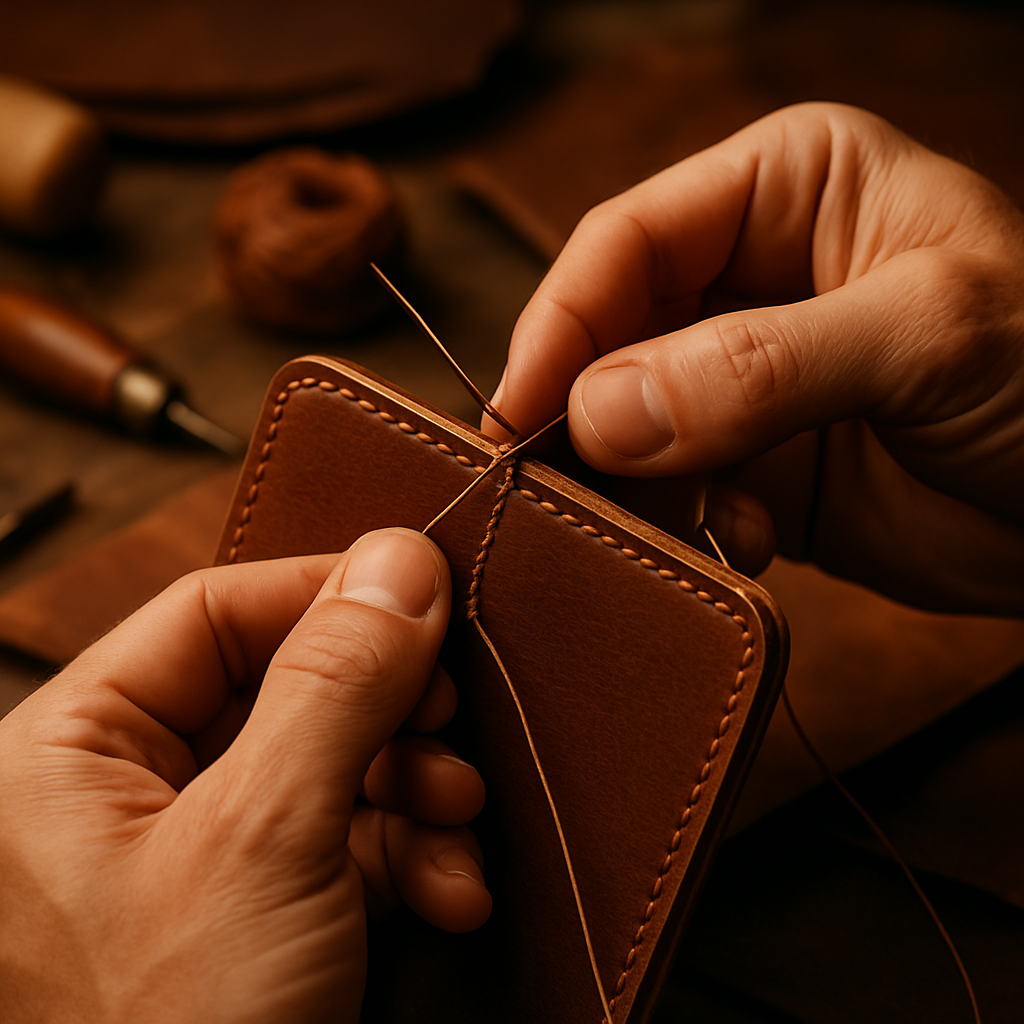
While science provides the foundation for durability, the human element—craftsmanship—transforms a durable object into a treasured one. High-end craftsmanship is the soul of longevity, an expression of skill, patience, and an unwavering commitment to excellence. It’s the difference between a product that simply works and one that feels destined to last forever.
To understand this art, we can use the “Craftsmanship Pyramid” as a framework. At the base is Uncompromising Material Choice (e.g., full-grain leather over bonded leather). The middle layer is Masterful Artisan Training, where skills are honed over years. At the pinnacle is Meticulous Hand-Finishing, the final details that signify true quality.
Beyond the Brand: How to Identify True Craftsmanship
In a market flooded with luxury labels, how can you spot genuine quality? You must learn to look past the logo and examine the evidence of the maker’s hand.
Use this checklist to evaluate an item’s craftsmanship:
- Stitching: Look for small, tight, and perfectly even stitches. A “saddle stitch,” done by hand with two needles, is far stronger and more durable than a machine lockstitch.
- Material Sourcing: Is the wood solid or a thin veneer? Is the leather full-grain, showing its natural texture, or a corrected-grain that has been sanded and coated?
- Joinery & Edges: In furniture, are the joints dovetailed or simply glued and stapled? In leather goods, are the edges burnished and polished smooth, or simply painted over?
A brand like Hermès, founded in 1837, exemplifies this ethos. With over 7,300 artisans dedicated to constructing its products, the brand’s legacy is built not on marketing, but on a tangible, verifiable commitment to craft that has been passed down for nearly two centuries.[9]
To help you identify these details, here is a quick glossary of key terms:
- Full-Grain Leather: The highest quality grade of leather, taken from the top layer of the hide. It retains the natural grain and is exceptionally strong and durable.
- Saddle Stitch: A traditional hand-stitching technique where two needles pass through the same hole in opposite directions, creating a lock stitch that will not unravel even if one thread breaks.
From Durable to Heirloom: The Storytelling Power of Quality
What elevates a product from simply durable to true “heirloom quality”? The difference lies in intent and emotion. An heirloom quality product is crafted not just to withstand use, but to be passed down, carrying stories and memories with it.
Makers like Earlywood Designs, who explicitly create “heirloom quality” wooden utensils, focus on timeless design, superior natural materials, and a finish that improves with age.[10] These items are imbued with a sense of permanence. They are the opposite of trendy; their value transcends fashion and is rooted in their function, beauty, and durability.
Caring for Future Heirlooms: To ensure these items last for generations, proper maintenance is key. This fills a critical gap often overlooked. For wooden goods, regular oiling prevents cracking. For leather, conditioning keeps it supple. For mechanical watches, periodic servicing ensures the intricate movement remains accurate. An heirloom is a partnership between the maker’s craft and the owner’s care.
The Consumer’s Counter-Strategy: How to Invest in Durability
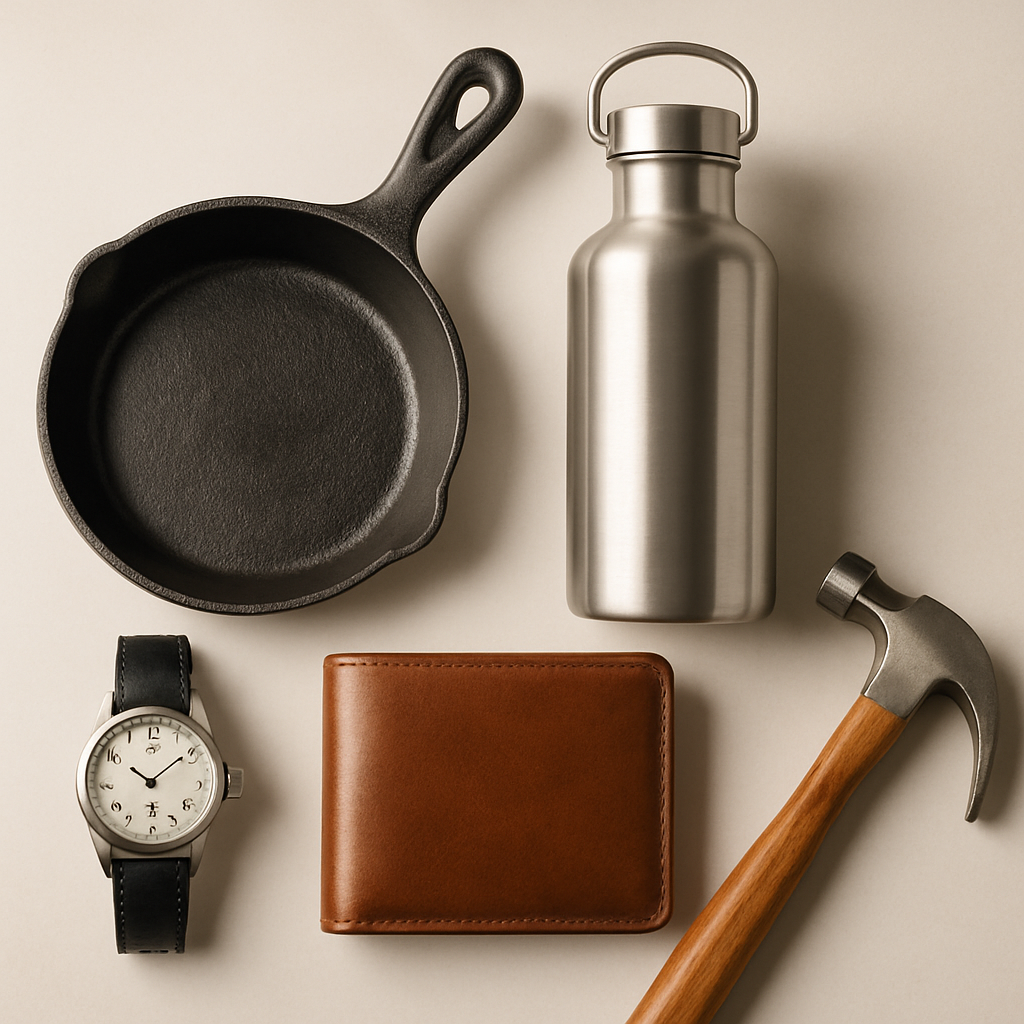
Armed with an understanding of what makes a product last, you can now shift from being a passive consumer to an active investor in quality. This is the practical guide to adopting a “Buy It For Life” mindset, a philosophy that saves money, reduces waste, and ultimately leads to greater satisfaction.
This approach requires a shift in perspective, best illustrated by the “Total Cost of Ownership” concept. A $30 pair of shoes that lasts one year costs more over a decade ($300) than a $200 pair of well-crafted, repairable shoes that lasts a lifetime. Authoritative consumer guides consistently highlight the long-term financial wisdom of investing in durability.[11]
The ‘Buy It For Life’ (BIFL) Philosophy
The “Buy It For Life” (BIFL) movement is a conscious rejection of disposable culture. It’s about seeking out products with lifetime warranties, robust construction, and timeless design. To help you identify potential BIFL products, you can categorize them by their type of longevity:
- Inherently Indestructible: Items made from simple, robust materials that are difficult to damage. Examples: Cast iron skillets, solid stainless steel water bottles, a full-grain leather belt.
- Serviceable for Life: Complex items designed to be repaired and maintained indefinitely, often with readily available parts. Examples: High-quality mechanical watches, premium bicycles, certain hand tools.
- Warranty-Backed: Products from companies so confident in their quality that they offer a lifetime or extensive warranty. This is common with high-end luggage and outdoor gear.[11]
Your Toolkit Against Planned Obsolescence
Fighting back against products designed to fail requires a proactive toolkit. Here are actionable strategies you can use:
- Prioritize Repairability: Before buying electronics, check repair scores from independent sources. Choose devices that use standard screws and have accessible components like batteries.
- Understand Warranties: Read the fine print. A “limited lifetime warranty” may only cover manufacturing defects, not wear and tear. Seek out companies with comprehensive, no-hassle guarantees.
- Support the ‘Right to Repair’ Movement: Advocate for legislation that requires manufacturers to make parts, tools, and repair manuals available to consumers and independent repair shops. Consumer advocacy groups like U.S. PIRG are at the forefront of this crucial battle for ownership rights.
As any independent repair technician will tell you, the fight against planned obsolescence is a fight to restore our right to truly own the things we buy.
The Creator’s Blueprint: How to Build a Legacy Brand
For the entrepreneurs, makers, and business leaders, the principles of durability are not just a consumer philosophy; they are a powerful business strategy. Building a brand on a foundation of adamantine quality is the path to creating a true legacy—one that earns enduring customer trust and stands the test of time.
The process can be visualized as the “Legacy Flywheel,” where each component builds momentum for the next:
- Uncompromising Material & Manufacturing Quality: This is the non-negotiable starting point. A commitment to quality from day one is the best investment a company can make.[12]
- Consistent Brand Messaging: Your marketing, packaging, and customer service must all reflect the promise of durability and longevity made by your product.
- Building Customer Trust: When a product consistently exceeds expectations, it transforms customers into advocates. Trust is earned through reliability, not just advertising.
- Forging a Lasting Reputation: Over time, this earned trust solidifies into a powerful reputation that becomes your brand’s most valuable asset.
Legacy brands like Gibson guitars and Calphalon cookware did not become icons overnight. They built their reputations over decades by refusing to compromise on quality, creating products that became integral parts of their customers’ lives.[13] This is the blueprint: build things that last, and you will build a brand that endures.
Conclusion
We began with the frustration of a broken product and have journeyed through the heart of the Durability Doctrine. We have seen that the antidote to our disposable culture is a conscious shift in mindset—from prioritizing short-term cost to celebrating long-term value.
This is more than a buyer’s guide. It is a philosophy. By understanding the science of durability, appreciating the art of true craftsmanship, and adopting the “Buy It For Life” strategy, you reclaim power in the marketplace. You choose to invest in items that bring lasting function and joy, reducing waste and honoring the resources and skill that went into their creation. This is the essence of adamantine quality: making intentional choices for a more sustainable, valuable, and satisfying life.
Share your most trusted ‘Buy It For Life’ product in the comments below and tell us its story. For creators, download our free ‘Legacy Quality Audit’ checklist to start building your brand’s enduring promise.
References
- Planet Green Recycle. (n.d.). Are We Living in a Disposable Culture? Retrieved from https://www.planetgreenrecycle.com/blogs/news/are-we-living-in-a-disposable-culture
- Crouch, A. (n.d.). How Disposable Objects Have Lead to Disposable People. Medium. Retrieved from https://medium.com/@ashely.crouch/how-disposable-objects-have-lead-to-disposable-people-7e52096b1b23
- ComplianceQuest & Genimex Group. (N.D.). [General principles of quality manufacturing and ‘Design for Manufacturing’ (DFM)]. Industry expertise.
- Investopedia. (2024). Planned Obsolescence: Definition, Types, and Examples. Retrieved from https://www.investopedia.com/terms/p/planned_obsolescence.asp
- Population Matters. (2024). From lightbulbs to smartphones: the practice of planned obsolescence. Retrieved from https://populationmatters.org/news/2024/04/from-lightbulbs-to-smartphones-the-practice-of-planned-obsolescence/
- Hamilton Caster & Mfg. Co. (n.d.). Seven of the strongest materials known to man. Retrieved from https://www.hamiltoncaster.com/Blog/EntryId/1701/Seven-of-the-strongest-materials-known-to-man
- Scientific American. (N.D.). [Reporting on the comparative strength of Kevlar and steel].
- Science Magazine. (N.D.). [Research on the properties of Darwin’s bark spider silk].
- Hermès International S.A. (N.D.). [Publicly available corporate information regarding company history and artisan workforce].
- Earlywood Designs. (n.d.). Heirloom Quality and Earlywood. Retrieved from https://www.earlywooddesigns.com/blogs/earlywood-wooden-utensils-blog/116758021-heirloom-quality-and-earlywood
- WIRED, The Penny Hoarder, & Condé Nast Traveler. (N.D.). [Various articles supporting the ‘Buy It For Life’ (BIFL) philosophy and product recommendations].
- Entrepreneur.com. (n.d.). 3 Tips for Manufacturing Products That Last a Lifetime. Retrieved from https://www.entrepreneur.com/growing-a-business/3-tips-for-manufacturing-products-that-last-a-lifetime/290935
- Gibson Brands, Inc. & Calphalon. (N.D.). [Brand legacy and reputation built on product durability]. Public brand information.