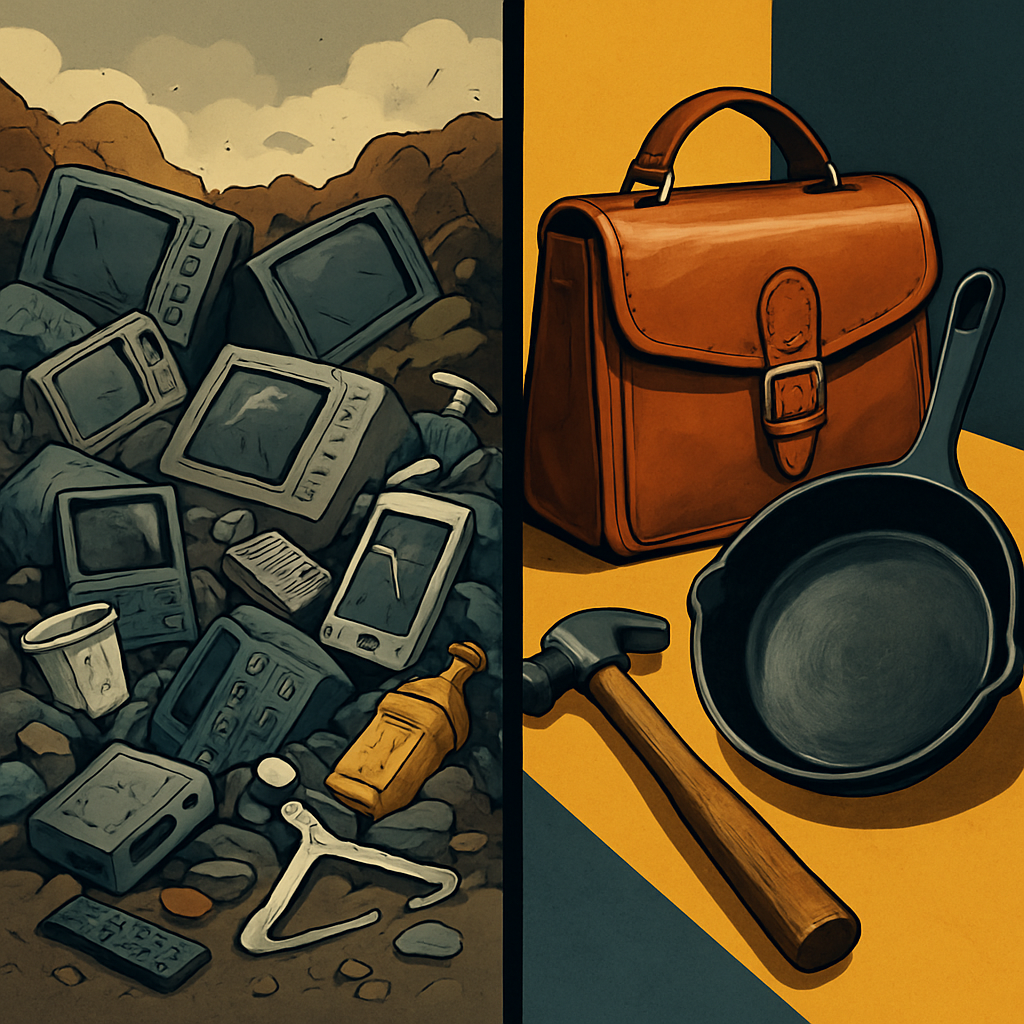
Have you ever felt that sting of frustration? The moment a perfectly good appliance, a favorite pair of headphones, or a trusty gadget dies just days after its warranty expires. It’s a feeling that’s become all too common, a symptom of a larger problem: our modern world is built on a foundation of disposability. We live in a throwaway culture, a cycle of buying, breaking, and replacing that drains our wallets and fills our landfills. This isn’t an accident; it’s by design.
But what if there was a different way? A philosophy that rejects the flimsy and fleeting in favor of the strong and enduring?
Welcome to the Adamantine Standard.
This isn’t just about buying expensive things; it’s a mindset rooted in the pursuit of unbreakable quality, timeless design, and true, lasting value. It’s about choosing products built with such integrity that they defy the cycle of planned obsolescence. This guide is your definitive playbook to reject disposable culture. We will expose the systems designed to make you a repeat customer, teach you the principles of timeless value, and equip you with the practical knowledge to identify genuinely durable, ‘Buy It For Life’ goods. It’s time to stop replacing and start investing.
- The Crisis of Disposable Culture: Why Everything You Own is Designed to Fail
- The Philosophy: Embracing the Adamantine Standard for Lasting Value
- The Practical Playbook: Your Ultimate Guide to ‘Buy It For Life’ (BIFL) Products
- Decoding Durability: A Consumer’s Guide to Technical Standards
- Conclusion: Forge Your Own Standard
- References
The Crisis of Disposable Culture: Why Everything You Own is Designed to Fail
The constant need to replace our belongings isn’t a personal failing; it’s the result of a carefully engineered economic system. To understand the solution, we must first dissect the problem—a crisis built on three pillars: a manufactured culture of disposability, the hidden strategy of planned obsolescence, and the cascading failures of low-quality manufacturing.
The Engineered Throwaway: How We Were Taught to Waste
Our habit of throwing things away is not a natural human tendency; it was taught. The shift to a disposable culture began in the mid-20th century, largely driven by the plastics industry to create new, ever-expanding markets for its products.[1] Investigative reports have revealed how corporations actively promoted single-use items and disposability, knowing that large-scale recycling was not a viable solution, to fuel a cycle of constant consumption.
This “worrying shift” towards single-use products, as noted by global bodies like the United Nations, has had devastating environmental consequences.[2] From the microplastics contaminating our water sources to the mountains of waste overwhelming our ecosystems, the convenience of disposability has come at an enormous long-term cost. We were sold a story of ease, but we inherited a legacy of waste.
Planned Obsolescence: The Hidden Strategy in Your Gadgets and Goods
Planned obsolescence is a business strategy in which a product is deliberately designed with a limited lifespan, becoming obsolete or non-functional after a certain period.[3] This isn’t a conspiracy theory; it’s a documented practice designed to guarantee repeat business. It manifests in several ways:
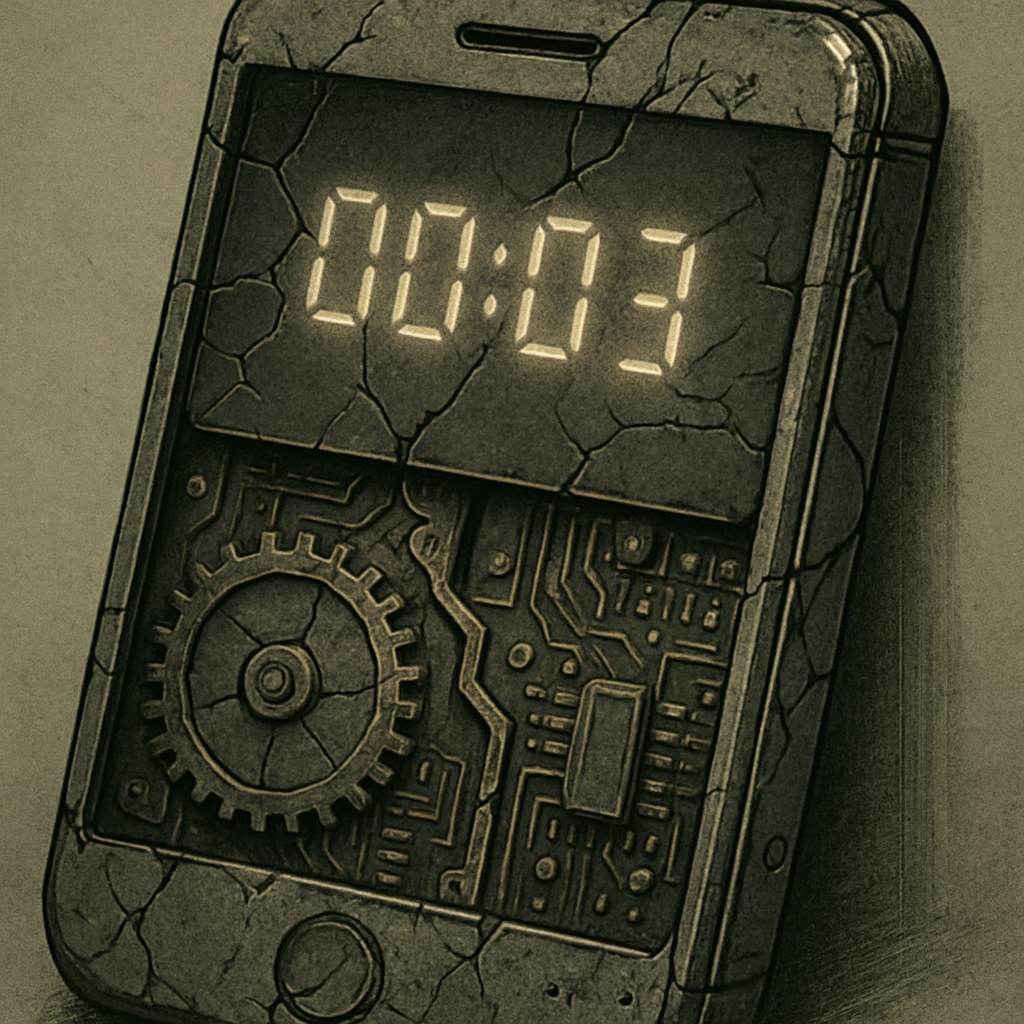
- Contrived Durability: Using materials that are known to wear out, fray, or break after a predictable amount of use.
- Prevention of Repairs: Designing products with glued-in components, proprietary screws, and a lack of available spare parts, making repairs impossible or more expensive than replacement.
- Systemic Obsolescence: Discontinuing software updates for older devices, rendering them slow, insecure, and incompatible with new applications.
A famous example is the “batterygate” incident, where Apple was found to be slowing down older iPhones, a move it claimed was to preserve battery life but which many consumers saw as a nudge to upgrade. It’s no coincidence that smartphones typically need replacing every two to three years due to this combination of hardware wear and software incompatibility. This strategy is the engine of the throwaway culture, ensuring that even well-cared-for products are destined for the scrap heap.
Death by a Thousand Cuts: The True Cost of Low-Quality Manufacturing
Beyond deliberate obsolescence, there’s the pervasive issue of low-quality manufacturing. This isn’t just about a single defective item; it’s a systemic problem that management experts at firms like Kepner-Tregoe identify as a “death by a thousand cuts”.[4] The root causes often lie in poor material sourcing, a lack of standardized operating procedures (SOPs), and inadequate quality control.
The consequences are severe: financial losses from warranty claims and product recalls, damage to brand reputation, and immense customer frustration. When companies prioritize cutting upfront costs over investing in robust systems like Design for Manufacturing (DFM) or Six Sigma, the consumer ultimately pays the price—not just in money, but in time, stress, and the environmental impact of a prematurely discarded product.
The Philosophy: Embracing the Adamantine Standard for Lasting Value
To fight back against the tide of disposability, we need a new philosophy. The Adamantine Standard is a commitment to quality that is unyielding, design that is enduring, and value that is measured in decades, not months. It’s about understanding the principles that separate the truly exceptional from the merely new.
What is ‘Adamantine Quality’? From Mythological Strength to a Modern Mindset
The word “adamant” entered the English lexicon around the 9th century, derived from the ancient Greek “adamas,” meaning “unconquerable” or “invincible”.[5] In mythology, it was a legendary, unbreakable material. In mineralogy, “adamantine luster” describes the brilliant, impenetrable sheen of a diamond.
This concept has been adopted by modern fantasy, where materials like adamantine represent the pinnacle of durability. In the Pathfinder roleplaying game, for instance, adamantine is a super-hard metal mined from meteorites, with specific, quantifiable properties of hardness and resilience that make it superior for crafting weapons and armor.[6]
Adopting the Adamantine Standard as a consumer means applying this metaphorical strength to our purchasing decisions. It’s a mindset that seeks out products with an unyielding resolve against wear and tear. It’s about looking for “unconquerable” construction, “invincible” materials, and a quality so profound it feels almost legendary.
The Unmistakable Principles of Timeless Design
An adamantine product isn’t just durable; it possesses a timeless appeal that transcends fleeting trends. As noted by leading design publications and architectural firms, timeless design is not about being plain or boring, but about adhering to a set of core principles that ensure lasting relevance:[7]
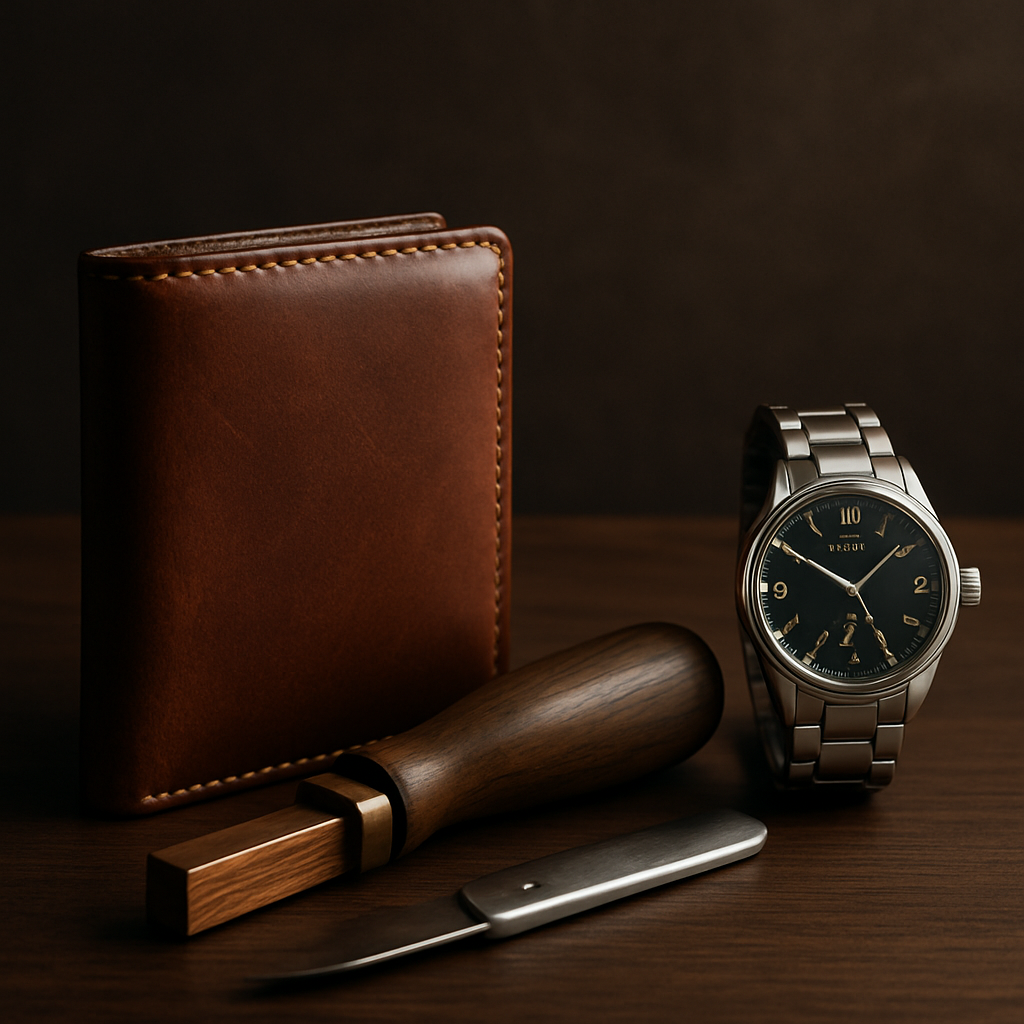
- Simplicity and Clarity: It avoids unnecessary ornamentation, focusing on clean lines and an intuitive form. Think of the iconic Eames Lounge Chair—its design is as relevant today as it was in the 1950s.
- Functionality First: The design serves a clear purpose and serves it well. It prioritizes user experience and practicality over novelty.
- Honest, High-Quality Materials: It showcases natural materials like solid wood, stone, full-grain leather, and steel, allowing their inherent beauty and durability to define the aesthetic.
- Proportion and Scale: The object feels balanced and harmonious, fitting comfortably into its environment without demanding undue attention.
Embracing timeless design also offers profound psychological benefits. By choosing items that don’t go out of style, we reduce decision fatigue and create a more calming, stable living environment, free from the constant pressure to update and replace.
A Connoisseur’s Eye: How to Spot Premium Quality and Craftsmanship
Premium quality is more than a high price tag or a fancy logo; it’s a collection of tangible details that signal superior craftsmanship and materials. Learning to spot these signals transforms you from a passive consumer into a discerning connoisseur.
Look for the story behind the product. Brands known for premium quality often have a rich heritage built on uncompromising standards. Loro Piana, for example, was founded in 1924 and goes to extraordinary lengths to source the rarest Vicuña wool from South America. Brunello Cucinelli is renowned for its ethical craftsmanship and use of the finest cashmere.
Here’s a mini-guide to what to look for:
- In Leather Goods: Seek out “full-grain” leather, which is the highest quality grade and develops a beautiful patina over time. Examine the stitching—it should be tight, even, and consistent.
- In Furniture: Look for solid wood construction and traditional joinery (like dovetail or mortise-and-tenon joints) instead of staples, glue, and particleboard.
- In Clothing: Check the density of the fabric weave and the quality of the seams. A well-made garment will have clean, reinforced stitching and buttons that are securely attached.
Developing this eye for detail allows you to see past marketing and recognize the inherent, adamantine quality that promises a lifetime of service.
The Practical Playbook: Your Ultimate Guide to ‘Buy It For Life’ (BIFL) Products
Adopting the Adamantine Standard is an actionable strategy. This playbook will provide you with the mindset and the specific recommendations to start building a collection of goods that last. It’s about making smart, informed choices that pay dividends for years to come.
The BIFL Mindset: How to Calculate True Cost and Invest in Your Future
The “Buy It For Life” (BIFL) philosophy is, at its core, a financial strategy endorsed by frugal living experts.[8] A cheap product that needs to be replaced every two years is far more expensive in the long run than a durable one that lasts for twenty.
To understand this, use the “True Annual Cost” calculation:
(Product Cost) / (Expected Years of Use) = True Annual Cost
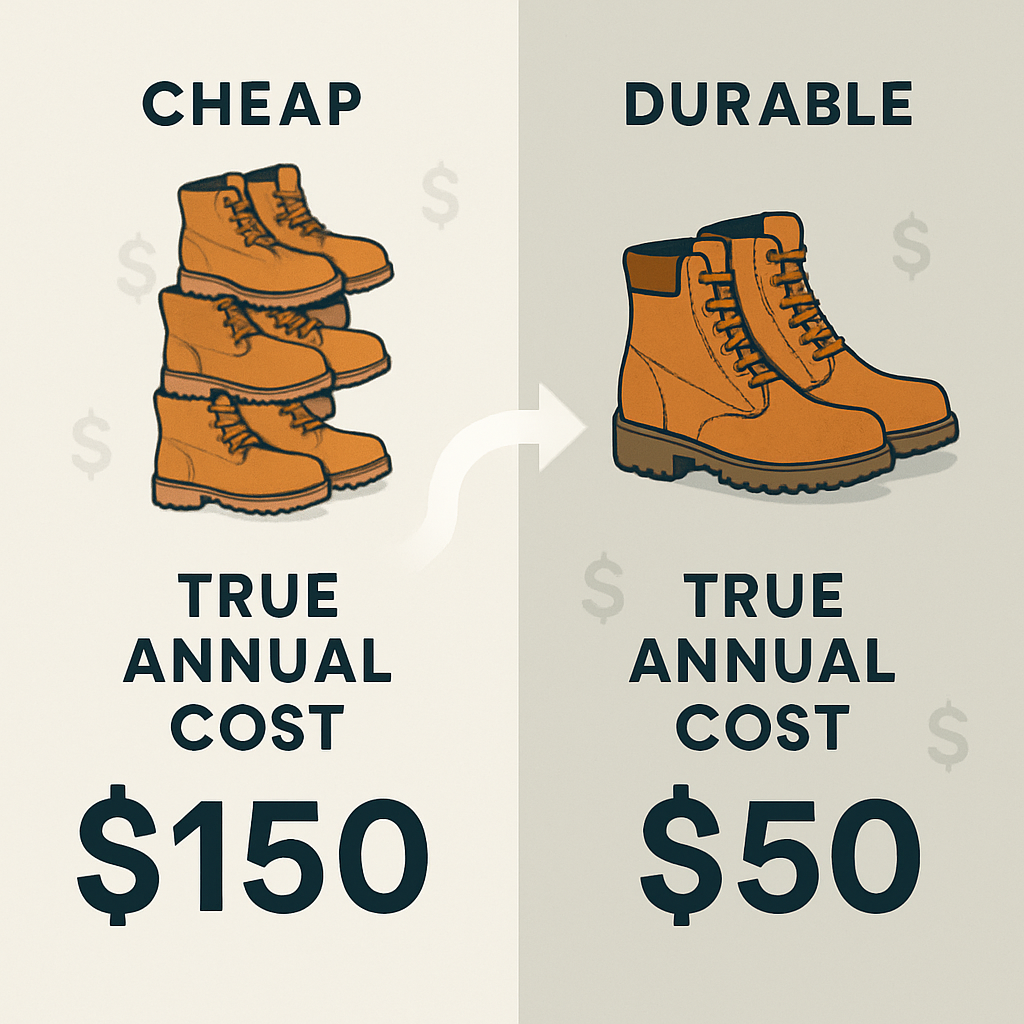
- Example A (Cheap Boots): $60 / 2 years = $30 per year.
- Example B (Durable Boots): $300 / 15 years = $20 per year.
While the upfront cost is higher, the durable boots save you money over time, not to mention the hassle of replacement and the environmental waste. This simple shift in perspective reframes a purchase from an expense into a long-term investment in your future.
The Adamantine List: Vetted BIFL Products for Every Part of Your Life
This curated list features brands and products legendary for their durability, craftsmanship, and robust warranties. Each one is an example of the Adamantine Standard in action.
For the Workshop & Tools
In the world of tools, durability is paramount. These items are forged to withstand decades of heavy use.
- Estwing Hammers: Famous for their single-piece forged steel construction, an Estwing hammer has no weak points where the head can separate from the handle. They are the choice of professional carpenters and are built to be passed down through generations.
- Indestructible Sledgehammers: For the most extreme tasks, companies like Graz produce sledgehammers that are tested to withstand over 36,000 blows with no deformation, representing the peak of unbreakable tool design.
Pro-Tip for Maintenance: Keep steel tools clean and dry to prevent rust. A light coating of machine oil can provide extra protection during long-term storage.
For the Kitchen
The kitchen is the heart of the home, and it deserves tools that can handle a lifetime of daily meals.
- Lodge Cast Iron Skillets: Inexpensive, virtually indestructible, and they only get better with age. A well-seasoned cast iron pan can last for over a century.
- Wüsthof or Victorinox Chef’s Knives: Forged from high-carbon steel, these knives hold a sharp edge and are balanced for professional use. With proper care, they are a one-time purchase.
- KitchenAid Stand Mixers: These iconic mixers are famous for their powerful motors and all-metal construction. It’s not uncommon to find models from the 1970s and 80s still in perfect working order.
Pro-Tip for Maintenance: Never put high-carbon steel knives or cast iron cookware in the dishwasher. Hand wash and dry them immediately, and keep cast iron seasoned with oil.
For Apparel & Accessories
The “fast fashion” industry is a primary driver of disposable culture. These brands offer a powerful alternative with products backed by incredible guarantees.
- Darn Tough Socks: Made in Vermont, these merino wool socks come with an unconditional lifetime guarantee. If they ever wear out, rip, or develop holes, the company will replace them, no questions asked.
- Saddleback Leather Co. Wallets & Bags: These products are famously over-engineered from thick, full-grain leather and are backed by a 100-year warranty. They are designed to outlive you.
- Jansport Backpacks: A classic for a reason. Most Jansport backpacks come with a lifetime warranty that covers manufacturing defects, making them a reliable choice for students and travelers alike.
Pro-Tip for Maintenance: Learn basic care for your materials. Condition leather goods annually, wash merino wool according to instructions, and patch small tears in fabric before they become large ones.
Decoding Durability: A Consumer’s Guide to Technical Standards
In a world of marketing buzzwords like “ultra-tough” and “heavy-duty,” how can you verify a product’s durability? The answer lies in understanding the technical standards that quantify toughness. Learning to decode this language empowers you to see past the hype and assess true quality.
Water and Dust-Proofing: What IP Ratings Really Mean
You’ve likely seen “IP67” or “IP68” on the specs for your phone or headphones. This is an Ingress Protection (IP) rating, an international standard that measures a device’s resistance to solids and liquids.[9]
The rating is made of two numbers:
- First Digit (Solids): Rates protection against objects, from fingers (1) to microscopic dust (6). A “6” means the device is completely dust-tight.
- Second Digit (Liquids): Rates protection against water, from dripping water (1) to continuous immersion (8).
Here’s a practical breakdown:
| Rating | Meaning | Real-World Example |
|---|---|---|
| IP67 | Dust-tight. Can be submerged in up to 1 meter of water for 30 minutes. | Safe from accidental drops in a sink or toilet. |
| IP68 | Dust-tight. Can be submerged in more than 1 meter of water (depth and time specified by manufacturer). | Safe for submersion in a pool for a limited time. |
Understanding these ratings allows you to match a product’s capabilities to your actual needs.
Military-Grade Toughness: Is MIL-STD-810H a Guarantee of Quality?
“Military-Grade” is a powerful marketing term, but it refers to a specific standard: MIL-STD-810. This is a series of tests designed by the U.S. Department of Defense to see if equipment can withstand the harsh conditions of military operations.[10] The standard includes 29 different laboratory test methods, including:
- Transit Drop: Surviving falls from various heights onto different surfaces.
- Vibration: Withstanding shaking and shocks from transport and use.
- Extreme Temperatures: Operating reliably in both freezing cold and scorching heat.
- Humidity & Salt Fog: Resisting corrosion and moisture damage.
However, there’s a crucial caveat: a company can claim its product is “MIL-STD-810 compliant” if it passes just one of the 29 tests. A truly rugged product will have been tested against multiple relevant methods. As a discerning consumer, you should always ask which specific tests a product has passed to verify that its toughness is more than just a marketing claim.
Conclusion: Forge Your Own Standard
The modern marketplace is a current pulling us toward the disposable, the temporary, and the trivial. It is a system that profits from failure and thrives on replacement. But you do not have to be swept away by it. A better way exists.
The Adamantine Standard is your anchor. It is a philosophy of conscious investment in timeless design, verifiable durability, and uncompromising craftsmanship. By learning to identify the hidden strategy of planned obsolescence, you can avoid its traps. By embracing the principles of timeless design, you can curate a life of lasting beauty and function. And by seeking out ‘Buy It For Life’ goods, you make a powerful statement—investing not just in a product, but in a more sustainable and financially sound future.
You now have the playbook. Go forth and become a more conscious, discerning consumer. Reject the throwaway culture and choose to build a world, for yourself and for the future, that is designed to last.
What’s your favorite ‘Buy It For Life’ product? Share your recommendation in the comments below and help us build the ultimate community resource for durable goods!
Disclaimer: This article may contain affiliate links. If you purchase a product through one of these links, we may receive a small commission at no extra cost to you. All product information, including prices, warranties, and availability, is subject to change by the manufacturer.
References
- NPR. (2024, June 9). Disposable plastic pollution waste single-use recycling climate change fossil fuels. Retrieved from npr.org, quoting Bart Elmore, professor of environmental history at Ohio State University.
- United Nations Environment Programme. (N.D.). Our planet is choking on plastic. Retrieved from unep.org.
- Investopedia. (N.D.). Planned Obsolescence: Definition, How It Works, and Examples. Retrieved from investopedia.com.
- Kepner-Tregoe. (N.D.). Quality Defects Without Known Cause in Manufacturing. Retrieved from kepner-tregoe.com.
- Online Etymology Dictionary. (N.D.). Adamant (n.). Retrieved from etymonline.com.
- Paizo Inc. (N.D.). Precious Materials: Adamantine. Archives of Nethys: Pathfinder 2nd Edition Database. Retrieved from 2e.aonprd.com.
- YR Architecture + Design. (N.D.). Timeless Design: 10 Qualities of Design That Lasts. Retrieved from yr-architecture.com.
- The Penny Hoarder. (N.D.). 32 Companies That Offer Lifetime Warranties. Retrieved from thepennyhoarder.com.
- International Electrotechnical Commission. (N.D.). IP ratings. Retrieved from iec.ch.
- Milrack. (N.D.). Durability Standards and Certifications. Retrieved from milrack.com.
